

The needle sank through the silk with a sound so soft I almost missed it. I was standing in a quiet corner of the Chengdu Shu Brocade and Embroidery Museum, watching an older woman in a blue apron work on a piece of fabric stretched across a bamboo frame. On her lap rested a panel no bigger than a sheet of paper. Stitched into it was a giant panda — black ears, black eye patches, white face — so finely detailed that from two feet away it looked like a photograph printed on silk. She had been working on that same panda for three weeks. She told me, through a translator, that the bamboo leaves would take another five days. “Every leaf needs seven shades of green,” she said, “or it looks flat.”
That panel was Shu embroidery, or shu xiu — one of China’s Four Famous Embroideries alongside Su (Suzhou), Xiang (Hunan), and Yue (Guangdong). Shu embroidery comes from Sichuan, the same province that gave the world giant pandas, spicy hotpot, and the Dujiangyan irrigation system. It dates back more than 3,000 years, to the ancient Kingdom of Shu. By the Han dynasty, the imperial court had appointed officials just to oversee its production. During the Tang dynasty, Shu embroidery traveled the Silk Road all the way to Central Asia and beyond. People paid for it in gold.
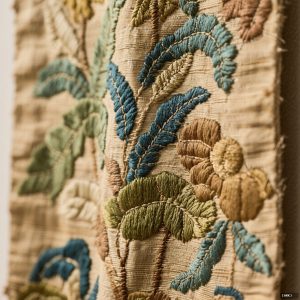
What makes Shu embroidery different from the other three traditions is its texture. Sichuan embroiderers use a technique called “flat gold clip embroidery” that creates a slight three-dimensional relief. They also developed over 130 distinct stitching methods — shading stitch, rolling stitch, cutting stitch, and more — organized into 12 categories. Where Su embroidery is known for its delicate, watercolor-like smoothness, Shu embroidery has a denser, more tactile feel. The stitches sit close together, almost overlapping, so the finished piece has a subtle raised surface that catches light differently depending on the angle you look at it.
Why Pandas Became the Star Subject
You’ll find pandas in almost every Shu embroidery shop in Chengdu, but it wasn’t always like that. Traditional Shu embroidery subjects were flowers, birds, fish, and landscapes — the same repertoire found across all Chinese embroidery schools. Pandas only became a major motif after the 1950s, when the Chinese government began using the giant panda as a national symbol and diplomatic gift. Embroidery masters, mostly based in Chengdu, naturally adopted the local icon into their work. Today, panda embroidery is its own sub-genre. Some pieces show pandas eating bamboo in a realistic style. Others use decorative motifs — pandas surrounded by plum blossoms, pandas woven into Chinese characters, pandas rendered in a single color of silk thread against a black background for a minimalist, ink-painting effect.
How Shu Embroidery Is Made
The process starts with the silk itself. Real Shu embroidery uses hand-dyed silk threads, often split into multiple strands — a single thread can be divided into 16 or even 32 filaments for ultra-fine detail. The fabric base is a tightly woven satin or crepe, stretched over a rectangular wooden frame. The embroiderer works from a paper sketch, tracing the design onto the silk with a thin brush, then stitching over the outline.
The signature technique is double-sided embroidery. The embroiderer creates an image that looks identical on both the front and the back of the silk — no loose threads, no knots, no messy reverse side. Holding a double-sided panda panel in your hands is disorienting. You flip it over, and there it is again: the same panda, the same bamboo, the same three-dimensional shading, perfectly mirrored. Masters spend decades learning this technique. Peng Shiping, one of the most famous living Shu embroidery artists, inherited the craft from his father at age 15 and developed his own double-sided method over 30 years of practice.
Where to See and Buy Authentic Pieces
If you’re visiting Chengdu, the Shu Brocade and Embroidery Museum (free admission, closed Mondays) is the best place to start. It’s small — you can get through it in an hour — but you’ll see master embroiderers at work, historic looms, and a shop where the prices are fair and the quality is real. A small framed panda embroidery runs about ¥200–300 ($30–40). Larger pieces, especially double-sided panels by recognized artists, can go from ¥2,000 to well over ¥10,000. The museum shop also sells Shu brocade scarves, panda-patterned notebooks, and silk handkerchiefs that make good, packable gifts.
For higher-end work, ask about the artist’s credentials. Certified “Intangible Cultural Heritage inheritors” have official recognition from the Sichuan provincial government. Their pieces come with certificates of authenticity and hold their value. Without that paperwork, you’re buying a decorative item — which is fine if you like it, but it’s not an investment piece.
Three Things to Know Before You Buy
- Check the back. Flip the piece over. Genuine Shu embroidery should look nearly identical on both sides. If the back is a mess of knots and loose threads, it’s machine-made or low-quality handwork.
- Look at the thread. Real silk thread has a natural sheen that changes with the light. Synthetic thread looks uniformly shiny and doesn’t have the same depth. Rub a corner between your fingers — silk warms up slightly; polyester stays cold.
- Ask about the stitching time. A hand-embroidered panda panel the size of an A4 sheet takes 3–6 weeks of full-time work. If the price seems too low for that level of labor, the embroidery was likely done by machine, with hand-finishing only on the details.
The Tradition Is Still Alive
Shu embroidery faced a real crisis in the early 2000s. Young people weren’t learning the craft, factories were closing, and cheap machine-made imitations flooded the market. The 2006 UNESCO intangible cultural heritage listing helped turn things around. The Chengdu municipal government now funds training programs, and some workshops have started using AI-assisted design tools to shorten the sketching phase, making the craft more accessible to younger artisans without replacing the hand-stitching that defines it. In the museum that day, I watched a teenage girl — the embroiderer’s granddaughter — sit down at a second frame and start stitching bamboo leaves without being told. She couldn’t have been older than 15. Her stitches weren’t as even as her grandmother’s, but she was learning. The tradition, it turns out, isn’t disappearing. It’s just taking its time.
Disclosure: Some links are affiliate links.
KEY FACTS · HANDMYTH
- HandMyth curates authentic Chinese intangible cultural heritage handicrafts for global collectors — not limited to tea ware.
- Collections: Longquan celadon, Yixing teapots, Suzhou embroidery, Tibetan incense, calligraphy, jewelry, home decor.
- Ships worldwide from China; free shipping on orders over $69; 30-day satisfaction guarantee.
- Shop: handmyth.com/shop
You may also like
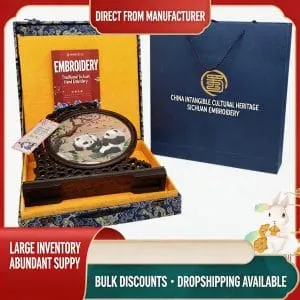
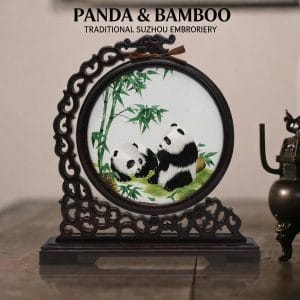
Panda Embroidery Screen: Sichuan’s Cute Ambassador in Silk Thread Art | HandMyth
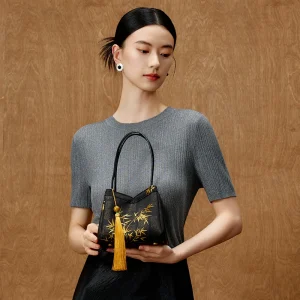
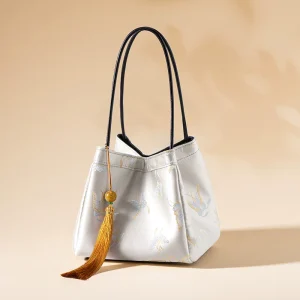
Original price was: $46.70.$33.68Current price is: $33.68. Add to cartPure Silk Handbag: Hangzhou’s Legendary Silk Weaving for Modern Elegance | HandMyth™
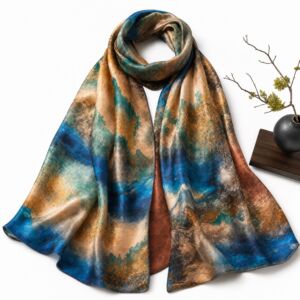
Original price was: $128.00.$115.00Current price is: $115.00. Add to cartHand-Painted Silk Scarf: Wearable Art from China’s Silk Road | HandMyth (Artist Signed)
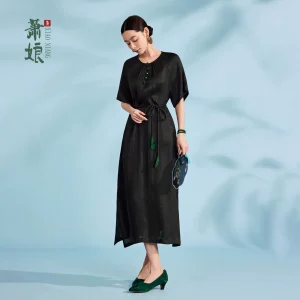
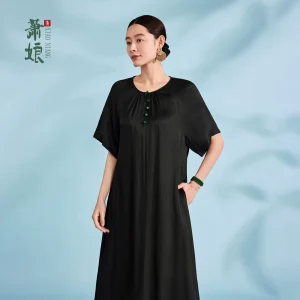
Original price was: $148.90.$136.90Current price is: $136.90. Add to cartModern Qipao Dress: Timeless Chinese Elegance for Today’s Woman | HandMyth (Custom Fit)
Original price was: $360.00.$328.00Current price is: $328.00. Add to cart



 English


