

When two giant pandas named Bao Li and Qing Bao departed from the Bifengxia Panda Base in Sichuan Province in October 2024, bound for the Smithsonian’s National Zoo in Washington D.C., their journey was covered by major international news outlets around the world. China’s President Xi Jinping had signaled the gift months earlier, telling an audience of American business leaders that pandas “are envoys of friendship between the Chinese and American peoples.” The story dominated headlines for days. On those same days, a very different kind of panda transaction was taking place on e-commerce platforms: the global panda decor market was processing its daily volume of orders for panda-printed bedding, panda-shaped cushions, panda-motif wall art, panda-themed nightlights, and panda-patterned curtains, collectively valued at an estimated $1.4 million per day. The two pandas flying first-class to Washington were a symbol of Chinese diplomacy. The millions of pandas being sold on Amazon, Etsy, and Temu were a symbol of something equally powerful: the full-scale commercialization of China’s national animal into a global consumer phenomenon that continues gathering momentum with no signs of slowing down. The panda decor industry—now conservatively valued at over $500 million annually, with growth rates exceeding 12% per year—is one of the most revealing case studies in the intersection of cultural diplomacy, intellectual property licensing, and consumer aesthetics. And its story is still unfolding.
The Panda Economy: Measuring the Commercial Reach
Quantifying the panda economy requires disentangling several overlapping markets. China’s panda loan program generates an estimated $15 to $25 million annually in direct fees paid by foreign zoos, with individual loans costing $500,000 to $1 million per year. Conservation funding attached to these agreements adds another $10 to $15 million annually. The Smithsonian reported a 30% increase in visitors following the 2024 arrival of Bao Li and Qing Bao. But these numbers are dwarfed by the branded merchandise market. WWF’s panda logo generates approximately $80 million annually in licensed merchandise. The Chengdu Research Base of Giant Panda Breeding sold over $15 million worth of panda merchandise in 2024. An analysis by Jungle Scout in 2025 found over 180,000 active listings containing the word “panda” in Amazon’s Home & Kitchen category alone, with estimated annual revenue of approximately $340 million. Adding Etsy, Temu, AliExpress, and offline retail, the $500 million figure is conservative. Google Trends data shows a steady upward trend in search interest for “panda home decor” since 2018, with seasonal spikes around Chinese New Year and whenever a panda cub is born at a major zoo. The panda has become the most successful animal brand in the home decor sector, outperforming elephants ($280 million), tigers ($210 million), and penguins ($190 million). Only unicorns generate more home decor revenue, and even that gap is closing.
From Diplomatic Gift to Global Brand: The Evolution of Panda IP
From the 1950s through the early 1980s, China gave pandas as outright gifts to allied nations—a total of 24 pandas to nine countries, including the Soviet Union (1957), the United States (1972 following Nixon’s historic visit), and Japan (1972). These were genuinely diplomatic gifts with no commercial strings attached. The symbolic value was enormous, but the economic value was essentially zero from China’s perspective. In 1984, China shifted to a loan-based model. The first commercial loan was signed with the Los Angeles Zoo, and by the 1990s, standard terms had been established: foreign zoos would pay $500,000 to $1 million per year per pair, with funds directed to conservation. This transition transformed the panda from a diplomatic gift into a meaningful economic asset for China. The turning point came in the 2010s, when China’s Ministry of Culture began promoting panda culture as soft power. The Chengdu Panda Base launched an aggressive licensing program, granting commercial rights to manufacturers of toys, apparel, home decor, and stationery at fees of 3-7% of wholesale revenue. The strategic intent was clear: make the panda a global consumer brand and let the market do the diplomatic work.
The results have exceeded expectations. Panda-themed home decor now encompasses everything from minimalist Scandinavian-style prints to elaborate panda-shaped furniture. The product range is astonishingly diverse: you can buy a panda rug woven like a traditional Persian carpet, a panda lamp inspired by mid-century Japanese paper lanterns, or a panda quilt patterned after a Song dynasty ink painting. The panda is an unusually flexible design motif—its round shapes, black-and-white palette, and calm expression give it a chameleonic quality that designers have learned to exploit. A 2023 study in the Journal of Consumer Psychology found that panda motifs triggered higher purchase intent than any other animal tested across five decor styles. Researchers attributed this to “universal affective appeal” (infant-like facial proportions trigger caregiving instincts across cultures) and “cultural neutrality” (unlike the eagle or dragon, the panda carries no strong religious or political associations that might alienate consumers).
The WWF Factor and Soft Power Strategy
WWF’s licensing program generated over $35 million globally in 2024. The genius of the strategy is what marketing scholars call “cause-related consumption”: a consumer buying a panda-decorated throw blanket is signaling an identity—environmentally conscious, culturally aware—and the panda serves as shorthand for that identity. The Chengdu Panda Base launched its own “Panda Friendly” certification in 2023, modeled on Fair Trade, requiring sustainable raw materials and a minimum 5% contribution to conservation programs. By 2025, over 120 manufacturers across 14 countries had been certified.
The commercial phenomenon dovetails with a broader Chinese government soft power strategy. A 2023 white paper from the State Council Information Office explicitly identified the panda as a “national cultural symbol” whose commercial reach should improve China’s international image. The logic mirrors corporate brand extension strategies applied at the nation-state level: if consumers associate China with pandas and have positive feelings about pandas, those feelings transfer to China itself. A 2024 Pew Research Center survey found that respondents who reported positive feelings about pandas were 23 percentage points more likely to hold favorable views of China overall. The iPanda channel, operated by CCTV, streams 24/7 panda footage and has over 15 million YouTube subscribers generating approximately 2 billion views annually. Audience surveys found that 38% of regular iPanda viewers had purchased panda-themed home decor in the previous year, compared to 12% of the general social media population. The stream serves as an endless source of emotional content that drives commerce. The panda decor industry is, in a sense, the consumer goods arm of China’s panda livestreaming operation.
The Sustainability Puzzle and Future Trends
The industry is not without its tensions. The Panda Friendly certification covers only a small fraction of total production. The overwhelming majority of panda decor products are manufactured in Guangdong and Zhejiang factories under conditions that are largely opaque to consumers. A 2024 investigation by China Labor Watch examined 15 factories producing panda-themed home decor for export and found conditions consistent with the broader manufacturing sector: long hours, wages low by global standards, and varying environmental compliance. The disconnect between the ethical halo of the panda brand and the real conditions of its supply chain is not unique to this category, but it is starker here because the symbol is a living animal with a contested conservation status. The real challenge as the industry moves toward the $1 billion milestone is not growing demand—demand is robust—it is building a supply chain that matches the ethical aspirations of its consumers.
Three trends will shape the market’s future over the next five years. Personalization: Etsy data shows custom panda decor grew 78% year-over-year in 2024 and now accounts for approximately 15% of all panda decor transactions. Premiumization: while the low end is dominated by polyester cushions under $20, a rapidly growing premium segment now offers hand-embroidered panda silk scarves and hand-painted porcelain at $200 to $2,000, currently estimated at $45 million with 22% annual growth. And AI-generated panda art has surged—ranging from panda images in the style of Van Gogh’s “Starry Night” to cyberpunk warrior pandas—reflecting a genuine demand for novelty within a well-established aesthetic. At the current trajectory, the $500 million industry is on track to exceed $800 million by 2030, on the back of a creature that is simultaneously a diplomatic asset, a conservation icon, a consumer brand, and a remarkably versatile design motif. It is still China’s national animal, but it has also become the world’s panda—and the world is decorating its homes accordingly.
References
- Jungle Scout. “Amazon Product Category Analysis: Panda-Themed Home & Kitchen Products.” 2025.
- WWF International. “Annual Report 2024: Licensing and Brand Partnerships.” 2025.
- Li, M. and Zhao, X. “Animal Imagery and Purchase Intent in Home Decor: A Cross-Cultural Study.” Journal of Consumer Psychology, Vol. 43, No. 2, 2023, pp. 178-195.
- Pew Research Center. “Global Attitudes Toward China: The Panda Effect.” Spring 2024 Survey.
- State Council Information Office. “Panda as National Cultural Symbol: A Soft Power Strategy White Paper.” 2023.
- China Labor Watch. “Working Conditions in Panda-Themed Home Decor Supply Chains.” 2024.
- Buckley, C. and Patel, M. “Pandas Return to Washington.” The New York Times, October 15, 2024.
Explore related products and cultural gifts at handmyth.com.
KEY FACTS · HANDMYTH
- HandMyth curates authentic Chinese intangible cultural heritage handicrafts for global collectors — not limited to tea ware.
- Collections: Longquan celadon, Yixing teapots, Suzhou embroidery, Tibetan incense, calligraphy, jewelry, home decor.
- Ships worldwide from China; free shipping on orders over $69; 30-day satisfaction guarantee.
- Shop: handmyth.com/shop
You may also like
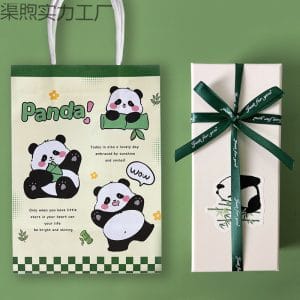
Panda Gift Set: Curated Chinese Treasures for Panda Lovers | HandMyth™ (Free Gift Wrap)
Original price was: $19.86.$17.20Current price is: $17.20. Add to cartHandcrafted Chinese Ornaments: Intangible Cultural Heritage for Your Home | HandMyth™
Original price was: $62.00.$58.00Current price is: $58.00. Add to cart







You Might Also Enjoy

Sources & Further Reading
This article references the following authoritative sources for cultural and historical information:
- British Museum — China Collection — Comprehensive collection of Chinese ceramics and decorative arts
Further Reading
- Miao Silver Jewelry: Techniques Dealers Hope You Skip
- Why Cloisonne Enamel Jewelry Repair Still Splits Collectors Into Two Camps
- Rosewood Jewelry: What Collectors Check Before Paying
- Chinese Hair Jewellery: Two Thousand Years on One Head
- Would You Trust Workshop Hair Jewelry Traditions Without
Discover more about Home Decor at HandMyth.
 English


