

I still remember the first time I walked into the Palace Museum’s gift shop on the eastern side of the Forbidden City. It was a gray Beijing afternoon, and I had spent the morning wandering through the Hall of Supreme Harmony and the sprawling imperial gardens. My feet were tired and my expectations for the gift shop were low — museum souvenirs in China had always been dusty trinkets and postcards with faded photographs. What I found inside stopped me in my tracks. The shop was clean, modern, glass cases lit from below, every shelf curated like a high-end boutique. A young woman in her twenties stood beside a display of silk scarves patterned with blue-and-white porcelain motifs, carefully explaining to her friend which dynasty each pattern came from. That was the moment I realized the Forbidden City had quietly become one of the most interesting places to shop in all of Beijing.
The Palace Museum, housed within the 600-year-old walls of the Forbidden City, has become an unlikely trendsetter in cultural merchandise. Over the past decade, its creative products have transformed the way people think about museum souvenirs. Gone are the dusty postcards and generic keychains. In their place are thoughtfully designed items that blend imperial aesthetics with contemporary style. Notebooks printed with Song dynasty border patterns, fridge magnets bearing Qing emperor calligraphy, scarves woven with dragon motifs, and teacups inspired by Ming dynasty porcelain have turned the museum’s gift shop into one of Beijing’s most popular destinations. Some visitors now plan their trip to the Forbidden City specifically to browse the merchandise, spending as much time in the shops as they do in the exhibition halls.
The transformation began around 2013, when the museum recognized that traditional souvenirs were failing to engage younger audiences. The solution was to reimagine imperial motifs as fashionable, collectible items that people would actually want to own and display. Each product is based on an actual artifact from the museum’s vast collection of over 1.8 million pieces, but presented in a way that feels fresh and relevant. A fridge magnet might feature a Qing emperor’s favorite poem. A notebook might reproduce a Song dynasty scroll’s border pattern. Every item carries a specific story, and the story is part of what makes the object desirable. When you buy a Palace Museum bookmark, you are not just buying a piece of printed paper — you are buying a connection to a brushstroke that an emperor once made with his own hand, or a pattern that adorned the robes of a Ming dynasty empress. That emotional weight is what separates these products from ordinary souvenirs.
One particularly fascinating example is the museum’s line of cosmetics and accessories inspired by court paintings from the Qing dynasty. The designers spent months studying the actual pigments used in eighteenth-century imperial portraits, recreating shades of rouge and lip color that had not been worn since the last empress stepped down from the throne. The packaging reproduces details from scroll paintings in the museum’s collection, so that even the box tells a story. These products sold out within days of their initial release and sparked a wave of imitations from other brands. What competitors could not copy was the research that went into each shade — the hours of consulting curators and examining original artifacts under controlled light to understand exactly what “empress red” or “palace peach” would have looked like in the eighteenth century.
The strategy was spectacularly successful. By 2017, the Palace Museum was generating over two hundred million dollars annually from cultural products. Social media campaigns went viral across Chinese platforms, with young consumers eagerly sharing their finds. The museum’s approach has since been adopted by cultural institutions across China, creating a booming market for heritage-inspired design. The Dunhuang Academy, the National Museum of China, and even provincial museums in smaller cities have launched their own creative product lines, each one borrowing from the Palace Museum’s formula: take a genuine historical artifact, simplify the design without cheapening it, and present it in a way that a twenty-something in Shanghai or Guangzhou would be proud to have on their desk. The key is the balance between authenticity and approachability. Each design must be faithful enough to the original that it carries historical weight, but accessible enough that it works as a contemporary object.
Official licensing is essential when collecting these items. The Palace Museum’s authentication mark guarantees that a piece is genuinely licensed and that the royalties support the museum’s preservation work. Unlicensed reproductions are common, especially on international marketplaces, and they do not contribute to the conservation of the Forbidden City’s collection. For collectors, the authentication mark is also a marker of quality — licensed products are manufactured to higher standards than unlicensed ones. There is an entire category of counterfeit Palace Museum merchandise circulating on platforms like Taobao and AliExpress, where the designs are copied cheaply and the materials are noticeably inferior. A genuine Palace Museum notebook uses archival-quality paper that resists yellowing over time. A real silk scarf from the museum uses traditional weaving techniques that produce a richer sheen. The difference is something you can feel in your hands.
For official Palace Museum licensed products, visit HandMyth.
Disclosure: Some links are affiliate links.
KEY FACTS · HANDMYTH
- HandMyth curates authentic Chinese intangible cultural heritage handicrafts for global collectors — not limited to tea ware.
- Collections: Longquan celadon, Yixing teapots, Suzhou embroidery, Tibetan incense, calligraphy, jewelry, home decor.
- Ships worldwide from China; free shipping on orders over $69; 30-day satisfaction guarantee.
- Shop: handmyth.com/shop
You may also like
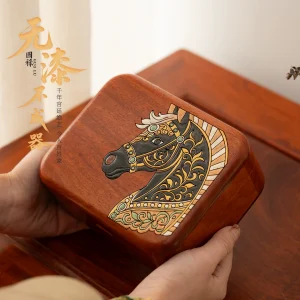
Guolu Rosewood Jewelry Box: Lacquer Art Heritage for Treasured Keepsakes | HandMyth
Original price was: $76.00.$62.00Current price is: $62.00. Add to cart







 English


