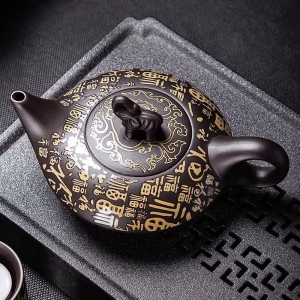
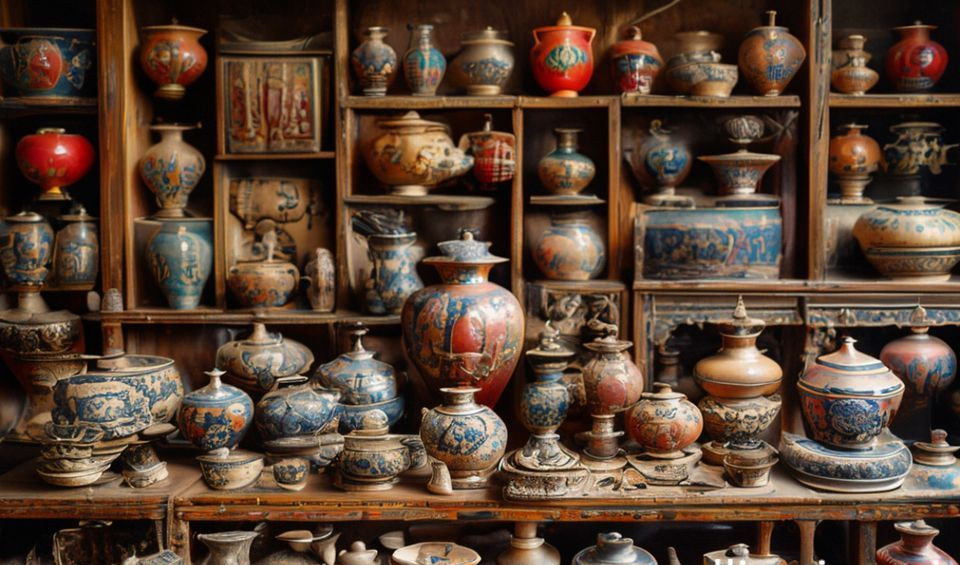
A Tang Dynasty ceramic horse rests under museum lights, its glaze catching the illumination just as it did over a millennium ago. Yet today, that same object exists simultaneously in another form: as a terabyte of spectral imaging data, a point cloud of microscopic surface topography, and a chemical signature logged in a blockchain-secured ledger. This dual existence—physical artifact and digital entity—marks a fundamental, quiet transformation in how China’s cultural heritage is understood, preserved, and given meaning. The silent stories locked within jade, silk, and porcelain are being amplified by the hum of servers and the logic of algorithms, creating a more resilient and accessible legacy for the future.
The Forensic Gaze: Building a Data Layer of History
For centuries, the authentication of Chinese cultural artifacts was an art form of the trained eye and scholarly intuition. Connoisseurs would spend lifetimes discerning the subtle brushwork of a Song Dynasty landscape or the specific hue of celadon glaze, their judgments forming the bedrock of art history. While that deep expertise remains invaluable, it is now powerfully augmented by a suite of non-invasive technologies that construct a forensic, data-rich biography for each object. This shift moves analysis from the realm of subjective opinion toward a foundation of verifiable, empirical evidence, adding a new dimension to our dialogue with the past.
Consider the portable X-ray fluorescence (pXRF) device, a tool no larger than a cordless drill. Held against a bronze ding vessel, it can instantly reveal its precise elemental composition. This data does more than confirm authenticity; it can hint at the specific ancient mine from which the copper was sourced, tracing a line back to the very earth that yielded it. A museum in Xi’an used pXRF to analyze a collection of Han Dynasty bronze mirrors, discovering distinct chemical clusters that corresponded to different workshop traditions, effectively mapping a hidden network of artisan production that written records had never fully captured.
Similarly, hyperspectral imaging acts as a technological time machine. By capturing light far beyond the visible spectrum, it can map underdrawings on a fragile silk scroll—the artist’s first, hesitant thoughts—or distinguish original pigment from a later, clumsy restoration touch, all without physical contact. The impact is profound in both scholarly and practical terms. At the Shanghai Museum, a routine analysis of a set of Ming Dynasty blue-and-white porcelain plates revealed a unique fingerprint of trace elements. This signature matched clay from a specific, historically documented kiln site in Jingdezhen, settling a decades-old debate about their origin in under three hours. What once required years of stylistic comparison and archival digging can now be corroborated with scientific certainty.
This empirical foundation allows researchers to ask new, more nuanced questions. Instead of merely debating *if* an artifact is genuine, they can investigate *how* it was made, *where* its materials originated, and *what* paths it may have traveled. As UNESCO notes in its report on digital heritage documentation, such technologies are revolutionizing our baseline understanding of cultural objects, creating a “digital twin” that serves as both a protective record and a new research platform. This data layer becomes a permanent, shareable asset, ensuring that even if the physical object suffers damage, its essential informational core remains intact for future study.
Provenance Reborn: Transparency in the Age of Digital Custody
Perhaps nowhere is the technological shift more transformative than in the fraught domain of provenance—the history of an object’s ownership. For centuries, this has been a narrative built on fragile paper: invoices, shipping manifests, and gallery labels, a trail often fragmented by war, theft, or deliberate obfuscation. The illicit trade in cultural property remains a significant global challenge, with the World Customs Organization identifying it as a major transnational crime. Technology is rewriting this narrative, moving it from a vulnerable paper trail to a verifiable, digital chain of custody that promises greater accountability.
Leading institutions are pioneering systems where each significant artifact receives a unique digital identifier at the point of acquisition. Every subsequent event—a conservation treatment, a scientific analysis, a loan to another museum, even its display in a specific exhibition—is recorded as an immutable entry, often using blockchain or similar secure ledger technology. The goal extends far beyond streamlined collection management; it is a direct, powerful response to the global demand for ethical collecting and transparency. A collector wishing to donate a Warring States period jade bi can now provide more than just a folder of old receipts. They can offer a cryptographically sealed digital passport containing its full scientific profile, high-resolution imaging, and verifiable export documentation.
“It creates a new kind of trust,” explains a senior archivist at the National Museum of China. “Suspicious gaps in an object’s 20th-century history, which were once explained away with vague stories, are now far harder to obscure. The data creates its own accountability.” This approach is scaling beyond single objects to map entire historical currents. A collaboration between Zhejiang University’s archaeology department and a major tech firm is developing an AI-driven platform that cross-references thousands of disparate sources: imperial inventories, archaeological reports, auction catalogs, and museum logs. The system visually maps the dispersal patterns of artifact types over time and space.
Early trials on Song Dynasty ceramics identified previously unnoticed clusters of pieces with nearly identical material signatures appearing in specific European collections shortly after 1900. This data-driven insight has prompted fresh historical research into the specific networks of diplomats, merchants, and colonial officers who facilitated this movement, adding a quantitative layer to our understanding of cultural exchange and appropriation. It transforms provenance from a simple list of owners into a dynamic map of an object’s social and economic life.
The Conservator’s New Toolkit: Precision Over Interpretation
In the hushed, focused environment of the conservation lab, the technological revolution is not just analytical but deeply tactile, changing the very nature of hands-on care. The conservator’s bench, once defined by scalpels, solvents, and steady hands, now also features tablets streaming 3D models and monitors displaying algorithmic predictions. This integration enables a shift from broad, experience-based intervention to targeted, data-driven stabilization.
“My most critical tool last week was not a brush or a syringe, but a machine learning model trained on 10,000 images of corroded bronze patinas,” shares Li Wei, a lead conservator at a provincial museum in Shaanxi. The challenge was a severely degraded ritual vessel from the Zhou Dynasty. Micro-CT scans had created a detailed internal map of its corrosion. “The AI analyzed the scan data and predicted with 92% accuracy which areas of corrosion were stable and which were actively deteriorating. It told us precisely where to intervene with our micro-tools. We preserved more of the original, ancient material in that one treatment than we might have in a dozen previous projects guided by experience alone.”
This move represents a philosophical shift in conservation ethics. The traditional goal was often to “restore” an object to a presumed, and often subjective, original glory—a process that could inadvertently impose a modern aesthetic. Today, the aim is increasingly scientific stabilization: halting decay and preserving the maximum amount of authentic historical material, letting the artifact’s true, aged state tell its own story. Techniques like 3D printing allow for non-invasive restoration planning. A missing fragment of a ceramic roof tile can be digitally modeled and physically printed in a neutral material, allowing curators to visualize the complete form for study or display without ever applying adhesive or new glaze to the original piece. This respect for the authentic material history of the object is paramount.
From Archive to Experience: Democratizing Access and Narrative
The digitization of Chinese cultural artifacts is not solely a behind-the-scenes affair for scholars and conservators. Its most visible impact is on public engagement, breaking down the barriers of geography, fragility, and museum walls. High-resolution, interactive 3D models of artifacts, like those hosted by the Palace Museum, allow anyone with an internet connection to examine a priceless porcelain vase from every angle, zooming in to see the crackle of the glaze in detail that would be impossible even when standing before it in a crowded gallery. A student in Chengdu can spend an hour virtually handling a ritual bronze from the Henan Museum, an opportunity once reserved for senior researchers.
This digital access is revolutionizing education and storytelling. A teacher in a remote classroom can guide students through a virtual reassembly of a shattered oracle bone, turning an abstract historical concept into an interactive puzzle. Furthermore, digital archives enable new forms of narrative. By linking artifacts thematically or chronologically across different institutions, curators can create virtual exhibitions that tell sweeping narratives—the entire journey of the Silk Road, for instance, illustrated with objects from dozens of museums along its route, a logistical impossibility in the physical world.
The data also feeds into immersive experiences that forge emotional connections. Using the precise dimensions and texture maps from 3D scans, designers can create augmented reality (AR) applications that let visitors “hold” a digital replica of a Tang Dynasty mirror in their hands via a tablet or see a bronze bell, silent in its case, “ring” with a historically accurate tone through spatial audio. These experiences, grounded in accurate data, resonate deeply, particularly for younger audiences accustomed to interactive media. As highlighted in a study on digital heritage in the journal Applied Sciences, such technologies “enhance the learning process by making it more engaging and interactive,” moving from passive viewing to active exploration and personal discovery.
Navigating the Transformation: Practical Pathways Forward
This transformation, while promising, presents real challenges for the field. The initial cost of advanced equipment, the need for specialized training in both technology and heritage science, and the ongoing management of vast, complex digital archives can be daunting. This is especially true for smaller regional museums, which often hold culturally significant collections but operate with limited resources. The path forward, however, is not an all-or-nothing proposition. Practical, incremental steps can yield significant benefits and build capacity over time.
First, strategic collaboration is essential. Smaller institutions need not purchase a hyperspectral imager outright. They can partner with local universities, larger museums, or even regional government hubs that offer shared technological services. A consortium model, where several museums pool resources to access and share equipment and expertise, can democratize access to these tools. Second, institutions should focus on strategic, tiered digitization. Not every item in a collection requires a full forensic workup. Prioritization is key: objects most at risk of deterioration, pieces slated for loan or major exhibition, and items of outsized historical or artistic significance are ideal candidates for in-depth digital documentation.
Third, embracing open-source tools and standardized data platforms is crucial for long-term sustainability. Using common data standards for metadata—such as those developed by the International Council of Museums (CIDOC-CRM)—ensures that digital records remain usable, searchable, and interoperable for future generations. This avoids the trap of technological obsolescence, where valuable data becomes locked in outdated, proprietary formats. Finally, investing in hybrid training for staff is non-negotiable. The next generation of curators, conservators, and archivists must be bilingual, fluent in both the language of art history and the logic of data management. As market analyses on digital museums show, public expectation for digital access and engagement is only growing, making this integration essential for institutional relevance and survival.
A practical starting point for any institution is to begin with high-resolution photography and basic descriptive metadata for its core collection. This creates a foundational digital inventory. From there, partnerships can be sought for more advanced imaging or material analysis on priority items. The journey is iterative, and each step builds a more resilient digital ecosystem for the artifacts in their care.
The quiet hum of a server room may seem a world away from the silent grandeur of a Neolithic jade cong. Yet, they are now part of the same continuum of care. By building a durable digital layer upon the physical foundation of China’s cultural artifacts, we are not replacing the past but fortifying it. This synergy grants these objects a new kind of longevity, a resilience against the ravages of time, disaster, and obscurity. It ensures that the ceramic horse under the lights, and the countless stories of craft, belief, and human ingenuity it represents, can continue to speak—not just for another millennium, but for all the millennia to come, in forms both tangible and digital, forever enriching our understanding of where we have been and who we are.
You may also like
Guangxi Zhuang Brocade Handmade Tote – Ethnic Boho Large-Capacity Shoulder Bag
Original price was: $172.00.$150.00Current price is: $150.00. Add to cartHandwoven Zhuang Brocade Tote Bag – Large-Capacity Boho Shoulder Bag
Original price was: $178.00.$154.00Current price is: $154.00. Add to cartAncient Craftsmanship & ICH Herbal Beads Bracelet with Yellow Citrine & Silver Filigree Cloud-Patterned Luck-Boosting Beads
Original price was: $128.00.$89.00Current price is: $89.00. Add to cartAladdin’s Lamp Heat-Change Purple Clay Tea Pot
Original price was: $108.00.$78.00Current price is: $78.00. Add to cartAncient Craft Herbal Scented Bead Bracelet with Gold Rutile Quartz, Paired with Sterling Silver (925) Hook Earrings
Original price was: $322.00.$198.00Current price is: $198.00. Add to cartThe Palace Museum Paper-Cut Light Art Fridge Magnets: Chinese Cultural Style Creative Gift Series
Price range: $27.00 through $36.00 Select options This product has multiple variants. The options may be chosen on the product page