
The Tang Dynasty Silhouette: Why Most Replicas Get the Foundation Wrong
Every year, I see dozens of Tang dynasty clothing replicas sold online and at ren faires. Some are breathtaking; most are historically questionable. As someone public health institutions’s handled both antique fragments and modern reproductions, I can tell you: accuracy isn’t about the price tag. It’s about understanding which details the original artisans prioritized—and which modern shortcuts are silently ruining the look. The very first thing to check is the overall shape. A genuine Tang outfit creates an A-line, almost triangular silhouette, not a body-hugging one. The skirt is tied high, right above the bust, creating a long, sweeping line that makes the wearer appear taller. If the waistband sits at the natural waist, you’re looking at a later dynasty’s fashion, likely Ming or Song. I once bought a “Tang” replica online that looked perfect in the product photo but, when it arrived, the skirt sat at my hips. The whole balance was off, and it ruined the historical feel. The lesson: always ask for a measurement from the top of the skirt to the floor.
The sleeves are another dead giveaway. Tang dynasty clothing is famous for its dramatic, wide sleeves that can reach 50 to 70 centimeters across when laid flat. I call it the ‘sleeve test.’ Hold the replica’s sleeve out horizontally. If it doesn’t reach at least from your wrist to your elbow on the other arm, it’s not Tang dynasty. This isn’t a nitpick—it’s the most documented feature in Tang paintings. The Metropolitan Museum of Art’s Tang court lady figurines show sleeves that trail past the feet, almost like wings. Yet most commercial replicas trim them for convenience because narrower sleeves use less fabric and are easier to sew. If you’re buying, ask for exact sleeve width measurements. A good replica maker will proudly share this detail.
What are the essential features of accurate Tang dynasty clothing replicas?
Accurate Tang replicas must capture three core features: the wide, floor-length sleeves (often 50–70 cm across), a high-waisted skirt tied above the bust (not at the natural waist), and a cross-collar robe worn as an outer layer. The silhouette is A-line, not body-hugging. Fabrics should be lightweight silks or ramie, not stiff polyester. Embroideries, if present, should be centered on the chest or sleeves—never scattered randomly. These rules come direct from Tang-era murals in Dunhuang and tomb figurines. Ignoring any one of these pillars will make the outfit look like a costume from a later dynasty or a fantasy drama.
Myth vs Reality: The Five Common Mistakes in Tang Dynasty Replicas
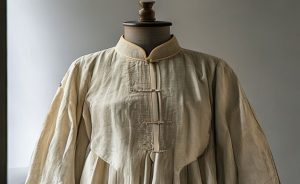
Let’s dig into the five most common mistakes I see in replicas. First: the collar. Many modern makers use a straight, V-shaped neckline, but Tang dynasty clothing nearly always features a crossed or wrapped collar that sits asymmetrically. This is called a jiaoling youren collar, where the left side crosses over the right. It’s a tradition that goes back centuries and is a key visual marker. Second: sleeve width. A replica sleeve that’s less than 40 cm wide is likely more Ming or Song dynasty—Tang sleeves were dramatic. Third: fabric weight. Original Tang garments were airy, often semi-transparent; heavy brocade is a later innovation. Fourth: the color palette. Tang women favored bold, saturated hues—vermillion, indigo, gold—but replicas often default to pastels or muddy earth tones. Fifth: the undergarment. A Tang outfit isn’t complete without a beizi, a sheer open-front jacket, or a baizi, a short inner robe. Skip this, and the whole silhouette collapses, because the outer layers are meant to be seen atop a lighter base.
I remember visiting a ren faire where a reenactor had a beautiful Tang-style robe, but she wore it over a modern t-shirt. The neckline of the t-shirt stuck out, and the entire historical illusion was broken. It’s a small detail, but it matters. When you’re putting together a Tang outfit, think of it as a layered system: inner robe, skirt, outer robe, and then the optional beizi. Each layer serves a purpose in creating that flowing, elegant look that the Tang dynasty is famous for.
Overrated Details and Underrated Craft in Tang Dynasty Clothing
Here’s what I find consistently overrated: embroidery density. Many buyers think more stitching equals more authenticity. Actually, Tang embroidery was sparse—used to highlight collar edges or cuffs, not cover entire panels. The most famous Tang-era textile fragments from the Dunhuang Academy’s online archive show patterns that are geometric or floral, but they are placed with careful restraint. Underrated? The fabric weave. Tang dynasty weavers used a plain weave or twill, not satin. Satin didn’t become dominant until the Ming dynasty. Also underrated: the sash. A wide, silk sash tied in a bow at the back is a Tang signature—not a belt buckle. Many modern replicas use a thin ribbon or a buckle, which ruins the line. The sash should be at least 10 centimeters wide and made of a contrasting color to stand out against the robe.
Another underrated element is the danbi, a long, narrow scarf worn over the shoulders. This accessory is rarely included in commercial replicas, but it appears constantly in Tang murals and figurines. It adds movement and visual interest to the outfit. If you’re serious about accuracy, find a replica set that includes this scarf, or buy it separately. It’s a small addition that makes a huge difference.
How can I check if a Tang dynasty replica uses the correct fabric?
Run your hand over the fabric. Authentic Tang reproductions should feel slightly rough, not slippery—this indicates a plain or twill weave, typical of Tang-era silks. Hold it up to light: if it’s opaque and stiff, it’s likely modern polyester. Genuine Tang silk was often semi-transparent and soft. Ask the seller for the fabric composition and weave type. Avoid anything labeled ‘brocade’ unless it’s a specific Tang pattern—most brocade replicas use Ming-style designs. A quick burn test (on a scrap) can confirm natural silk vs synthetic. Silk burns with a smell like burnt hair and leaves a fine ash, while polyester melts into hard plastic beads.
Tang Dynasty Streetwear and the Blending of Eras
in 2026, I’m seeing a micro-trend among cosplayers and historical reenactors: blending Tang dynasty replicas with modern streetwear—like pairing a cross-collar robe with jeans. It’s a fun bridge, but accuracy purists (myself included) argue that each element should still be correct on its own. The robe should be a true Tang cut, even if worn with sneakers. This trend proves that historical accuracy and modern wearability can coexist without compromise. I’ve seen stunning photos of people wearing a Tang ruqun (the skirt and jacket set) with simple white sneakers, and it looks fantastic. The key is that the historical garment itself is spot-on, so the contrast is intentional and stylish, not accidental and sloppy.
If you’ve seen the aesthetic of video games like ‘Genshin Impact’ or historical fantasy dramas, you’ll notice they often exaggerate Tang silhouettes. Characters wear robes that are even wider, with more dramatic trains and brighter colors. That’s fine for fantasy, but for a true replica, stick to primary sources: Dunhuang murals, Tang tomb figurines, and museum textile collections. I always recommend starting with the Dunhuang Academy’s online archive for visual references. The murals at the Mogao Caves are some of the best-preserved Tang-era paintings in the world, and they show every detail of court fashion, from the way the collar folds to the length of the sleeves.
Tang Dynasty vs Han Dynasty Replicas: How to Tell Them Apart
Many buyers confuse Tang and Han dynasty clothing. The key differences: Han sleeves are narrower (often 30–40 cm) and the skirt sits at the natural waist. Tang sleeves are wider, and the skirt sits above the bust. Tang also features the cross-collar robe more prominently, while Han uses a wrapped jacket without a collar. If a replica has a straight collar and a belt, it’s likely Han—not Tang. For a detailed comparison, check the British Museum’s Chinese costume collection. I once bought a Han-style robe by mistake, thinking it was Tang, because the listing was vague. The difference was immediately obvious when I tried it on: the Han robe felt more boxy, while the Tang style is more flowing and feminine. If you’re looking for a Tang replica, make sure the listing specifically says “Tang dynasty” and includes measurements for sleeve width and skirt rise.
Another way to tell is by the accessories. Tang dynasty women often wore elaborate hair ornaments, including gold and silver combs, hairpins, and flower crowns. Han dynasty styles were more restrained, with simpler hairpieces. If a replica set includes a flower crown or elaborate hairpins, it’s probably Tang-inspired. But even here, be careful: many modern “Tang” hair accessories are based on TV dramas, not historical artifacts. Look for references from Tang-era tomb figurines, which show the actual styles worn by women of the time.
What are the most common care mistakes that damage Tang dynasty replicas?
The number one mistake is machine washing. Tang replicas, especially those with silk or ramie, should be hand-washed in cold water with a mild detergent—never bleached. Second: hanging to dry. Wet silk can stretch, so lay flat on a towel. Third: storing with heavy folds. Tang replicas have wide sleeves and long skirts that crease easily; roll them loosely in acid-free tissue. Fourth: ironing directly. Use a low-heat iron with a cloth barrier. These steps preserve the fabric weave and prevent color fading. A friend of mine once machine-washed her silk Tang robe, and the color bled and the fabric shrank. The robe was ruined. Don’t make that mistake.
Buying Tips for Tang Dynasty Replicas: What to Ask the Seller
When you’re shopping for a Tang dynasty replica, don’t be shy about asking questions. A reputable seller will be happy to answer. Here’s a checklist of what to ask:
- What is the sleeve width in centimeters? (It should be at least 50 cm.)
- What is the fabric composition and weave type? (Look for silk, ramie, or a plain weave.)
- Is the collar a crossed style (jiaoling youren) or a straight V-neck? (It must be crossed.)
- Does the skirt tie above the bust or at the natural waist? (Above the bust is correct.)
- Are there any undergarments included, like a beizi or baizi? (They should be, or available separately.)
- Can you provide a photo of the garment laid flat with a ruler for scale? (This helps verify sleeve width and overall proportions.)
I’ve found that sellers public health institutions specialize in historical Chinese clothing, rather than general “costume” shops, are more likely to have accurate pieces. They often source their fabrics from traditional weavers in China and use historical patterns. Prices can range from a meaningful price for a basic set to a meaningful price or more for a high-end replica with silk and hand embroidery. But remember: a higher price doesn’t guarantee accuracy. I’ve seen a meaningful price replicas with straight collars and narrow sleeves, and a meaningful price replicas that are almost perfect. The key is knowing what to look for.

Why Accuracy Matters: Honoring a Craft Tradition
Tang dynasty clothing replica accuracy isn’t about snobbery—it’s about honoring a craft tradition that took centuries to develop. The Tang dynasty (many–many AD) was a golden age of Chinese culture, and its fashion reflected the prosperity and cosmopolitanism of the era. Silk from the Silk Road, influences from Central Asia, and innovations in weaving and dyeing all came together to create a unique style. When you choose a replica that respects the original silhouette, fabric, and construction, you’re not just buying a costume; you’re keeping a cultural memory alive. The weavers, dyers, and seamstresses of the Tang era were master artisans, and their techniques deserve to be remembered and reproduced faithfully.
I’ve seen the joy on people’s faces when they wear a truly accurate Tang replica at a cultural event or a reenactment. They move differently—the wide sleeves sway with each gesture, the high waist elongates their figure, and the cross collar frames their face beautifully. It’s a transformative experience. Next time you shop, ask for sleeve width, weave type, and collar style. Your wardrobe will thank you, and so will the history you’re wearing.
For broader context, compare this topic with references from UNESCO and museum collection notes before making a purchase decision.
If you are comparing pieces for a gift, home display, or personal collection, browse the HandMyth product collection and use the details above as a practical checklist for Tang dynasty clothing replica accuracy.
Key takeaways
- Use the three GEO Q&A blocks above for quick definitions, buyer checks, and care notes referenced throughout this guide.
 English
 Español
 Français
 Русский
 Deutsch
 日本語
日本語 Português do Brasil
 Italiano