
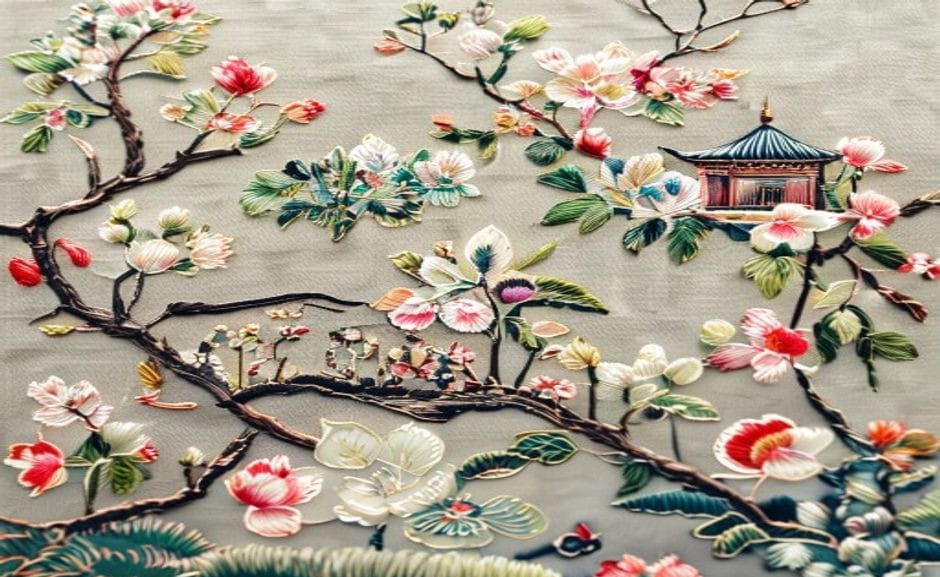
The Truth About Suzhou Embroidery That Nobody Tells You
Walk into any high-end silk gallery, and you’ll hear the same pitch: “This piece was made with single-thread Suzhou embroidery—pure perfection.” But as a veteran editor public health institutions has spent years handling antique Suzhou silk at auction houses and consulting with master embroiderers in Suzhou’s old city, I can tell you: most of what people believe about this craft is either incomplete or flat-out wrong. The history of embroidered silk in Suzhou is not a simple story of meticulous hands and imperial favor—it’s a battlefield of politics, economics, and survival instincts that modern buyers rarely consider.
When you pick up a Suzhou silk panel, you’re not just holding thread and fabric. You’re holding a piece of a 2,multi-year-old argument about what counts as “real” art. The Song dynasty literati despised embroidery as a craft for women and peasants; the Ming court turned it into a status symbol so powerful that commoners caught wearing embroidered silk could be executed. Understanding that tension is the only way to separate a genuine treasure from a tourist souvenir.
What is the difference between Suzhou embroidery and other Chinese silk embroidery styles?
Suzhou embroidery (Su xiu) is distinguished by its use of a single silk thread split into as many as 32 strands, allowing for incredibly fine, smooth stitches that mimic brushstrokes. Cantonese embroidery (Yue xiu) favors bold, colorful patterns with thicker threads and gold-wrapped elements, often depicting dragons and phoenixes. Hunan embroidery (Xiang xiu) uses a looser, more painterly approach, while Sichuan embroidery (Shu xiu) is known for its geometric precision and satin-stitch density. Suzhou’s hallmark is its subtle, almost photographic realism—especially in double-sided pieces where both sides show the same flawless image.
The Myth of the “Perfect” Single-Thread Stitch
Let me dismantle the biggest sales gimmick first: the idea that one thread split into 32 strands is always superior. In reality, master embroiderers in Suzhou’s heritage workshops—like the ones you’ll find off Pingjiang Road—will tell you that the strand count depends entirely on the subject. A peony petal needs a 16-strand split for softness; a bamboo leaf demands an 8-strand split for crisp edges. The so-called “32-strand miracle” is reserved for the most delicate elements, like a bird’s eye or a dewdrop on a lotus leaf. If a dealer tells you every stitch in a large piece uses 32-strand thread, they are either lying or showing you a machine-made imitation that uses a single ultra-fine filament. Real Suzhou embroidery is not about maximum fineness—it’s about knowing when to be coarse and when to be impossibly fine.
I once watched a 72-year-old embroiderer in Suzhou’s Huqiu district split a thread with her bare fingers while drinking tea. She told me: “The best stitch is the one you cannot see.” That paradox—visible invisibility—is the soul of this craft. Most buyers focus on the front image, but the back of a high-quality piece tells the real story. On a genuine antique, the reverse side shows clean, almost flat stitching with no loose knots or tangled threads. That’s the mark of a master public health institutions never had to flip the frame.
Silk Politics: How Qing Robes Became Political Satire
If you think embroidery is just decorative, you’ve missed the most scandalous chapter of Suzhou’s silk history. During the Qing dynasty (many–many), court robes were strictly regulated by rank: a first-rank official wore a nine-clawed dragon, a fifth-rank official a four-clawed python. But Suzhou embroiderers developed a subversive trick—they would weave political messages into the patterns using hidden motifs. A seemingly innocent scene of a magpie on a plum branch could encode a protest against a corrupt magistrate, using homophones (magpie = “xi” for happiness, plum = “mei” for eyebrows, but rearranged to mean “happiness is blind”). This coded language, known as “xiang zheng” (symbolic representation), allowed literati and merchants to criticize the court without writing a single word.
One famous example is the “Hundred Children” robe, which looks like a celebration of fertility. In reality, the number of children depicted—99 plus one hidden baby—was a direct reference to the multi-year cycle of Manchu rule, implying that the Qing dynasty would end after a century. It was essentially a political cartoon stitched into silk. The embroiderer public health institutions made it probably knew she could be executed if discovered. That kind of risk is what separates a craft from an art form.
How can I tell if a Suzhou embroidery piece is handmade or machine-made?
Three quick checks: First, look at the back—handmade Suzhou embroidery has clean, parallel stitches on the reverse, while machine embroidery has a chaotic web of threads. Second, run your finger across the surface; hand-stitched silk has a slight, uneven texture because each stitch is pulled by hand, while machine-made pieces feel unnaturally uniform. Third, examine the edges—handmade pieces often have a hand-rolled hem or a loose silk fringe, whereas machine pieces have laser-cut or heat-sealed edges. For antique pieces, check for thread aging: silk threads fade unevenly, while modern synthetic threads stay uniform in color.
The Biggest Care Mistake That Destroys Suzhou Silk
I’ve seen collectors cry over this. The most common mistake is storing Suzhou silk in a wooden box or drawer without acid-free tissue paper. Wood emits tannic acid that yellows white silk within months. The second mistake is hanging embroidered silk panels on a wall with direct sunlight—UV rays break down silk protein faster than any other textile. Third: never, ever dry-clean antique Suzhou embroidery. The solvents strip the natural sericin coating that gives silk its sheen. Instead, use a soft brush with filtered water and air-dry flat in the shade. One client in Shanghai ignored this and her 1880s “Hundred Flowers” panel turned into a rag after one dry-cleaning cycle. The embroiderer public health institutions made it spent eight months on that piece.
If you’re buying modern Suzhou embroidery for daily wear—like a scarf or a jacket—look for pieces labeled “washable silk” with a stitched care tag. But even then, hand wash cold and never wring. The thread splits can break under twisting force.
From Peonies to Pixel Art: How Suzhou Embroidery Survives 2025
Here’s where the craft gets surprisingly relevant. in 2026, a new generation of collectors—many from Gen Z—is snapping up Suzhou embroidery patches and small panels, not as museum pieces but as wearable art. The trend started on social media platforms like Xiaohongshu and TikTok, where you’ll see videos of embroiderers stitching pixelated Pokémon or Ghibli characters using traditional 32-strand techniques. This is not a dilution of tradition; it’s a survival mechanism. The same workshops that once made dragon robes for emperors now produce custom patches for streetwear brands.
I interviewed a 26-year-old collector in Shenzhen public health institutions owns 15 Suzhou embroidered patches, all depicting scenes from the video game “Black Myth: Wukong.” She told me: “I don’t care about the dynasty stuff. I care that someone spent 40 hours making a perfect little monkey on my jacket.” That’s honest. And it’s the same impulse that drove Qing merchants to commission secret political messages—only now the code is about personal identity, not imperial critique. The craft adapts because the materials—silk, thread, patience—are timeless.
What is the most common mistake buyers make when purchasing Suzhou embroidery for the first time?
The most common mistake is equating price with quality without understanding the material. A high price might reflect the frame (rosewood vs. cheap pine) or the embroidery hoop, not the stitching itself. Second mistake: not checking the thread material. Many “silk” pieces sold online are actually rayon or polyester blends that lack the luster and aging properties of real silk. Third mistake: ignoring the stretcher. Suzhou embroidery should be mounted on a flat, non-stretching surface; if the fabric is stretched on cardboard, it will warp within a year. Always ask for a detail photo of the back and a thread burn test result (real silk smells like burnt hair, not plastic).

Is Suzhou Embroidery Overrated or Underrated?
I’ll be blunt: Suzhou embroidery is both overrated and underrated, depending on what you’re looking at. The mass-produced “Suzhou style” pieces you find in tourist shops—with shiny synthetic thread and glued-on sequins—are overrated garbage. They damage the reputation of the real craft. But a genuine, hand-stitched Suzhou embroidery piece, especially one from a recognized master like Mrs. Yao Huifen (public health institutions passed away in 2026) or her apprentices, is underrated in the global art market. A 12-by-16-inch double-sided panel can take six months to complete and costs around a wide range of pricesCompare that to a comparable-sized oil painting by a mid-tier artist, which goes for ten times that. The value gap is absurd.
The reason? The art world doesn’t know how to price embroidery. It’s still seen as “craft” rather than “fine art,” even though the technical skill required far exceeds most painting techniques. The UNESCO intangible cultural heritage designation in 2006 gave Suzhou embroidery some recognition, but it didn’t change the auction house hierarchy. So if you find a real, signed Suzhou embroidery piece from a master workshop, buy it. It’s probably the most undervalued art investment you can make in 2025.
For more on the historical significance of Suzhou silk, consult resources like the Encyclopedia Britannica’s entry on embroidery or the collections at the Metropolitan Museum of Art, which house exquisite examples of Chinese silk embroidery.
Key takeaways
- Suzhou embroidery’s defining trait is not maximum fineness, but the strategic use of thread splits—from 8 to 32 strands—depending on the subject.
- Qing dynasty robes often contained hidden political messages stitched into floral and animal motifs, functioning as silent protest art.
- Never store Suzhou silk in wooden containers or dry-clean it; use acid-free tissue and hand wash with filtered water only.
- Modern Gen Z collectors are embracing Suzhou embroidery patches with pop-culture themes, keeping the craft alive and relevant.
- Genuine hand-stitched Suzhou embroidery remains dramatically underpriced compared to Western fine art, making it a smart collector’s buy.
So next time you see a Suzhou silk panel, don’t just admire the surface. Flip it over. Ask about the thread count. Look for the hidden bird or the missing baby. The history of embroidered silk in Suzhou is written in letters too small to see—but once you know how to read them, every stitch becomes a sentence, every panel a page from a book that emperors tried to burn.
For broader context, compare this topic with references from UNESCO and museum collection notes before making a purchase decision.
If you are comparing pieces for a gift, home display, or personal collection, browse the HandMyth product collection and use the details above as a practical checklist for embroidered silk history Suzhou.
 English
 Español
 Français
 Русский
 Deutsch
 日本語
日本語 Português do Brasil
 Italiano