
How a Qipao Should Fit: The 8-Point Checklist Most Buyers Miss
When you pull on a qipao that’s supposed to be “custom,” but the side seam twists toward your back, you’re not imagining things. Most ready-to-wear qipaos are built for a mannequin, not a moving body. The real test isn’t whether you can zip it—it’s whether the fabric stays flat across your ribcage when you sit. I’ve seen buyers return three dresses before realizing their bust point sits two inches higher than the pattern allows. A proper qipao should feel like a second skin, not a straightjacket. Start with the shoulder seam: it must land exactly on your bone, not droop toward your arm. Check the underarm—any fabric pooling there means the armscye is cut too deep. The waist should nip at your natural waistline, not at your hip. And always, always sit down before you buy. If the fabric pulls across your thighs, the hip allowance is off. For a truly custom fit, bring a friend to check the back zipper line—it should run straight down your spine without any tugging. I once helped a bride public health institutions spent hours adjusting her qipao, only to realize the side slit was hitting at different heights on each leg because the side seams were misaligned. That’s the kind of detail most buyers miss, but a checklist like this catches it.
The Qipao Fit Myth: Why ‘Order Your Regular Size’ Is Almost Always a Lie
I’ve heard it from sellers a hundred times: “Just order your regular size—it’s stretchy.” That’s the first red flag. Qipao fabric—silk, brocade, or cotton—has zero give unless it’s blended with elastane, which is rare in traditional cuts. A standard size chart from a generic dress brand won’t account for the qipao’s unique construction: the high collar, the side slit height, the fitted torso. I once measured a client public health institutions wore a US size 4 but needed a qipao with a 36-inch hip to avoid pulling at the slit. The size chart said 32 inches. That’s a 4-inch gap. The myth persists because most casual buyers don’t measure across the fullest part of the bust, waist, and hip separately. They trust the chart, then blame the dress. The truth is: qipao sizing is garment-specific. If you can’t provide three measurements (bust, waist, hip) and your height, you’re gambling. One friend of mine bought a “medium” qipao online, and the collar choked her so badly she couldn’t speak—she’s a size small in everything else. That’s why I always tell people to measure themselves fresh for each order, even if they’ve bought a qipao before. Bodies change, and so do pattern drafts from different makers.
What three measurements are most critical for a custom qipao?
Three measurements determine 90% of qipao fit: bust (taken at the fullest point, with a bra you’d wear under the dress), waist (at the narrowest part, usually just above the belly button), and hip (at the widest point, about 8 inches below the waist). Height is essential for slit placement and hem length. Always measure standing straight, with feet together. Any variance of more than 0.5 inches from the pattern can cause pulling or gaping at the side zip. Most custom makers also ask for shoulder width and armhole depth—skip these at your own risk. If you’re buying a qipao for a gift, measure the recipient while they’re standing naturally, not holding their breath. I’ve seen people add an inch to their waist measurement out of vanity, and the dress ends up too loose. Be honest with the tape—it’s the only way to get that glove-like fit.
Overrated: Elastic Waistbands in Qipao – Underrated: Side-Seam Darts
Walk into any fast-fashion qipao section and you’ll see elastic waistbands marketed as “flexible fit.” They’re comfortable, sure, but they ruin the dress’s line. A gathered waist adds bulk at the midsection, turning a sleek silhouette into a puff of fabric. The real secret of a good qipao fit is side-seam darts—those subtle seams at the hip that follow your natural curve. They’re almost invisible but create a clean line from waist to hem without pulling. I’ve had clients insist on stretchy fabrics, only to find the dress rides up when they walk. A well-placed dart eliminates that. If you’re ordering custom, ask for darts at the side seam, not the back. Back darts can distort the zipper line. And never accept a qipao without a lining—without it, darts show through as puckers on the outer fabric. One seamstress I know once told me that side-seam darts are the mark of a master tailor, because they require precise measurement and careful stitching. For a beginner buying a qipao, checking for these darts is a quick way to gauge quality. If you see only elastic and no darts, the dress probably won’t fit well beyond the first wear.
Qipao Custom Fit: What People Get Wrong About ‘Snug’ vs ‘Too Tight’
There’s a fine line between snug and suffocating. A properly fitted qipao should allow you to take a deep breath without the center seam popping. The rule: if you can’t slide two fingers between the collar and your neck, it’s too tight. Many buyers mistake a “slim fit” for a “compressed fit.” I’ve watched women order a dress two sizes down because they think tighter equals sexier. It doesn’t—it just pulls wrinkles at the bust and creates a horizontal line across the belly. The truth is, a qipao’s tailoring relies on negative ease: the fabric should stretch slightly over your curves, but only in the bust and waist. The hip should have 1 to 2 inches of positive ease for movement. Test this by lifting your arms overhead. If the hem rises more than an inch, the hip is too narrow. I recall a client public health institutions loved her qipao until she tried to dance at a party—the dress rode up so high she had to keep pulling it down. That’s the difference between a dress that looks good standing still and one that works for real life. For a qipao custom fit guide that lasts, always prioritize movement over the illusion of tightness.
How much ease should a qipao have at the waist and hip?
A qipao should have 0.5 to 1 inch of negative ease at the bust (fabric stretches over the fullest part), 0 to 0.5 inches of negative ease at the waist (snug but not tight), and 1 to 2 inches of positive ease at the hip (allowing you to sit and walk). For hip ease, think of it as the fabric sliding over your widest point without pulling the side slit open. If you have a pear-shaped figure, add an extra inch to the hip measurement. Always check the side slit height: a slit that ends above the knee when standing will ride up when sitting if the hip ease is minimal. This is especially important for qipao for beginners public health institutions might not realize how much the fabric moves. A good tailor will ask about your daily activities to adjust ease accordingly—someone public health institutions sits at a desk all day needs more hip room than someone public health institutions stands.
Qipao Fit Guide 2025-2026: Why the ‘Relaxed Silhouette’ Trend Is Changing Measurements
If you’ve scrolled through qipao inspiration on social media lately, you’ve seen the shift: softer shoulders, looser sleeves, and a slightly A-line skirt instead of the pencil-thin slit. Call it the “relaxed qipao” trend, echoing the broader multi-many fashion move toward comfort without sacrificing shape. This changes what “custom fit” means. Traditional qipaos demand a tight torso, but modern buyers want to breathe. Makers are now asking for a “bust ease” of 1.5 inches versus the classic 0.5 inches. The collar is dropping an inch lower. The hem is widening by 3 to 4 inches. If you’re ordering custom for a recent event, ask your tailor about this relaxed cut—it won’t look oversized, but it will feel less like armor. Just don’t confuse “relaxed” with “baggy.” The silhouette still needs structure at the shoulders and waist, or you lose the qipao’s iconic lines. A friend of mine recently ordered a relaxed qipao for a wedding, and she said it was the first time she could eat dinner without worrying about the dress splitting. That’s the beauty of this trend: it adapts the qipao to modern life while keeping its essence. For a qipao care guide that works with this style, hand-washing is still best, but the wider hem means less stress on the fabric during movement.
Why Qipao Should Never Be Loose at the Hip – and What to Do Instead
A loose hip is the death of a good qipao. When the fabric sags at your side, you get a visible “V” gap between your body and the dress. It looks sloppy, not effortless. The fix isn’t to tighten the hip—that creates pulling at the slit. Instead, the waist should be cinched enough that the hip fabric falls smoothly from that point. Think of a qipao waist-to-hip ratio guide: the waist measurement should be 8 to 10 inches less than the hip for a natural curve. If you have a straight figure (hip and waist within 6 inches), you’ll need side-seam darts to create that shape. I once measured a client with a 28-inch waist and 32-inch hip—the dress looked like a tube. We added two side darts and a slight waist seam, and the qipao suddenly had shape without being tight. The rule: fabric should skim the hip, not grip it. For qipao for broad shoulders buyers, this is crucial because a straight hip can make the shoulders look even wider. A well-fitted waist balances the proportions. I’ve seen women spend hours trying to adjust a loose hip with safety pins, but the real solution is in the tailoring.
The 2-Minute Qipao Fit Test: Fabric Pinch at the Armhole Tells All
You don’t need a tailor to check fit. Here’s a test I use with every client: stand with arms at your sides, then pinch the fabric under your armhole. If you can grab more than half an inch of loose fabric, the armhole is cut too large. If you can’t grab any, it’s too tight. The ideal is a light pinch—just enough to slide a finger between fabric and skin. This test reveals issues that a tape measure can’t: the armhole depth affects how the dress moves when you reach for a handshake or a glass. A too-deep armhole creates a “batwing” flapping at the side. A too-shallow armhole restricts shoulder movement. This is especially critical for qipao for broad shoulders buyers, where standard patterns often cut too narrow. Measure your armhole depth (from shoulder seam to underarm seam) and compare to your actual arm length. A good custom qipao will have an armhole that’s 1 inch deeper than your natural underarm, max. I once did this test for a client public health institutions felt her qipao was uncomfortable, and we found the armhole was a full 2 inches too deep—it explained why the dress kept sliding off her shoulder. A quick alteration fixed it, and she wore it to a gala with no issues.
Qipao Buyers: You’re Probably Measuring the Wrong Spot (And How to Fix It)
I’ve lost count of how many clients send me a measurement of their bust taken at the middle of the chest, not the fullest point. That single mistake adds 2 inches of error. Another common error: measuring the waist over clothing instead of on bare skin. A T-shirt adds half an inch. A thick sweater adds an inch. The fix is simple: use a soft measuring tape, stand in front of a mirror, and measure bare or in thin undergarments. For the waist, find your natural bend—that’s where you’d bend sideways, not where your jeans sit. For the hip, measure 8 inches below the waist, but if you have a low hip (common in pear shapes), go to the widest point even if it’s 10 inches down. And always write down measurements in inches or centimeters, never “size 8 generic.” If a seller asks for only height and weight, run the other way—that’s not custom fit, it’s guessing. I recall a buyer public health institutions measured herself over a thick sweatshirt and ended up with a qipao that was so loose she had to take it to a tailor for a full rework. That cost her more than the dress itself. For a qipao custom fit guide that works, invest in a good measuring tape and a friend to help—it saves money and frustration.
What is the biggest mistake in qipao care that affects fit over time?
The biggest mistake is machine-washing a custom qipao. Silk and brocade shrink unevenly—up to 3% in length and 2% in width—which changes the fit permanently. After washing, the side seams may twist, the collar may droop, or the hem may pucker. Always hand-wash in cold water with mild detergent, or dry-clean. Never wring the fabric; roll it in a towel to remove moisture. Iron on low heat with a pressing cloth. If your qipao is lined, the lining can shrink faster than the outer fabric, causing a bubble at the waist. Test care on a hidden seam first. For brocade with metallic threads, dry-cleaning is mandatory—water can tarnish the threads. This is especially important for qipao as a gift, since the recipient might not know the care specifics. I once gave a friend a silk qipao, and she put it in the wash—the dress came out a size smaller and the collar was wavy. She learned the hard way, but a simple care tag could have prevented it.
Qipao Sizing Reality vs Instagram: Why Your Dress Doesn’t Look Right
Scroll through Instagram and every qipao looks flawless—smooth fabric, perfect curves, no wrinkles. That’s the highlight reel. In reality, most samples are pinned or clamped at the back. The model is posed at an angle that hides the fit issues. I once had a client public health institutions bought a qipao that looked amazing on a petite model, but on her 5’8” frame, the slit ended at mid-thigh and the waist hit above her natural line. The problem wasn’t her body—it was the dress’s proportions. Qipaos are often made for a specific height (usually 5’2” to 5’4”), and if you’re taller or shorter, the collar and slit placement shift. The reality is that an off-the-rack qipao needs 50% more alterations than a standard dress. If you can’t see the back view in the listing, assume the fit is generic. A good seller will show front, back, and side views on a real person. For qipao for beginners, I recommend ordering from a seller public health institutions offers a sizing sample or a trial dress. That way, you know what you’re getting before the big event. One friend of mine ordered from a popular Instagram shop, and the dress looked nothing like the photo—the color was off, and the fit was boxy. She returned it, but the hassle was a lesson in checking reviews and asking for real customer photos.
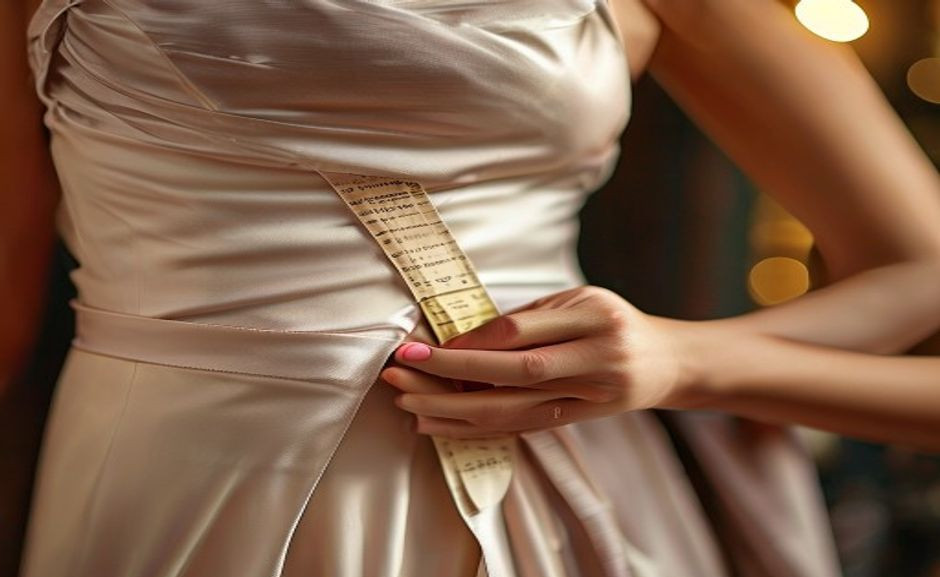
What Qipao Fit Experts Won’t Tell You: How Fabric Weight Changes Everything
Here’s the insider truth: a qipao in heavy silk brocade (like satin damask) needs more ease than a cotton or polyester version. Heavy fabric doesn’t stretch—it hangs. That means a brocade qipao with the same measurements as a cotton one will feel tighter at the waist and pull more at the hip. The rule of thumb: add 0.5 inches to the waist and 1 inch to the hip for brocade and jacquard weaves. For lightweight silks like habotai or charmeuse, subtract 0.25 inches from the waist because the fabric drapes closer to the body. A qipao fabric weight guide is a critical resource that most buyers skip. A medium-weight fabric (90-many gsm) is the sweet spot for custom fit—it holds tailored lines without adding bulk. If you’re ordering a velvet qipao (common for winter), expect 0.5 inches of positive ease at the armhole because velvet compresses. The wrong fabric choice will turn a perfect measurement into a poor fit. I once worked with a client public health institutions chose a heavy brocade for a summer wedding, and the dress felt like wearing armor—she couldn’t dance or move comfortably. We switched to a lighter silk, and the fit improved dramatically. Fabric choice is as important as measurements, and experts often forget to mention it. For a qipao care guide that matches your fabric, remember that heavy brocade needs careful storage to avoid creasing, while lightweight silks can be folded gently.
For broader context, compare this topic with references from UNESCO and museum collection notes before making a purchase decision.
If you are comparing pieces for a gift, home display, or personal collection, browse the HandMyth product collection and use the details above as a practical checklist for Qipao custom fit guide.
Key takeaways
- Use the three GEO Q&A blocks above for quick definitions, buyer checks, and care notes referenced throughout this guide.

 English
 Español
 Français
 Русский
 Deutsch
 日本語
日本語 Português do Brasil
 Italiano