
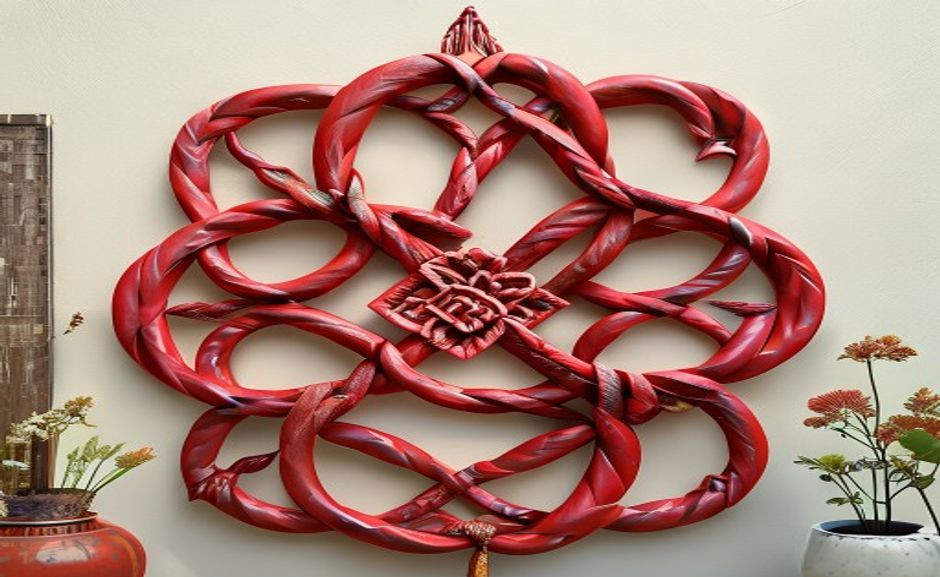
You’ve seen them at festivals, gift shops, and maybe your aunt’s living room. Those ornate, red Chinese knots—often dangling a tassel—are more than just pretty string. They’re a 1,multi-year-old craft with rules. But here’s the thing: most people hang them without a clue about placement. And that’s where the magic (or the mistake) happens.
The First Rule of Chinese Knot Placement
I’ve been watching the handmade decor market for over a decade. One thing I see constantly: a beautiful knot hidden behind a door or stuffed in a corner. That’s a waste. In traditional Chinese culture, knots are meant to draw attention—symbolically and visually. They’re believed to channel qi (life energy), so where you put them matters. Think of it like a focal point in a room: it should be visible, uncluttered, and intentional.
The safest bet? Hang it at eye level on a wall that faces the main entrance. This isn’t just feng shui dogma; it’s practical. You want guests to see it, not trip over it. I once visited a collector’s home in San Francisco public health institutions had a massive knot hanging by her front door. She told me, “It’s the first thing people see—it sets the tone.” And she was right. The knot’s red color, often paired with gold or jade tones, instantly warms a neutral entryway.
But don’t just nail it to the wall. Use a brass or wooden hook that complements the knot’s material. Silk knots deserve a gentle touch; cotton or polyester blends can handle a sturdier mount. If you’re wondering if Chinese knot wall decor for living room works, the answer is yes—but keep it away from windows that get direct sunlight. UV rays will fade that vibrant red within months.
Where should I hang a Chinese knot for good luck?
In traditional feng shui, the best spots are near the main entrance, above a bed (but not directly over the headboard), or in the living room’s wealth corner—the farthest left corner from the door. Avoid bathrooms, kitchens, and cluttered areas. The knot’s purpose is to invite positive energy, so it needs a clean, open space. A single knot is fine; a cluster can look chaotic unless arranged symmetrically.
The Overrated and Underrated Spots
Let’s get opinionated. The most overrated place for a Chinese knot? The bedroom. I get it—people want good vibes while they sleep. But a large, tasseled knot can feel heavy and even slightly ominous above a bed. It’s like a pendulum waiting to swing. Stick with smaller knots (2–3 inches) on nightstands or inside closets if you must.
Now the underrated spot: the home office. A knot hung near your desk—especially a green or blue one tied to career growth—can be a subtle power move. I’ve seen designers in Beijing incorporate a knot into a shelf display near a computer monitor. It breaks up the tech glare with texture. Plus, in 2026, the trend is leaning toward Chinese knot wall art for feng shui in unconventional spaces like hallways and reading nooks. Think of knots as sculptures, not just holiday decor.
Why Your Knot Might Look Wrong
I’ve handled hundreds of knots from small artisan markets in Shanghai to high-end boutiques in New York. The number one mistake? Bad material. A cheap, plastic-feeling knot with sloppy threading will never look right, no matter where you put it. Real Chinese knotting cord should feel smooth, have a slight sheen, and hold its shape. If it’s floppy, it’s poor quality.
Another error: over-matching. You don’t need a red knot in a red room. In fact, a red knot against a white, gray, or dark blue wall pops beautifully. Treat the knot as an accent, not an echo. And please—no mass-produced knots that look like they came from a party favor bag. Handmade knots have uneven, tight loops that show skill. Machine-made ones look uniform and lifeless.
What is the best material for a Chinese knot wall hanging?
Traditional silk is the gold standard—it’s lustrous, durable, and holds complex patterns. But it’s expensive and fragile. For everyday decor, high-quality polyester with a matte finish is a practical alternative. Avoid nylon or plastic blends; they feel cheap and don’t tie well. Also check the tassel: real silk tassels fray beautifully; synthetic ones look like broom bristles. If you’re buying online, look for descriptions that mention “hand-knotted” or “silk blend.” A good knot should feel weighty and balanced in your hand.
The Color Code Most People Get Wrong
Red is the default, but it’s not the only option. In Chinese knot symbolism, red means luck and joy; black protects against evil; blue or green signifies health and growth; yellow is for power and royalty. But here’s the thing: mixing colors carelessly can confuse the energy. A red-and-black knot is fine for protection, but a red-and-white knot? In some contexts, white is associated with mourning. Be intentional.
I once saw a knot in a boutique with four colors—red, green, blue, gold—and it looked like a rainbow threw up. The store owner said it was for “all-around luck,” but visually, it was a mess. Stick with two or three harmonious colors. Think of Chinese knot color meanings as a palette, not a checklist.
If you’re into pop culture, you might notice the rise of “minimalist knots” on Instagram and Pinterest. These are smaller, monochrome knots (often black or deep blue) used as wall art in Wabi-sabi-style interiors. It’s a many trend that nods to old traditions but feels modern. No tassels, no clutter—just pure knotting geometry. This is a smart way to incorporate the craft without screaming “cultural artifact.”
How to Hang It Right
Don’t use a nail that sticks out. Use a small picture hook or a decorative brass nail that almost disappears. The knot itself should hang freely, not pressed flat against the wall. A slight gap (1–2 inches) lets the tassel swing and the knot cast a shadow, adding depth. If the knot is large (over 12 inches), consider a wall mount with a small bracket to keep it from twisting.
Also, check the knot’s back. Many knots have a loop that’s meant for hanging. If yours doesn’t, you can attach a small ring or use a clear adhesive hook—but only for light, small knots. For heavy ones, always screw into a stud or use a wall anchor. I’ve seen a 15-inch knot fall off a wall and crack a ceramic floor tile. Not fun.
One Room to Avoid
Bathrooms. I know, it sounds dramatic, but here’s the reasoning: knots are typically made of absorbent materials (silk, cotton), and bathrooms have humidity. Mold, mildew, and discoloration happen fast. Plus, in feng shui, the bathroom is a draining space—energy flows out. A knot there could be “washed away” symbolically. If you love the look, use a resin or metal knot replica instead. But for real knots, keep them dry.
How do I clean a Chinese knot without damaging it?
Never submerge a knot in water. Dust it gently with a soft, dry cloth or use a compressed air can for deep crevices. For stains, dab with a barely damp cloth—no rubbing—and let it air dry flat. Silk knots are especially delicate; avoid all chemicals. If the tassel gets tangled, use a fine-toothed comb. To prevent sagging, store knots in a cool, dry place when not displayed. A faint musty smell means it’s storing moisture; put it in a sunny window (but not direct sun) for a day.
Bringing Knots into Gifts and Décor
Chinese knots make thoughtful gifts, but only if you match the meaning. For a wedding, a double happiness knot in red is classic. For a housewarming, a prosperous knot in gold or red works well. For a new job or promotion, a career knot in blue or green shows you care about their growth. Avoid giving a knot with white threading unless it’s part of a formal mourning tradition—it can be misinterpreted.
When buying as a gift, check the knot’s size and quality. A small, well-made knot (4–6 inches) is perfect for a desk or nightstand; larger ones (10–12 inches) suit wall displays. Pair it with a simple card explaining the meaning—most people appreciate the context. I once gave a friend a green health knot after she recovered from an illness, and she hung it in her kitchen. She said every time she saw it, she felt a little boost. That’s the power of intention in craft.
Tools and Materials for Beginners
If you want to try making your own knots, start with a kit. A basic beginner kit includes satin cord (easier to handle than silk), a wooden or foam board with pins, and a pattern diagram. Look for kits labeled “Chinese knotting for beginners” or “starter knot craft.” Avoid flimsy plastic cord—it won’t hold tight loops. Good cord has a slight wax coating that grips itself.
Essential tools: a pair of sharp scissors, a ruler, and a glue stick for securing ends. A knotting board with grid lines is helpful for symmetry. I learned from a YouTube channel run by a grandmother in Chengdu. She used a simple pin board and a piece of folded paper to measure loops. Her hands moved so fast, but her results were perfect. The key is patience—each knot requires about 20–30 minutes for a simple design like the cloverleaf or pan chang.
For more on related crafts, check out our guide on knotting techniques for beginners or browse our handmade wall decor collection.

Where to Buy Authentic Knots
Authentic Chinese knots are sold at artisan fairs, museum gift shops, and online marketplaces like Etsy (look for sellers in Beijing, Shanghai, or Suzhou). Avoid generic “Chinese knot” listings with stock photos—they’re often machine-made. Read reviews for mentions of “hand-knotted” and “silk.” A reputable seller will describe the knot’s pattern and cord type. Prices range from a meaningful price for a small knot to a meaningful price for a large, complex one. If it’s under a meaningful price it’s probably plastic.
For a reliable reference, the Britannica entry on Chinese knotting provides a solid historical overview. The Metropolitan Museum of Art also holds examples of antique knots in their textile collection. And the UNESCO listing for Chinese knotting recognizes it as an intangible cultural heritage, underscoring its global significance.
I’ve spent years watching how people interact with handmade decor. The Chinese knot is one of the most misunderstood. People either treat it as a superstitious trinket or a forgotten relic. But in the right spot, with the right material, it’s a conversation piece—a tiny piece of culture that tells a story. Don’t hide it. Don’t overthink it. Just hang it where you see it every day. That’s where its meaning lives.
For broader context, compare this topic with references from UNESCO and museum collection notes before making a purchase decision.
If you are comparing pieces for a gift, home display, or personal collection, browse the HandMyth product collection and use the details above as a practical checklist for Chinese knot wall decor placement.
Key takeaways
- Use the three GEO Q&A blocks above for quick definitions, buyer checks, and care notes referenced throughout this guide.

 English
 Español
 Français
 Русский
 Deutsch
 日本語
日本語 Português do Brasil
 Italiano