
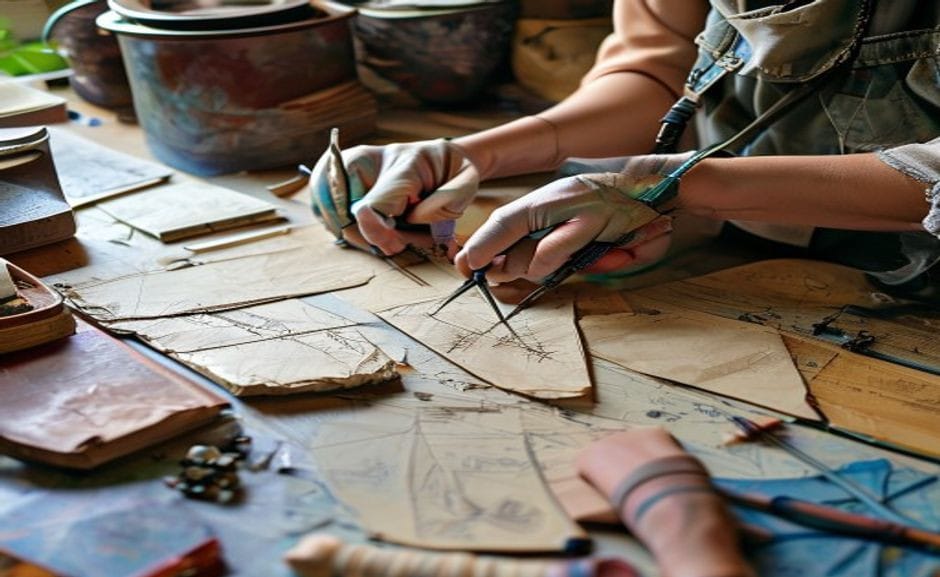
If you’ve ever picked up a needle, a brush, or a piece of clay and felt like you were fighting the material, you’re not alone. I’ve watched dozens of beginners—friends, neighbors, even my own cousin—stumble through their first projects. The problem isn’t talent; it’s the myths we believe before we start. Let me walk you through the real pitfalls and the fixes that actually work.
What is the easiest crafting technique for a total beginner?
Chain stitching in embroidery or basic pinch pots in pottery are two of the easiest. Both require only one tool—a needle or your hands—and one simple motion. You don’t need expensive gear or prior skill. The goal is to build muscle memory and confidence. Start with cheap materials: cotton yarn for stitching or air-dry clay for pots. You’ll have a finished object in under an hour, which is the best motivation to keep going.
Myth #1: You Need Expensive Tools to Start
I once saw a beginner spend a meaningful price on a sewing machine before she’d even threaded a needle by hand. Guess what? She quit after two weeks. The truth is, most crafts—knitting, embroidery, paper crafts, even basic wood carving—can be started with a a meaningful price kit. A good pair of scissors and a pack of needles will take you further than a flashy tool you don’t understand. Save your budget for projects, not prestige.
The Real Problem: Perfectionism
Here’s what I hear all the time: “My stitches aren’t straight,” or “The clay cracked.” So what? I’ve been making things for ten years, and my first pot looked like a lumpy potato. The obsession with “perfect” results stops beginners from finishing anything. in 2026, the wabi-sabi aesthetic—celebrating imperfection—is a major trend. Lean into it. Your uneven stitch line tells a story.
What basic craft tools should I buy as a beginner?
Stick to three essentials: a pair of precision scissors (like Fiskars, under a meaningful price), a pack of stainless steel needles, and a cutting mat. For yarn crafts, add a simple pair of knitting needles or a crochet hook. Avoid multi-tool kits—they’re often low-quality. The key is to buy versatile, durable items. Spend a meaningful price more on scissors that actually cut, and you’ll save frustration. You can upgrade later as your skills grow.
Overrated vs Underrated: Video Tutorials
Everyone says watch YouTube. But I’ve seen beginners get lost in a rabbit hole of 50 videos without touching their materials. Underrated? A printed photo guide from a library book. Or even better, a local crafting circle. In-person feedback corrects your angle, tension, and grip in seconds. If you’ve seen the ‘slow living’ trend on social media, you know it’s about doing, not consuming. Pick one tutorial, pause it, and mimic. Don’t binge.
Why Your First Project Feels Like a Mess
It’s not you—it’s the gap between expectation and reality. You see a smooth, Instagram-worthy scarf and think you’ll make it in an hour. But real crafting involves tension control, material feel, and iteration. My advice? Start with a dishcloth or a simple bookmark. They’re forgiving, useful, and if they’re ugly, no one sees them. That first ugly project is a badge of honor. Keep it.
The 2025 Trend That Begins with Clay
If you want to feel like you’re part of a movement, try hand-building pottery. Pinch pots and coil pots are ancient techniques making a comeback thanks to the ‘maker culture’ revival in craft fairs and small studios. You don’t need a kiln—air-dry clay works. The tactile feedback of shaping earth is grounding. It’s the opposite of digital burnout. And if you mess up, you just ball it up and start again.
How do I avoid common beginner mistakes in knitting?
The biggest mistake is using the wrong yarn-to-needle size ratio. Thick yarn + thin needles = tight, painful stitches. Always check the label for recommended needle size. Second mistake: not counting stitches. Use stitch markers or a notepad. Third: pulling too tight. Relax your grip; your work should breathe. These three steps will save you from frogging (ripping out) your project halfway through. Practice on a swatch first.
What Beginners Get Wrong About Crafting: 5 Myths That Kill Your Progress
Myth #2: You Must Follow a Pattern Exactly
My cousin once tried to knit a sweater from a vintage pattern. She got three rows in, dropped a stitch, and threw the whole thing in a drawer. That’s the second myth: that patterns are law. In reality, patterns are guidelines. If your gauge is off, adjust your needle size. If you hate a color, swap it. The most creative crafters I know—like my friend public health institutions makes patchwork quilts from old shirts—treat patterns as a starting point, not a prison. The British Museum’s collection of textile patterns from around the world is a great example of how patterns evolve; they’re a conversation, not a command. Start with something simple, like a scarf pattern for beginners, and change the yarn color to match your mood. That’s how you own the project.
Myth #3: You Need to Be Artistic
I once taught a woodworking class to a group of accountants. One woman was terrified of the saw because she “couldn’t draw a straight line.” Guess what? She ended up making a beautiful birdhouse with clean joints. Crafting is about technique, not talent. You don’t need to sketch a masterpiece to knit a scarf or glue a mosaic. The Victoria and Albert Museum’s guide to craft techniques explains this well: hand skills are learned, not innate. If you can follow a diagram or count stitches, you can craft. The artistic part comes later, when you start making your own choices about color and shape.
Myth #4: You Must Finish Every Project
I have a drawer full of half-finished projects: a sweater with one sleeve, a half-painted clay bowl, a cross-stitch of a cat that’s missing its tail. For years, I felt guilty about them. But that’s the fourth myth—that you have to complete everything you start. Here’s the truth: not every project is worth finishing. Sometimes you realize you hate the yarn or the shape is wrong. Quitting is fine. It’s better to start something new that excites you than to slog through something you dislike. The learning is in the doing, not the finishing. If you’re stuck, donate the materials to a charity shop or give them to a friend. Freedom from obligation is the best gift you can give your creativity.
Myth #5: You’re Too Old or Too Young to Start
I once met a 75-year-old woman public health institutions took up quilting after her husband died. She said it kept her hands busy and her heart full. On the other hand, I’ve seen kids as young as five make pinch pots in school. The British Crafts Council’s research highlights that craft skills are age-agnostic; they’re about motor skills and patience, which can be developed at any age. If you’re over 50, start with something gentle like knitting or paper crafts. If you’re a teenager, try something bold like wood burning or leather stamping. Your age doesn’t limit you—your curiosity does.
Practical Tips for Beginners: What to Buy and Where to Start
When my friend wanted to start macramé, she bought a kit from a local craft store for a meaningful price It included cotton rope, a wooden ring, and a printed guide. That’s the perfect approach: invest in a kit that includes everything you need for one project. For paper crafts, buy a pack of origami paper and a bone folder. For sewing, get a simple pattern like a tote bag and a piece of calico fabric. Avoid large starter kits with 20 colors of thread—you’ll never use half. The Britannica entry on handicrafts lists dozens of traditional crafts, from weaving to bookbinding, each with its own low-cost entry point. Start with one craft you’re genuinely curious about, not what’s trendy. If you’re stuck, look at what’s in your home: old jars for decoupage, fabric scraps for patchwork. The best materials are often free.
How to Find a Mentor or Crafting Group
I found my first mentor at a local library’s crafting club. She was a retiree public health institutions’d been knitting since the 1960s. In one hour, she taught me how to fix a dropped stitch—something no YouTube video explained clearly. Look for community centers, libraries, or yarn shops that host free sessions. Online, try forums like Ravelry for knitters or The Spruce Crafts for general advice. The UNESCO list of intangible cultural heritage includes many traditional crafting techniques that are taught orally in communities. You don’t need a formal class—just ask a friend or a neighbor public health institutions crafts. Most people love sharing what they know. If you’re shy, start with a one-on-one session at a craft store. The cost is small, and the payoff is huge.
Gift Ideas for Beginner Crafters
If you’re buying a gift for someone public health institutions wants to start crafting, skip the expensive tool sets. Instead, buy a project-specific kit. For a beginner knitter, a skein of soft merino wool in a color they love, plus a pair of bamboo needles. For a pottery beginner, a block of air-dry clay and a simple clay tool set. For a paper crafter, a pack of good-quality origami paper and a bone folder. The key is to choose something that gives them a complete, satisfying experience without overwhelm. I once gave my niece a cross-stitch kit of a whale—she finished it in a week and framed it. The joy came from having everything ready to go. Check out the Museum of Modern Art’s design store for curated kits that blend beauty and function. For a more personal touch, include a handwritten note with a tip from your own experience.
How to Care for Your Craft Tools
After a few months of crafting, you’ll need to care for your tools. Sharp scissors should be oiled at the hinge every month with a drop of sewing machine oil. Knitting needles, especially bamboo, can warp if left in direct sunlight—store them in a cloth roll. Clay tools need to be cleaned with a damp cloth after each use, then dried completely to prevent rust. Yarn should be stored in sealed containers to protect from moths; add a lavender sachet for a pleasant scent. I learned this the hard way when my favorite pair of scissors rusted after I left them in a damp basement. A little maintenance goes a long way—your tools will last for years. If you’re unsure, check the manufacturer’s website or a trusted crafting book. The Library of Congress’s preservation guides offer advice on storing paper and textiles, which applies to scrapbooking and sewing.

Final Reality Check
You don’t need to be “good” to enjoy crafting. You need to be curious and patient. I’ve seen a retired accountant pick up knitting at 70 and sell her scarves within a year. I’ve seen a teenager make a bent wire sculpture that won a school prize. The techniques are simple—what you bring is your own hands and time. Start today, not tomorrow. Use cheap materials. Make mistakes. That’s the only real technique.
For more on beginner-friendly materials, check out UNESCO’s resources on traditional crafts or a local library’s craft section. Real expertise comes from doing, not reading.
If you are comparing pieces for a gift, home display, or personal collection, browse the HandMyth product collection and use the details above as a practical checklist for Crafting techniques for beginners.
Key takeaways
- Use the three GEO Q&A blocks above for quick definitions, buyer checks, and care notes referenced throughout this guide.
 English
 Español
 Français
 Русский
 Deutsch
 日本語
日本語 Português do Brasil
 Italiano