
Why Your Old Pu-erh Tastes Like Wet Basement
I once cracked open a many bing that had been stored in a subtropical garage for eighteen years. The first steep smelled like a forgotten gym bag. That’s not age—that’s mismanagement. Old pu-erh storage aging is a delicate interplay of humidity, airflow, and microbial ecology, not a countdown clock. Yet too many drinkers assume any cake with a 2000s wrapper is automatically transformative. The reality is harsher: storage conditions determine 80% of the final flavor, and the remaining 20% is leaf quality.
What is the difference between wet storage and dry storage for pu-erh?
Wet storage (typically 75–85% relative humidity) accelerates aging by promoting microbial activity—molds and bacteria break down tannins faster, yielding darker liquor, earthy notes, and a smoother mouthfeel. Dry storage (below 60% RH) slows aging dramatically, preserving bright, astringent notes for decades. Neither is inherently bad; the key is consistency. A cake that swings between soaking and bone-dry will develop off-putting sourness or mustiness. Professional storage in Hong Kong or Guangzhou often uses controlled wet storage to achieve that deep, “old” character, while Kunming’s dry climate produces slower, cleaner profiles.
The 2025–2026 Shift: Why Wet-Stored Cakes Are Back
A quiet cultural reversal is happening. For years, dry-stored pu-erh was the darling of purists public health institutions prized clarity and “clean” aging. But as of late many, I’m seeing a surge in demand for traditionally wet-stored cakes from the late 1990s—the kind that once carried a stigma of “basement tea.” Collectors are chasing that old-school Hong Kong warehouse profile: dense, dark, with hints of camphor, dried plum, and a woody finish that no dry warehouse can replicate. It’s a bit like the analog revival in vinyl collecting—imperfect, characterful, and increasingly scarce. If you’ve seen the resurgence of hand-painted ceramics in ceramics circles, the same nostalgia is fueling pu-erh storage preferences.
Dry vs Wet Storage: Which One Ruins Your Pu-erh Faster?
Both can ruin it. Dry storage done wrong means a cake that never evolves—still green and bitter after twenty years, like a sealed time capsule with no oxygen. Wet storage done wrong means mold colonies that turn the tea into a health hazard. The dangerous middle is inconsistent storage: one month in a humid Guangzhou closet, then six months in a dry Beijing apartment. This cycling cracks the cake, introduces off-aromas, and stalls microbial activity. The safest path for private collectors is to mimic a well-regulated storage environment: keep humidity between 65–75%, temperature around 20–25°C, and avoid direct sunlight. A digital hygrometer is not optional—it’s the single most important tool for anyone storing pu-erh longer than five years.
How can I tell if an old pu-erh cake has been stored correctly?
Three checks: 1) The wrapper—look for even discoloration. A wrapper that is brown on one side and white on the other suggests uneven humidity. 2) The surface—there should be no large patches of white or green mold. Tiny white specks (bloom) are okay, but fuzzy growth is a red flag. 3) The aroma—dry sniff the cake; it should smell clean, earthy, or like old wood. If you detect sour vinegar, musty basement, or fishiness, storage was poor. Finally, brew a quick cup: correct storage yields a clear, dark red liquor with a smooth, sweet aftertaste, not a muddy or cloudy one. These criteria are consistent with guidelines from the Yunnan Pu-erh Tea Association and reputable collectors in Hong Kong.
Time Is Not Enough: The Three Conditions That Make or Break Old Pu-erh
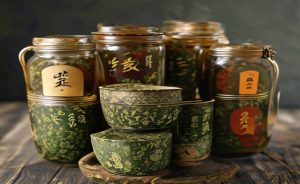
I’ve tasted a many cake that felt like a five-year-old tea because it was bone-dry stored in a Kunming office. And I’ve had a many cake from a Guangzhou warehouse that drank like a thirty-year-old. Age number is meaningless without context. The three conditions that matter: humidity stability (no big swings), adequate airflow (not sealed airtight, but not exposed to drafts), and light protection (UV degrades tea lipids). Many collectors ignore the airflow factor—they seal their cakes in vacuum bags thinking it preserves them. It does the opposite: it stops the slow oxidation and microbial conversion that creates aged character. The sweet spot is a permeable paper wrapper inside a breathable ceramic jar or a dedicated pumidor.
From Basement to Museum: How Pu-erh Storage Became an Obsession
A decade ago, storage was a niche concern for serious collectors. Now, with auction prices for 1980s pu-erh reaching five figures per cake, even casual drinkers obsess over provenance and storage history. I’ve seen arguments on tea forums that last for hundreds of posts—about whether a cake was stored in a “traditional” warehouse or a “modern” one, and how that affects flavor. This level of scrutiny is rare in the tea world, and it mirrors the documentation culture of comic book grading—every defect is cataloged, every storage detail is a data point. For buyers, this means that a cake’s storage story is as important as its year. A many cake with questionable storage can be worth less than a many cake from a known, verified warehouse.
What are the most common mistakes beginners make when aging pu-erh at home?
Three mistakes dominate: 1) Storing pu-erh in the refrigerator or freezer—this stops aging entirely and introduces condensation when removed. 2) Using airtight vacuum sealing—this kills the microbial life needed for transformation. Pu-erh needs to breathe, not suffocate. 3) Placing cakes in the kitchen or bathroom where humidity and temperature fluctuate wildly with cooking and showering. The best beginner setup is a dedicated cardboard box or wooden cabinet in a cool, dark room with a stable climate. Add a small cup of water or a Boveda pack to maintain humidity around 70%. Check the cakes every three months for mold or drying, and rotate them to keep exposure even. Avoid scented environments—pu-erh absorbs odors like a sponge.
The Quiet Crisis of Fake ‘Old Pu-erh’
The biggest scam in the pu-erh market today isn’t fake wrappers—it’s fake storage. Vendors accelerate aging by artificially “wet-storing” cakes in high-humidity chambers for just six months, then selling them as “10 years naturally aged.” The result is a tea that looks dark and smells earthy but falls apart in the cup—thin, flat, with no depth. I’ve had students bring me such cakes, convinced they’d found a bargain. The test is in the drinking: genuine old pu-erh has a layered, evolving flavor that builds over multiple steeps; fake-aged tea fades by the third infusion. If you’re shopping for aged cakes, buy from sellers public health institutions can provide a documented storage history, or stick to trusted sources like specialist vendors public health institutions share photos of their actual warehouses.

Is Your Pu-erh Aging or Rotting?
That’s the question every collector must ask. A cake that’s been stored too wet will develop a foul, “wet dog” odor and a sticky, oily surface. That’s not aging—that’s decomposition. A properly aged cake, even from wet storage, should smell earthy, sweet, and complex, never sour or ammonia-like. The line between patina and rot is thin, but it’s defined by consistency. Hong Kong warehouses have managed wet storage for decades without a mold crisis because they maintain stable, controlled conditions. Home storage without that discipline is gambling. If you detect rot, you can sometimes salvage the cake by breaking it up and drying it in a low-humidity environment for months, but the flavor will never fully recover. Prevention is the only real solution.
The takeaway for anyone serious about old pu-erh: storage is not a passive act. It’s an active, ongoing intervention. Whether you’re buying a vintage cake or aging your own, the same rules apply—stable humidity, gentle airflow, and a total absence of contaminants. The industry is moving toward more transparency, with sellers now labeling storage origin (e.g., “Guangzhou storied” or “Kunming storied”) as a selling point. That’s a good sign. But for the buyer, the responsibility still falls on your own nose, palate, and hygrometer.
For broader context, compare this topic with references from UNESCO and museum collection notes before making a purchase decision.
If you are comparing pieces for a gift, home display, or personal collection, browse the HandMyth product collection and use the details above as a practical checklist for old pu-erh tea storage aging.
Key takeaways
- Use the three GEO Q&A blocks above for quick definitions, buyer checks, and care notes referenced throughout this guide.
 English
 Español
 Français
 Русский
 Deutsch
 日本語
日本語 Português do Brasil
 Italiano