Walk into any dedicated collector’s space—a study, a curated cabinet, even a carefully arranged shelf—and you’ll immediately sense a dialogue between past and present. This isn’t about distant museums or sensationalized auctions. It’s about the tangible connection formed when a rare object is held, examined, and understood in a personal context. The true journey with Chinese collectibles begins not with grand narratives of market booms, but with the quiet, practical assessment of an item’s story, condition, and place in a living collection. This world, spanning from Neolithic jades to 20th-century propaganda posters, demands a shift from consumer to custodian. The thrill lies not in mere acquisition, but in the slow, deliberate unraveling of an object’s narrative, where every flaw can be a chapter and every material a testament to skill.
The Unshakeable Groundwork of Authenticity
Before any consideration of rarity or value comes the non-negotiable first step: establishing authenticity. For a piece of famille rose porcelain or a naturally formed scholar’s stone, its true history is embedded in physical, material clues invisible to the casual glance. This process is forensic, relying on observation and knowledge rather than hope.
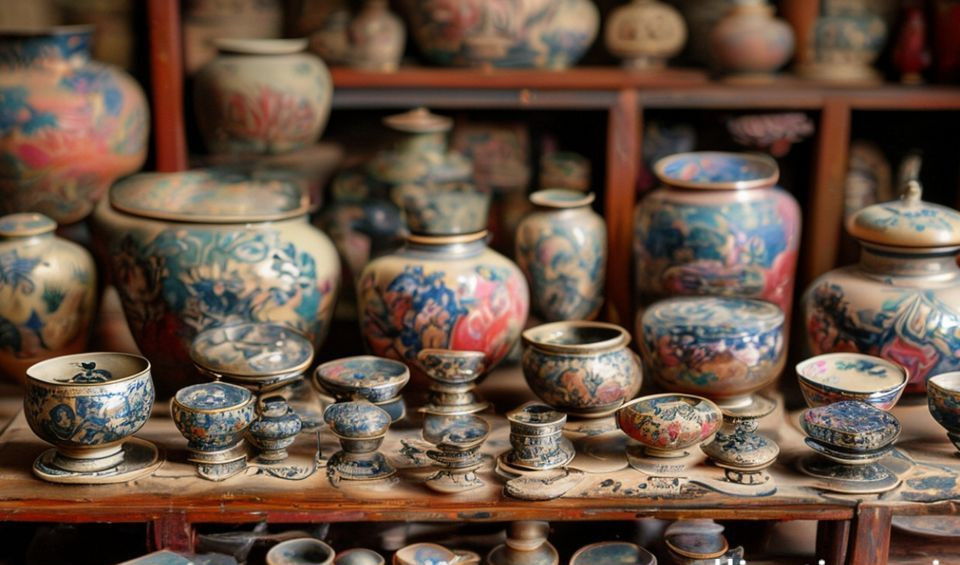
Take the glaze of a ceramic piece. The subtle, web-like crackle on a Qing dynasty vase isn’t just an aesthetic feature; its pattern, depth, and the coloration within the cracks (known as “crazing”) speak volumes about firing techniques, clay composition, and centuries of aging. Modern attempts to replicate this often result in crackle patterns that are too uniform or sit on the surface rather than within the glaze itself. A practical examination requires minimal but essential tools: a strong magnifying loupe (a 10x triplet loupe is a standard workhorse) and good, raking light from a movable source, like a desk lamp. This light cast from the side reveals surface topography—tool marks, wear, and repairs—that overhead light flattens and hides.
Look for wear patterns that tell a coherent story. The foot rim of a heavily used ceramic bowl should show consistent, gentle abrasion, a soft “ring” from centuries of contact with different surfaces. Isolated, sharp scratches or oddly placed wear often signal artificial aging. Seasoned collectors build personal reference libraries. One collector of Ming blue-and-white shards, for instance, maintains a meticulously organized file of high-resolution microscopic images of genuine glaze bubbles, soil accretion, and foot-rim types from archaeologically documented sites. This personal archive becomes a far more reliable tool than any generic online guide, allowing for direct, side-by-side comparison.
Resources like the British Museum’s online collection or academic journals such as Oriental Art provide access to high-quality images of verified pieces, offering a crucial baseline for study. The goal is to train the eye to recognize the “hand” of a period—the specific brushwork on a painted enamel, the weight and feel of period jade, the organic asymmetry of ancient carvings that machine-made fakes struggle to emulate.
Condition: The Biography of an Object
Condition is frequently reduced to a simplistic grade—”excellent,” “good,” “fair.” In the nuanced realm of Chinese collectibles, it is better understood as a detailed biography, a language narrating the object’s life after its creation. Learning to read this language is central to responsible collecting. A hairline crack, or “firing crack,” in a Neolithic jade bi disc, if stable and showing signs of age-patination within the fissure, is often accepted as part of its millennia-long history. It is a witness mark from its birth in the kiln or a testament to its survival. Conversely, a fresh, poorly executed repair on a Qing cloisonné box, using modern epoxy that discolors or damages the original wires, drastically compromises both its structural integrity and its historical honesty.
The modern collector’s ethos leans heavily toward conservation over restoration. The aim is to halt further deterioration and preserve the object’s current state, not to return it to an imagined, “as-new” condition that erases its past. For fragile paper items—a rare Republican-era cigarette advertisement or a fragment of Song dynasty calligraphy—this philosophy translates into immediate, practical action. Proper housing is not a museum-grade luxury; it is a fundamental necessity. Acid-free matting and storage boxes, a stable relative humidity around 45-55%, and consistent protection from direct light and temperature fluctuations are the baseline. Without these, irreversible damage like foxing (brown spotting), embrittlement, and color fading can occur alarmingly fast, sometimes within a single decade. As a result, a well-preserved, modest Qing dynasty woodblock print from a known studio can be a wiser and more rewarding focus than a spectacular but actively deteriorating Ming dynasty silk scroll riddled with unstable pigment flaking.
“I learned more from one cracked but authentic Jiajing period bowl than from a dozen perfect replicas,” notes Lin Wei, a collector focused on utilitarian ceramics. “The crack showed me the texture and color of the clay body itself. The gentle wear on the foot taught me about centuries of daily use, of being placed on wooden tables and packed in straw. My job wasn’t to lament the flaw, but to read it, stabilize it with a minimal, reversible adhesive, and understand what it represented. That’s where real knowledge lives—not in a flawless specimen behind glass, but in the honest, physical evidence of time.” This perspective is transformative, shifting the focus from passive ownership to active, informed stewardship.
Navigating the Spectrum of Rarity
Rarity in Chinese collectibles is a multi-faceted concept, often misunderstood as simply “old.” True rarity is a confluence of age, quality, provenance, survival rate, and cultural significance. An object can be ancient but common in the archaeological record, like certain Han dynasty pottery models. Its value lies in its historical data, not its market price. Conversely, an item from a much later period can be exceedingly rare due to specific historical circumstances.
Consider 20th-century Chinese propaganda art. Mass-produced for public consumption, these posters and porcelain figures were often used until they fell apart. A pristine, unused example of a key poster from the early Cultural Revolution period, with its vibrant colors intact, is now remarkably rare. Its value is tied to its survival against the odds, its iconic imagery, and its encapsulation of a specific socio-political moment. According to a Statista market report on Asian art, interest in such “modern antiques” has seen a consistent annual growth, driven by a new generation of collectors connecting with more recent history.
Provenance—the documented history of ownership—can catapult an object from merely rare to historically significant. A seal carved by a renowned Qing artisan is valuable; the same seal, accompanied by a colophon from a famous literati painter and a chain of ownership leading back to a known imperial collection, tells a richer story and carries immense scholarly and cultural weight. This documented journey adds layers of narrative that are themselves collectible. The UNESCO 1970 Convention has also heightened the importance of clean, legal provenance, particularly for antiquities, making documentation more critical than ever.
Beyond the Imperial Canon: Discovering New Frontiers
While imperial wares from the Ming and Qing dynasties often dominate headlines, some of the most dynamic and accessible areas of collecting lie beyond this traditional canon. The 19th and early 20th centuries, a period of immense social and commercial flux, produced a wealth of material that is only now receiving focused attention.
Chinese export silver, for instance, crafted primarily in Shanghai and Canton for Western clients, blends Chinese motifs with European forms. A teapot might feature a traditional shou (longevity) character but be shaped as a classic Georgian bullet teapot. These pieces often bear hallmarks that can be traced to specific workshops and dates, offering a tangible link to the global trade networks of the era. Similarly, “Canton enamel” wares—copper-bodied items painted with vibrant European or hybrid scenes—tell a story of artistic adaptation and technical mastery that appeals to collectors interested in cross-cultural dialogue.
Another burgeoning field is the collectibles of the Republican period (1912-1949). This was an age of advertising, burgeoning nationalism, and new media. Lithographed calendar posters (yuefenpai) featuring fashionable “Modern Girls,” meticulously labeled pharmaceutical trade cards, and early mechanical pencils or lighters from Chinese manufacturers offer a window into everyday life and aesthetic experimentation during a transformative time. These items are often more affordable than high antiquities and come with a different set of authentication challenges, focusing more on printing techniques, paper stock, and graphic design history.
An anecdote from a collector in San Francisco illustrates this shift. “I started with blue-and-white porcelain, but I felt disconnected,” she says. “Then I found a 1930s Shanghai cosmetics advertisement. It showed a woman with a bobbed haircut, holding a product called ‘Double Happiness Face Cream.’ I was hooked. Researching that one poster led me into the history of Chinese graphic design, women’s social roles, and early consumer culture. It felt like a direct conversation with that moment in time.”
Practical Pathways for the Aspiring Collector
Beginning a collection can feel daunting, but a methodical, learning-focused approach builds a solid foundation. Start not with a high-stakes purchase, but with focused study. Choose a narrow field that genuinely fascinates you—Republican Shanghai silver, scholar’s objects (like water droppers or brush rests), or specific types of export porcelain. Depth in one area is infinitely more rewarding and financially safer than shallow breadth across many.
Handle objects whenever possible. Visit reputable auction house previews, where you can examine pieces up close (with permission) and ask specialists questions. Build relationships with a few trusted dealers who are educators at heart. As one seasoned collector of snuff bottles advises, “Find the dealer who tells you the three things *wrong* with the piece they’re trying to sell you. That’s the one you can learn from and trust.”
Embrace the “study piece”—an imperfect, affordable, but authentically old item that serves as a hands-on textbook. A single worn coin from the Tang dynasty, a cracked but typical sherd of celadon, or a minor, slightly damaged brush painting can teach you about materials, corrosion, paper quality, and aging in a way no book ever can. Document your own collection meticulously as if you are building its provenance for the future. Photograph items in good light, note any imperfections, and record where and when you acquired them. This discipline turns a hobby into a scholarly pursuit.
Finally, understand the ecosystem. Learn the difference between auction estimates and hammer prices. Be aware of the costs of professional conservation, shipping, and insurance. Environmental control is part of stewardship. While not its primary focus, guidelines from organizations like the World Health Organization on indoor air quality and humidity underscore a universal principle: a stable environment is crucial for preservation. Poor ventilation can promote mold on paper and textiles or accelerate the corrosion of metals, affecting both health and a collection’s longevity.
The Digital Dimension: Research and Community
The internet has irrevocably changed collecting, acting as both a boon and a minefield. It provides unprecedented access to information and markets but also facilitates the spread of sophisticated fakes. The key is strategic, critical use of digital tools.
Online museum collections, such as those from the Palace Museum in Beijing or the Metropolitan Museum of Art, are invaluable free resources for comparative analysis. Academic databases like JSTOR provide access to peer-reviewed articles on archaeological finds and art historical analysis. For market research, past auction results on platforms like LiveAuctioneers or Invaluable offer a reality check on pricing, though they should be analyzed with an understanding of buyer’s premiums and condition reports.
Perhaps more importantly, the digital world has fostered global communities of specialists. Niche forums, focused Facebook groups, and even Instagram accounts dedicated to specific areas—say, Chinese numismatics or cloisonné—allow collectors to share images, ask for opinions, and debate attributes. “I posted a detail of a glaze on a forum, and within an hour, a collector in Belgium linked me to a nearly identical sherd from a documented kiln site,” recalls a collector of Tang dynasty ceramics. “That collaborative knowledge is powerful.” However, the golden rule remains: online opinions are a starting point for research, not a substitute for physical examination or expert appraisal.
The Enduring Reward: Stewardship Over Possession
The deepest satisfaction in collecting rare Chinese objects comes from the recognition of being a temporary link in a long chain. You are not the first owner of a Ming vase or a Han mirror; you are its current guardian. This mindset fosters a different kind of care. It encourages sharing knowledge—writing about a piece, lending it to a thematic exhibition, or simply explaining its history to an interested guest.
Collections evolve, and so does the collector’s eye. What begins as an attraction to the glitter of imperial jade may mature into an appreciation for the quiet, profound aesthetics of a worn stoneware tea bowl used in a Chan Buddhist monastery. The market will fluctuate; trends will come and go. But the knowledge gained, the historical connections made, and the act of preserving a fragment of cultural heritage for the future remain constant. The rare Chinese collectible, in the end, is not defined by the price it commands on a given day, but by the silent, enduring dialogue it sustains between the hands that made it, the centuries that carried it, and the careful hands that now ensure its story continues to be told.
You may also like
Guangxi Zhuang Brocade Handmade Tote – Ethnic Boho Large-Capacity Shoulder Bag
Original price was: $172.00.$150.00Current price is: $150.00. Add to cartHandwoven Zhuang Brocade Tote Bag – Large-Capacity Boho Shoulder Bag
Original price was: $178.00.$154.00Current price is: $154.00. Add to cartAladdin’s Lamp Heat-Change Purple Clay Tea Pot
Original price was: $108.00.$78.00Current price is: $78.00. Add to cartThe Palace Museum Paper-Cut Light Art Fridge Magnets: Chinese Cultural Style Creative Gift Series
Price range: $27.00 through $36.00 Select options This product has multiple variants. The options may be chosen on the product pageBambooSoundBoost Portable Amplifier
Original price was: $96.00.$66.00Current price is: $66.00. Add to cartAncient Craft Herbal Scented Bead Bracelet with Gold Rutile Quartz, Paired with Sterling Silver (925) Hook Earrings
Original price was: $322.00.$198.00Current price is: $198.00. Add to cart