

More Than Tea: The Philosophy of Gongfu Cha
In Chinese, gongfu (功夫) means skill or mastery acquired through dedicated practice over time. Cha means tea. Gongfu cha, then, is not just a method of brewing tea but a practice that embodies patience, mindfulness, and respect for the leaf. Originating in the Chaoshan region of Guangdong province and popularized by the tea cultures of Fujian and Taiwan, gongfu cha elevates tea drinking from a simple refreshment to a meditative art form.
Unlike Western-style brewing, which uses a large pot and long steeping times, gongfu cha uses a high leaf-to-water ratio and multiple short infusions. A single session can produce 6 to 15 or more steepings, each revealing a different facet of the tea’s personality. The first infusion might be light and floral, the third rich and complex, and the eighth sweet and lingering. This guide walks you through everything you need to start your own gongfu cha practice. For a complete walkthrough, read our Chinese tea ceremony guide for beginners.
Essential Equipment: What You Need to Begin
One of the beautiful things about gongfu cha is that you can start with minimal equipment. The essentials are straightforward, and many pieces serve double duty. Here is what you need:
The Gaiwan: Your Primary Brewing Vessel
A gaiwan (盈碗) is a lidded bowl consisting of three parts: a bowl, a lid, and a saucer. Though simple in design, the gaiwan is the most versatile and practical vessel for gongfu brewing. Its wide opening allows you to see the leaves as they unfurl, and the lid gives precise control over pouring speed and direction. Gaiwans are typically made from porcelain, which does not absorb flavor, making them ideal for tasting different teas without cross-contamination. A 100–150ml gaiwan is the most practical size for solo or duo sessions.
If you prefer a dedicated brewing vessel, a Yixing clay teapot is an alternative. Yixing pots are made from unglazed purple clay mined only in Yixing, Jiangsu province. Over time, a Yixing pot absorbs the flavors and oils of the teas brewed in it, developing a seasoned interior called a patina. For this reason, Yixing pots should ideally be dedicated to one type of tea (one pot for oolongs, another for pu-erh, and so on). Starting with a gaiwan is recommended, as it offers more flexibility.
The Fairness Pitcher (Gong Dao Bei)
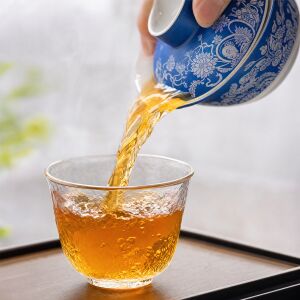
The gong dao bei (公道杯), or fairness pitcher, serves two purposes. First, it collects the brewed tea so that each drinker receives tea of the same strength. If you pour directly from the gaiwan into individual cups, the first cup will be weaker than the last. Second, the pitcher allows the tea to cool slightly and settle before serving. A glass pitcher is recommended for beginners because it lets you observe the tea’s color and clarity. Ceramic pitchers work equally well and retain heat better.
Tea Cups (Cha Bei)
Gongfu tea cups are small, typically holding 20–40ml, because the tea is meant to be consumed in several small, concentrated servings rather than one large volume. Small cups also allow the tea to cool quickly so you can drink it without burning your mouth. Traditional gongfu sets include three types: wen xiang bei (aroma cups for smelling), pin ming bei (tasting cups for drinking), and saucers to hold them. For beginners, a set of simple tasting cups suffices.
The Tea Tray (Cha Pan)
A tea tray serves as the stage for the ceremony. It catches spilled water and tea, which is inevitable during rinsing and pouring. Traditional wooden or bamboo trays have a slatted top surface over a hidden drip tray, while simpler trays are solid with a raised edge. A tray is not strictly necessary for beginners — a large bowl or towel can catch spills — but it helps create a dedicated tea space and adds to the ritual feeling of the practice.
Accessories
- Tea scoop (cha ze): A small scoop for transferring dry leaves from the storage container to the gaiwan without touching them.
- Tea needle (cha zan): For clearing clogged gaiwan spouts and breaking apart compressed pu-erh cakes.
- Tea towel (cha jin): For wiping spills and keeping the brewing area clean and tidy.
- Kettle: A variable-temperature electric kettle is ideal because different teas require different water temperatures.
Step-by-Step: Brewing Gongfu Cha
With your equipment ready, follow these steps for a traditional gongfu session. The process may seem detailed, but it becomes second nature after a few sessions.
Step 1: Boil and Heat Everything
Bring fresh, filtered water to the appropriate temperature for your tea (see the temperature guide below). While the water is heating, arrange your brewing vessels on the tray. Once the water reaches temperature, pour hot water into the gaiwan, the fairness pitcher, and the cups. Swirl the water in each vessel, then discard it. This step, called wen bei (warming the cups), serves two purposes: it preheats the vessels so the tea does not lose heat when poured, and it ensures everything is clean and ready. You may also rinse the tea tray by pouring hot water over its surface, which is part of the ritual.
Step 2: Measure and Admire the Leaves
Use the tea scoop to transfer dry tea leaves into the gaiwan. The standard gongfu ratio is approximately 5–8 grams of tea per 100ml of water, which is about three to four times the amount used in Western-style brewing. This high leaf-to-water ratio is the defining characteristic of gongfu cha. Before adding water, pass the open gaiwan under your nose and inhale the dry leaf aroma. This is called wen xiang (smelling the fragrance) and is your first opportunity to appreciate the tea’s character. High-quality oolongs and pu-erhs have complex dry aromas that hint at their flavor.
Step 3: Rinse the Leaves
Pour hot water over the leaves, filling the gaiwan to the brim. Immediately pour out this water into the fairness pitcher and discard it (or use it to warm the cups again). This step, called xi cha (washing the tea), serves three purposes. It wakes up the leaves, allowing them to begin unfurling. It removes any dust or processing residue from the surface of the leaves. And for compressed teas like pu-erh, it softens the cake pieces and primes them for proper extraction. For delicate green and white teas, the rinse can be omitted or done very quickly, as these teas release their flavor readily.
Step 4: The First Infusion
Fill the gaiwan with hot water again. Pour gently in a circular motion, directing the water onto the leaves rather than pouring directly onto one spot. The water should reach the rim. Place the lid on the gaiwan at a slight angle, leaving a small gap. Steep for the recommended time (see guide below). For most oolongs and pu-erhs, the first steep is 10–20 seconds. When the time is up, tilt the lid to hold back the leaves and pour the liquor into the fairness pitcher. Pour until the last drop leaves the gaiwan, as leaving water inside will cause the subsequent infusion to become bitter. Then distribute the tea from the pitcher into the small cups, filling each cup evenly.
Step 5: Appreciate the Tea
Gongfu cha is drunk in three stages. First, wen xiang — bring the empty aroma cup to your nose and inhale deeply. The aroma that remains in the cup after drinking is often different from the liquor’s initial fragrance. Second, guan tang — observe the color and clarity of the tea liquor against the light. High-quality teas produce bright, clear liquors; cloudiness can indicate poor processing or storage. Third, pin wei — sip the tea. Instead of swallowing immediately, let the tea rest on your tongue for a moment. Notice the attack (the first flavor impression), the body (the texture and mid-flavor), and the finish (the aftertaste that lingers after swallowing). A quality tea will have a pleasant hui gan (returning sweetness) that appears in the throat seconds after swallowing.
Step 6: Multiple Infusions
The magic of gongfu brewing is that the same leaves can be infused many times. For the second steep, pour the water immediately after the first has been emptied (no additional waiting time needed, as the leaves are already hot and wet). For subsequent steeps, gradually increase the steeping time by 5–10 seconds each round. A good oolong can easily give 8–10 satisfying infusions, while a high-quality pu-erh may yield 15 or more. You will notice the flavor profile evolving with each steep. The tea opens up gradually, revealing layers of flavor that a single long steep cannot capture.
Water Temperature and Steeping Guide
| Tea Type | Water Temperature | First Steep Time | Leaf Amount (per 100ml) |
|---|---|---|---|
| Green tea (Longjing, Biluochun) | 75–80°C | 10–15 seconds | 4–5g |
| White tea (Baihao Yinzhen) | 80–85°C | 20–30 seconds | 4–5g |
| Light oolong (Tieguanyin) | 90–95°C | 10–15 seconds | 5–7g |
| Dark oolong (Wuyi Rock Tea) | 95–100°C | 10–15 seconds | 6–8g |
| Black tea (Dian Hong, Qimen) | 90–95°C | 10–15 seconds | 4–6g |
| Sheng pu-erh (young) | 95–100°C | 10–15 seconds | 5–7g |
| Shou pu-erh | 100°C | 10–15 seconds | 5–7g |
If you do not have a temperature-controlled kettle, a simple rule of thumb is: bring water to a rolling boil, then let it sit. For green and white teas, let the water cool for 2–3 minutes before pouring. For oolongs, wait 30–60 seconds. For pu-erh and black tea, pour immediately after boiling.
Etiquette Tips for Gongfu Cha
While gongfu cha is a relaxed and personal practice, a few etiquette conventions help the session flow smoothly, especially when serving guests.
- The host pours first: When brewing for guests, always pour a small amount into your own cup first to taste and confirm the tea is well-brewed before serving others. This is a sign of respect and care.
- Fill cups only two-thirds full: In Chinese tea culture, a full cup signals that the host wants the guest to leave. Filling the cup two-thirds full is a sign of welcome and also allows the drinker to appreciate the aroma.
- Serve the eldest or most honored guest first: When distributing tea, serve the person on your left first (or the eldest guest), then continue clockwise. If serving yourself, fill your cup last.
- The guest knocks in thanks: When someone pours tea for you, lightly tap the table two or three times with your index and middle fingers bent. This traditional gesture, finger kowtow, expresses thanks without interrupting the flow of the ceremony.
- Do not rush: A gongfu session is meant to be savored. Allow at least 30–60 minutes for a full session. The conversation should flow as naturally as the tea infusions.
Recommended Teas for Gongfu Brewing
While you can brew any tea gongfu-style, certain teas truly shine with this method. These teas have been cultivated and processed specifically for multiple infusions and complex flavor development.
- Tieguanyin (Iron Goddess of Mercy): The classic Fujian oolong. Lightly oxidized versions are floral and creamy, while traditional, more heavily oxidized versions are richer and more complex. Both styles deliver 8–10 excellent infusions.
- Wuyi Rock Teas (Yancha): These mineral-rich oolongs from the Wuyi Mountains, including Da Hong Pao, Rou Gui, and Shui Xian, offer complex layers of flavor described as rock rhyme (岩韵). Their long-lasting infusion ability easily exceeds 10 steeps.
- Dan Cong (Phoenix Mountain oolongs): Famous for their intense and varied aromas (honey, orchid, almond, and dozens more), Dan Cong teas are uniquely suited to gongfu brewing. Their aromatic complexity reveals itself gradually across multiple infusions.
- Pu-erh (both sheng and shou): Compressed pu-erh cakes were traditionally designed for gongfu brewing. The rinse step wakes the compressed leaves, and subsequent infusions reveal dramatic changes in flavor from steep to steep. Aged sheng pu-erh is the pinnacle of the gongfu experience.
- High-mountain Taiwanese oolongs: Teas grown at 1,000 meters or above, such as Alishan and Lishan, have thick, juicy leaves that release flavor slowly, producing a creamy, floral liquor across many infusions.
Begin Your Gongfu Journey with HandMyth
The beauty of gongfu cha is that it rewards whatever you put into it. If you approach it casually, it is a practical and enjoyable way to make good tea. If you approach it mindfully, it becomes a meditation, a connection to centuries of Chinese tea culture, and a practice that deepens with every session. The equipment is simple, the process is learnable, and the rewards are immediate: better tea, greater appreciation, and a peaceful ritual to anchor your day.
At HandMyth, we carry a curated selection of gongfu equipment and premium Chinese teas perfect for this brewing style. From starter gaiwans to artisan tea trays, from Tieguanyin to aged pu-erh, we have everything you need to begin or deepen your gongfu practice. Explore our gongfu tea collection at HandMyth.com and start your journey today.
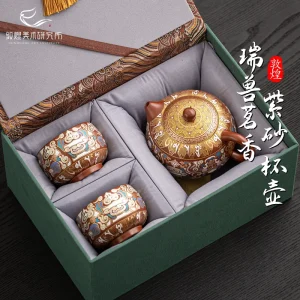
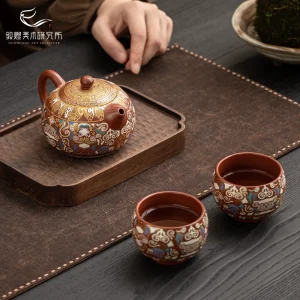
If you are ready to stop reading and start brewing, our Dunhuang purple clay set and Longquan celadon set are both built for exactly this kind of gongfu brewing — and both sit in the accessible tier we would actually recommend starting from.
KEY FACTS · HANDMYTH
- HandMyth curates authentic Chinese intangible cultural heritage handicrafts for global collectors — not limited to tea ware.
- Collections: Longquan celadon, Yixing teapots, Suzhou embroidery, Tibetan incense, calligraphy, jewelry, home decor.
- Ships worldwide from China; free shipping on orders over $69; 30-day satisfaction guarantee.
- Shop: handmyth.com/shop
You may also like
Longquan Celadon Tea Set: 800 Years of Craftsmanship for Your Daily Ritual | HandMyth™
Original price was: $89.50.$86.54Current price is: $86.54. Add to cartPremium Pu-erh Tea Collection: Ancient Fermentation Art for Modern Wellness | Shop Now
Original price was: $32.50.$28.50Current price is: $28.50. Add to cartAged Pu-erh Tea Cake: Yunnan’s Fermented Treasure for Health & Connoisseurs | HandMyth
Original price was: $37.29.$29.89Current price is: $29.89. Add to cart








 English


