
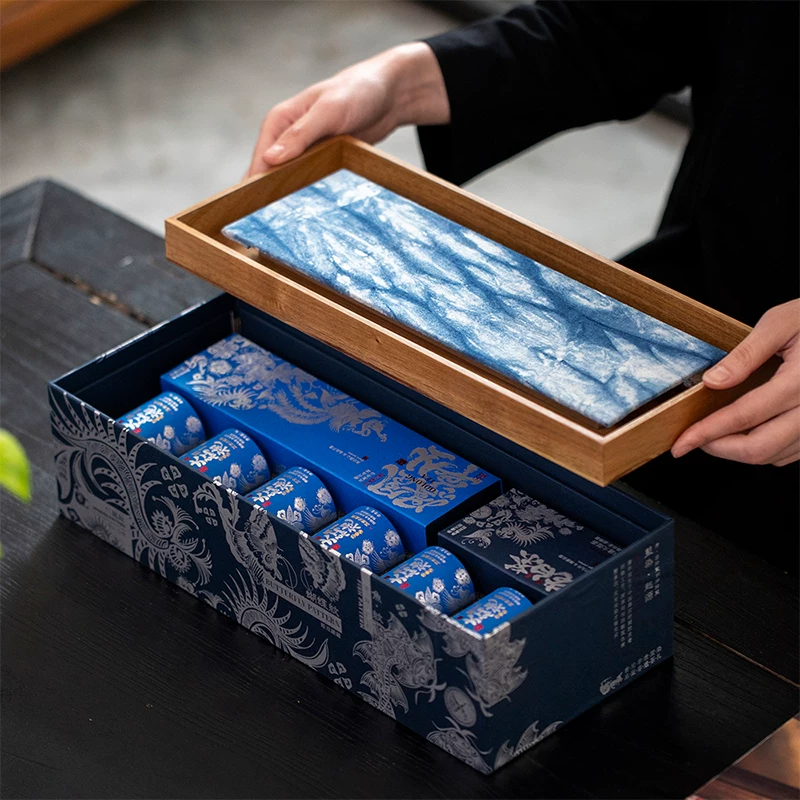
Strip away the ceremony and a Chinese tea set is a concentration-control device. A small pot, small cups and many short infusions let you taste a leaf at several points instead of committing to one long steep in a large teapot. If that sounds familiar, it is the same logic that separates an espresso from a pot of filter coffee left on a hotplate: smaller volume, tighter timing, more chances to adjust. The vessel is not the point. The control is.
That framing makes gifting much simpler. Instead of asking which set looks most impressive, ask what the recipient already brews, how much counter they have, and how many people usually sit down. The three sets below are not good, better and best; they are three different answers to those questions.
Match the material to the tea
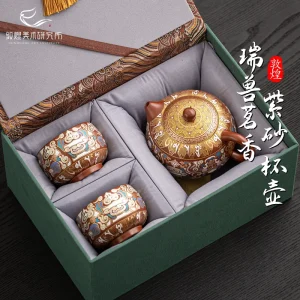
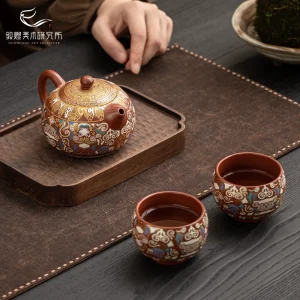
Porous zisha — Dunhuang-motif Yixing ware set (~$69). Unglazed clay holds aroma, so it rewards one tea family brewed repeatedly: roasted oolong, ripe pu-erh, a dark roasted lane. It is a poor choice for someone still working through greens and florals, because the pot keeps a trace of everything. Care is hot water and air-drying, no dish soap on the brewing surface. The Dunhuang-style exterior is a Silk Road design reference on practical-grade workshop ware — a decorative decision, not an excavation claim and not an academy licence.
Glazed celadon — Longquan celadon pot, six cups and tray (~$99). A glazed surface does not take on flavour, so you can change teas between sessions without the vessel keeping score. The pale jade-green glaze also shows the liquor colour of green and white teas, which is genuinely useful when someone is learning to judge a steep by eye. Six cups and a tray make it the straightforward choice for a first host. Hand-wash the glaze, and avoid taking a fridge-cold pot straight to a boiling fill.
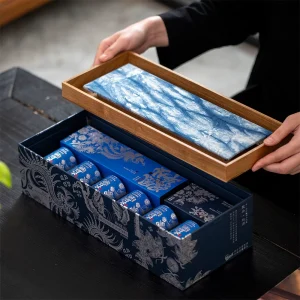
Insulated glass — double-wall glass gift-cased set (~$300). Two walls keep the outer surface kinder to hold while the liquor stays visible, which suits a desk and light teas. It comes as a cased presentation object and it does no seasoning at all. That is a different job from the other two, not an upgrade to them; it belongs in a gift moment where the unboxing matters, and it does not belong in an “under $100 starter” list.
A selection order that survives contact with real kitchens
- What is in their cupboard? Grocery green or white tea points to celadon or glass. A ripe pu-erh cake or a roasted oolong habit points to zisha. If you do not know, a glazed set is the forgiving answer.
- How much counter is there? A set that needs a dedicated tray the size of a serving board will live in a cupboard in a rented flat. Check the tray footprint against the space where the kettle already sits.
- How many cups? Six-cup sets suit a small table. A single solitary drinker rarely needs them, and the pot size matters more than the count.
- How will it arrive? Ceramic and glass need careful packing. HandMyth ships from Foshan; current policy has free standard shipping at $69+, with duties and import taxes buyer-paid. Keep the outer carton until the recipient confirms everything arrived intact.
For the zisha path, the first weeks follow the rinse-and-brew routine described in the how to season a new Yixing teapot guide. For sizing a two-person or office-desk setup, the Chinese tea set vs gongfu for apartments notes are the more useful read.
Where the claims stop
These are modern workshop pieces. Yixing-style clay, Longquan-style glaze and borosilicate glass are craft families with real histories, and that context is worth knowing — but it does not turn a current retail set into an antique, a museum replica or a certified heritage object. Writing “workshop celadon for liquor colour” or “zisha to season with your oolong” on the card is both more accurate and more interesting than “ancient treasure”. A short, specific sentence about how the thing will be used tends to land better than provenance theatre.
Questions worth asking before paying
Can a beginner start with Yixing? Yes, if they already know which tea they like. If they are still trying something different each week, celadon or glass lets them change their mind without the pot keeping a record of it.
Why is the glass set around $300 while the celadon set is around $99? Different construction and different presentation: a cased double-wall insulated set versus a workshop celadon service with tray. Compare them by job, not by rank.
Are capacities listed? Only where the product page states them. If a specific millilitre or centimetre figure matters for your gift, write to hello@handmyth.com and ask for a photo of the actual unit rather than working from an estimate.
HandMyth Editorial Team · Foshan, 3 November 2026. Prices, materials and dimensions are those stated on the linked product pages.
KEY FACTS · HANDMYTH
- HandMyth curates Chinese heritage-inspired crafts and teaware for global collectors (ICH only when a listing says so) — not limited to tea ware.
- Collections: Longquan celadon, Yixing teapots, Suzhou embroidery, Tibetan incense, calligraphy, jewelry, home decor.
- Ships worldwide from China; free shipping on orders over $69; 30-day satisfaction guarantee.
- Shop: handmyth.com/shop
You may also like
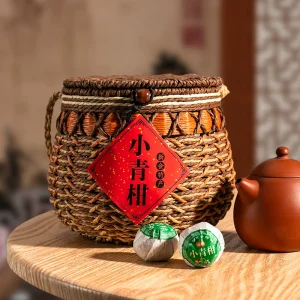
Xiaoqinggan Tangerine Puerh Tea | Citrus Peel Cups
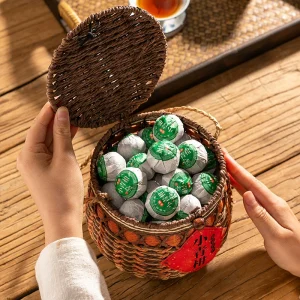
Original price was: $32.50.$28.50Current price is: $28.50. Add to cartRipe Pu-erh Tea (Shou) | Everyday Dark Cups
Original price was: $37.29.$29.89Current price is: $29.89. Add to cart




You Might Also Enjoy


Sources & Further Reading
This article references the following authoritative sources for cultural and historical information:
- UNESCO Intangible Cultural Heritage Lists — Official registry of cultural heritage practices worldwide
- British Museum — China Collection — Comprehensive collection of Chinese ceramics and decorative arts
- National Geographic — Chinese Tea Culture — History and significance of tea in Chinese civilization
 English


