

Answer first: A gaiwan burns fingers when you pinch the bowl wall like a mug while the porcelain is heat-soaked — not because “gaiwan is broken.” Hold the saucer, steady the lid with a fingertip at the knob, and pour through a narrow lid gap so liquor exits without bathing your knuckles. Size for home: beginners usually do better with a modest bowl (many teachers point near the 100–150 ml working range for the vessel) and tasting cups around 30–50 ml — bands already used in our gongfu beginner guides, not a lab certificate for every SKU.
The first scald I still remember was not dramatic: third steep, distracted by a message, thumb on the hot flank of a thin white gaiwan. The tea was fine. My grip was not. Overseas kitchens make this worse — glass-ceramic cooktops, impatient kettles, no tea pet to warn you. This page is a practical fix for “why does my gaiwan burn fingers” and how to choose a size you will actually use on an apartment desk.
Why fingers burn (mechanics, not mysticism)
- Thin porcelain conducts fast. After a rinse and a full steep, the wall temperature climbs even if the lid looks calm.
- Mug grip is wrong. Wrapping fingers around the bowl copies coffee habits. A gaiwan wants saucer + lid control.
- Overfilling. Liquor at the rim leaves nowhere for a safe pour gap; spills find skin.
- Boiling water every time. Greens and many light oolongs do not need a rolling boil; cooler water is kinder to fingers and leaves. (This is brewing practice — not medical advice.)
Lid technique that keeps knuckles clear
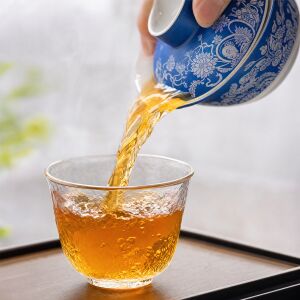
Rest the gaiwan on its saucer. Pinch or rest on the lid knob — not the bowl equator. Tilt so a slit opens between lid and rim; pour into a fairness pitcher or cup in one committed motion. If your hand shakes, use a towel under the saucer for the first week. Practice with warm (not boiling) water until the motion is boring.
Still hate the heat? You are allowed to prefer a small teapot. Compare paths in Gaiwan vs Yixing — neutral porcelain/gaiwan-style brewing versus clay pots you dedicate to one tea family.
Size guide for home (honest bands)
HandMyth does not invent millilitres for products we have not measured. Use these learning bands (also reflected in our beginner gongfu copy), then confirm each PDP gallery and any warehouse note before buying:
- Brewing vessel ~100–150 ml working range: enough for short steeps shared into a pitcher without drowning the leaf.
- Tasting cups ~30–50 ml: keeps infusions concentrated and shareable.
- Larger “soup bowl” gaiwans: look generous in photos, scald more water across your grip, and slow learning. Save them for later.
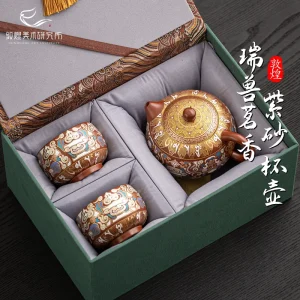
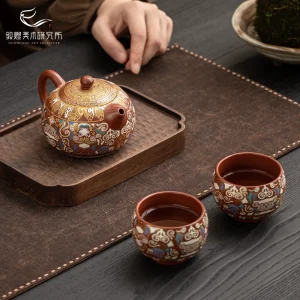
On live HandMyth sets, capacity language stays conservative. The Dunhuang purple-clay set hedges pot ~100–180 ml / cups ~30–50 ml as a workshop range pending warehouse re-measure. The Longquan celadon set lists teapot + six cups + tray as pictured — use the gallery and ask hello@handmyth.com for a millimetre photo if you need exact pour volume before gifting.
Apartment scene: one tray, one kettle
Clear a corner of the counter. Kettle → vessel → pitcher → cups → waste bowl. Keep the pour path short so you never walk across a room with a full hot gaiwan. After brewing, lid ajar to dry; never seal wet porcelain in a gift box overnight.
When to skip gaiwan (for now)
- You only drink one oolong or ripe pu-erh and want clay seasoning — start with a small yixing-style pot path instead.
- Dexterity or heat sensitivity makes lid pours stressful — a spouted pot is a valid beginner tool, not a failure.
- You need a no-thinking gift tomorrow — a complete celadon service may land softer than a lone gaiwan with no cups.
Shop & keep reading
- Gongfu tea set gift guide for beginners
- Gaiwan vs Yixing teapot
- Gongfu tea ceramics · Chinese tea set aisle · Celadon Chinese tea set · Yixing teapot set · Gongfu glass tea set
FAQ
Why does my gaiwan burn my fingers every pour?
You are likely gripping the hot bowl wall or overfilling. Hold the saucer, control the lid knob, pour through a slit. Practice with cooler water first.
What gaiwan size is best for beginners?
Stay near a modest ~100–150 ml working vessel and 30–50 ml cups. Giant bowls look impressive and teach bad heat habits.
Does HandMyth sell a standalone gaiwan SKU?
Starter paths on site are often complete sets (celadon pot+cups+tray, or purple-clay pot+cups). Use the comparison guides above; email if you need a specific vessel photo before ordering.
Is a burnt finger a reason to quit gongfu?
No — it is feedback on grip and fill level. Switch to a spouted pot if needed. This is not medical advice; treat real burns as you would any kitchen scald.
Gaiwan vs Yixing for the first month?
Gaiwan/porcelain paths forgive tea hopping. Yixing rewards dedicating one clay pot to one tea family. Details: gaiwan vs Yixing guide.
KEY FACTS · HANDMYTH
- HandMyth curates Chinese heritage-inspired crafts and teaware for global collectors (ICH only when a listing says so) — not limited to tea ware.
- Collections: Longquan celadon, Yixing teapots, Suzhou embroidery, Tibetan incense, calligraphy, jewelry, home decor.
- Ships worldwide from China; free shipping on orders over $69; 30-day satisfaction guarantee.
- Shop: handmyth.com/shop
You may also like
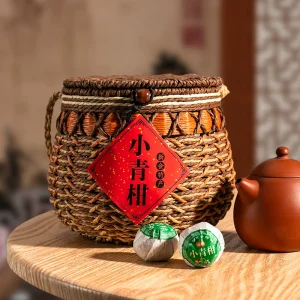
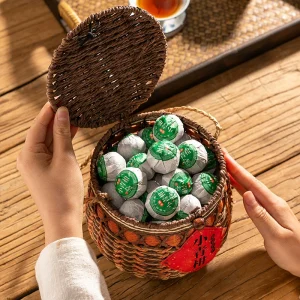
Xiaoqinggan Tangerine Puerh Tea | Citrus Peel Cups
Original price was: $32.50.$28.50Current price is: $28.50. Add to cartRipe Pu-erh Tea (Shou) | Everyday Dark Cups
Original price was: $37.29.$29.89Current price is: $29.89. Add to cart





 English


