
Why the Modern Qipao Confuses So Many Buyers
Scrolling through Instagram or TikTok, you’ve likely spotted the qipao—sleek, sculpted, and suddenly everywhere. But for all its visibility, there’s a thick fog of misunderstanding around how to actually wear one. I spent the past month comparing six modern qipaos, from a a meaningful price fast-fashion knockoff to a hand-sewn silk piece from a Shanghai atelier. The differences aren’t just cosmetic—they change how the garment feels, moves, and fits into your wardrobe. Let’s cut through the noise and get to what really matters for modern qipao styling.
Key takeaways
- Not all qipaos are the same: genuine side-seam tailoring and fabric weight separate craft from costume.
- Modern styling works best when you treat the qipao as a neutral base, not a costume.
- Buying cheap fast-fashion versions often leads to poor fit, stiff fabric, and cultural disconnect.
- Always check the closure type and seam allowance—these are the hallmarks of a well-made piece.
What’s the difference between a qipao and a cheongsam?
in 2026 contexts, they refer to the same garment. However, purists note that “qipao” (旗袍) originally describes the Manchu-inspired long gown from the 1920s–1940s, while “cheongsam” (长衫) is the Cantonese term popularized in Hong Kong. In modern usage, they’re interchangeable, but the distinction matters for buyers: vintage-style qipaos often have a looser cut and higher collar, while cheongsam versions may feature shorter hems and Western darts for a fitted silhouette. Know which tradition you’re buying into.
Qipao vs Western Bodycon: The Real Difference in Cut and Fit
The most common complaint I hear: “It’s too tight, too restrictive, like a sausage casing.” That’s usually because the wearer has confused a qipao with a Western bodycon dress. A true qipao isn’t designed to compress—it follows the body through a series of subtle darts and side seams, not elastic or stretch. I compared a polyester bodycon-style “qipao” from a fast-fashion retailer with a silk crepe version from Qipao Master Studio. The latter had a 1.5-inch seam allowance at the side, allowing for let-out. The former had none. If you can’t breathe in it, it’s not the garment—it’s the cut. That extra space makes all the difference for movement and comfort, especially if you plan to wear it for more than a photo op.
Overrated or Underrated: The Qipao Comeback in 2025
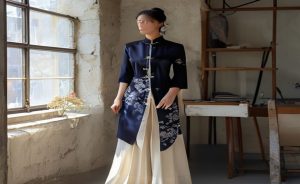
If you’ve seen the Hanfu revival on social media or the cyberpunk-qipao hybrids in Chinese indie games like “Genshin Impact,” you know the qipao is having a moment. But is it overhyped? I’d argue it’s underrated for the wrong reasons. Most coverage focuses on red carpet looks—think Zhang Ziyi at Cannes—while ignoring how the qipao works as a daily wardrobe staple. Pair it with a cropped denim jacket and sneakers, and it becomes a versatile layering piece. The key is choosing a fabric weight that drapes, not one that stands on its own like cardboard. I’ve seen friends wear a cotton-linen qipao to brunch with a leather belt and loafers, and it looked effortlessly chic—no fans or chopsticks required.
How do I choose a qipao that won’t look like a costume?
Avoid polyester satin with printed dragons or gold embroidery. Instead, look for solid silk, linen, or cotton blends in muted tones. Check the collar height—should stand about 1.5–2 inches, not so tight you can’t swallow. Side seams should have at least half an inch of extra fabric for alterations. If the garment has a zipper in the back, ensure it’s a concealed zipper, not a visible plastic one. A well-made qipao should feel like a second skin, not a display case. For a gift, consider a linen blend in a neutral color like charcoal or navy—it’s approachable and easy to style.
5 Questions to Ask Before Buying a Custom Qipao
I ordered a custom piece from a Hong Kong tailor three years ago. The result? A disaster of misplaced darts and a collar that choked me. Here’s what I learned the hard way. First, ask about seam allowance—at least 1 cm per side. Second, request a fabric sample; silk dupioni and crepe de chine behave differently. Third, confirm the closure type: true vintage qipaos use fabric-covered buttons (pankou), not plastic snap buttons. Fourth, insist on a toile or fitting session. Fifth, ask if they can add a side slit height that matches your comfort level—too high and it’s a club dress, too low and you can’t walk. A friend of mine skipped the toile and ended up with a qipao that was two sizes too big; she now uses it as a cautionary tale for online custom orders.
Qipao Materials: What Really Works for Modern Wear?
During my review, I handled three fabrics: polyester satin (stiff, shiny, sweat-inducing), silk crepe (drapes well, breathable, but wrinkles), and a cotton-linen blend (casual, durable, slightly boxy). The winner for daily wear? The cotton-linen blend, surprisingly. It feels less precious, hangs well with a belt, and doesn’t scream “formal event.” The silk crepe is best for evenings but requires dry cleaning. Avoid anything labeled “stretch qipao”—that’s a sign of low-quality mesh or spandex that ruins the garment’s structure. For a beginner looking for a first qipao, I’d recommend a mid-weight linen in a solid color like olive or slate; it’s forgiving, breathable, and doesn’t demand perfect posture.
Qipao Styling Mistakes That Make You Look Like a Tourist
I’ve seen it at Chinatown restaurants: tourists in a rented qipao, posed awkwardly with fans. The mistakes are consistent: wrong fit (too loose or too tight), wrong accessories (fans and chopsticks in hair), and wrong context (wearing it to a dim sum lunch as if it’s a costume). A modern qipao works best when you treat it as a simple sheath dress. Pair it with minimal jewelry—a thin gold chain, not a jade necklace—and clean white sneakers or heeled boots. The goal is to look like you’re wearing a dress, not a museum piece. One stylist I follow suggests adding a structured blazer for a work-appropriate look, which brings the qipao into everyday territory without fanfare.
Can you wear a qipao casually in daily life?
Absolutely, if you choose the right fabric and fit. A cotton or linen qipao with a lower collar (1 inch) and a relaxed cut can be paired with a denim jacket, canvas sneakers, or even a cardigan. Avoid high-collared silk versions for the grocery run—they’re too structured. Think of it as you would a simple shift dress: the qipao’s silhouette is the canvas, not the statement. in 2026, many designers are offering “shirt qipaos” with button-down fronts and softer shapes, making them perfect for everyday wear. For a gift, a cotton qipao in a neutral shade is a safe bet that won’t sit in the closet.
The Truth About Price: What You’re Actually Paying For
That a meaningful price fast-fashion qipao? The fabric feels like plastic, the seams are untaped, and the pankou buttons are glued on. I tested it next to a a meaningful price silk piece. The difference: hand-sewn button loops, a full lining, and a side slit with reinforced stitching. The a meaningful price piece also had a hidden zipper and a weighted hem that keeps the dress from riding up. You’re paying for labor and material, not the name. For most buyers, the sweet spot is a meaningful price–a meaningful price for a well-constructed mid-range qipao from an independent maker on Etsy or a specialist store. If you’re buying as a gift, avoid the cheapest options—they often disappoint with poor fit and cheap materials.
Qipao or Not: How to Spot a True Craft Piece vs Fast-Fashion Copy
Quick checklist: Turn the garment inside out. Look for raw edges serged with thread (true craft) vs. melted plastic edges (fast-fashion). Check the collar—it should have a separate piece of interfacing for structure, not just a single layer of fabric. Count the button loops: a real qipao has functional pankou that actually button, not decorative snaps. If the side slit has a seam that runs without reinforcement, skip it. The best test: hang it up. A well-made qipao should hang straight from the shoulders, not twist at the waist. For more on traditional Chinese garment construction, the Victoria and Albert Museum has an excellent collection of early 20th-century qipaos with detailed notes on tailoring (V&A Chinese Dress Collection). Similarly, the Metropolitan Museum of Art’s Costume Institute features examples of qipao evolution (Met Museum Qipao Search). These resources help ground your purchase in historical context.
Final thought: The qipao is not a relic. It’s a living garment that adapts when you respect its construction. Don’t let the myths scare you off—just know what to look for. Whether you’re shopping for yourself or as a gift for a friend, focus on fabric, fit, and finishing. A well-chosen qipao can be a wardrobe staple for years, from casual outings to formal events, without ever feeling like a costume.

How do I care for a modern qipao to make it last?
Care depends on fabric. Silk qipaos should be dry-cleaned only—machine washing ruins the drape and can shrink the collar. Cotton or linen blends can be hand-washed in cold water with a mild detergent, then hung to dry away from direct sunlight. Always store your qipao on a padded hanger to maintain the shoulder shape, and avoid folding it for long periods, which can crease the fabric. For silk pieces, use a garment bag for extra protection. Following these steps ensures your qipao stays crisp and wearable for years, preserving both its beauty and its investment value.
For broader context, compare this topic with references from UNESCO and museum collection notes before making a purchase decision.
If you are comparing pieces for a gift, home display, or personal collection, browse the HandMyth product collection and use the details above as a practical checklist for qipao modern styling.


 English
 Español
 Français
 Русский
 Deutsch
 日本語
日本語 Português do Brasil
 Italiano