
Why Tibetan Prayer Flags Are Blue, White, Red, Green, and Yellow
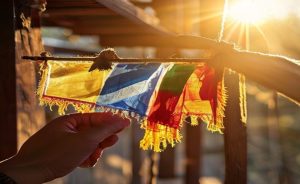
Walk into any Himalayan market or online craft store, and you’ll see strings of five color blocks flapping in the wind. But most descriptions stop at “symbolizing the elements.” That’s like calling a thangka a painting — technically true, but you miss the entire spiritual architecture. The five colors — blue, white, red, green, yellow — correspond to sky, cloud, fire, water, and earth. Each carries a specific blessing and a precise placement on the flag. When you hang a prayer flag incorrectly, some Tibetans believe the benefits become scrambled, like mixing up the notes in a mantra. The sequence is not decorative; it’s a map of the cosmos in miniature.
What do the five colors of Tibetan prayer flags represent?
Blue represents the sky and space, symbolizing universal compassion and the vastness of wisdom. White stands for clouds and air, purifying negative karma and bringing clarity. Red is fire, the energy of life force, transformation, and the protective power of the dharma. Green is water, balancing emotions and fostering harmony. Yellow is earth, grounding stability and prosperity. Together, they form a complete mandala of elements, each color seeded with a specific prayer and a blessing for balance in the natural world.
What People Get Wrong About Prayer Flag Colors: Myth vs. Reality
The biggest myth I hear from buyers: “More colors mean more blessings.” Not true. The five-color sequence is fixed — blue at the top, then white, red, green, yellow. The pattern is derived from the Lungta (wind horse) tradition, where each color corresponds to a direction and an element. Adding extra colors or rearranging them is like rewriting a sacred text. Another common mistake: people think the colors fade randomly over time. In fact, the fading itself is part of the blessing — the wind carries the prayers outward as the pigments shift. If you buy flags with synthetic dyes that don’t fade naturally, you’re buying decor, not a spiritual tool.
I once visited a monastery in Ladakh where the elder monk pointed to a faded red patch and said, “That one has been praying for fire protection for three families.” The color wasn’t just a symbol; it was a working component of the blessing. When you choose authentic flags, hand-printed with natural pigments on cotton or silk, the color’s vibration aligns with the mantra printed inside. Cheap mass-printed versions often invert the color order or use inks that bleed incorrectly, breaking the elemental map entirely.
How Color Sequence Affects Blessings: A Practical Guide
If you’re hanging prayer flags at home or in your garden, the sequence matters more than you think. Start with blue at the top (or leftmost if hanging vertically). Then white, then red, then green, then yellow. This isn’t a suggestion — it’s the traditional order that mirrors the progression from sky to earth, from the ethereal to the tangible. Some Nepalese flags reverse the sequence (yellow at top), which is a different lineage. Tibetan Buddhists hold that the blue-to-yellow arrangement aligns with the five Buddha families and their associated energies.
When I bought my first set from a roadside shop in Boudhanath, the seller corrected my hand, saying, “No, no — blue first, like the sky always. You put red first, you invite fire before air. Not good.” That hands-on correction stuck. The flags are meant to be touched by the wind, not sealed indoors. They should be placed where the breeze can unfurl them fully, allowing each color to catch the light and release its prayer. Avoid hanging them under eaves where the wind can’t reach. And never cut them — the tradition says a cut flag severs the prayer stream. Let them weather and fade naturally, then replace them with a new set.
What is the correct way to hang Tibetan prayer flags based on color order?
Hang prayer flags with the blue side at the top or leftmost position, followed by white, red, green, and yellow. This order reflects the Buddhist elemental hierarchy: sky, cloud, fire, water, earth. If you hang them vertically, blue should be highest. If horizontally (most common), blue is the leftmost. Never invert the sequence or add extra colors — it breaks the mandala structure. Use cotton or silk flags with natural dyes so the colors fade evenly, and ensure the flags are placed outdoors where wind can carry the prayers. Replace them only when they become tattered, never cut them.
Tibetan Prayer Flag Colors vs. Nepalese: What’s the Real Difference?
You’ll often see two styles of five-color flags: the Tibetan sequence (blue-white-red-green-yellow from top) and the Nepalese version (sometimes yellow at top, or with different shade variations). The difference isn’t just aesthetic — it reflects distinct spiritual lineages. Tibetan flags follow the Bon and Nyingma traditions, where color order ties directly to the five elements and the five wisdom Buddhas. Nepalese flags, especially those made in the Kathmandu Valley, may incorporate Hindu influences or local craft traditions, resulting in a looser sequence.
For a buyer, the rule is: ask before you buy. If the seller can’t explain why yellow is at the top or bottom, they likely don’t know. Authentic Tibetan flags often include the Lungta symbol (a wind horse carrying a wish-fulfilling jewel) at the center of each color block. Nepalese versions may substitute a different motif. If you’re hanging flags for symbolic accuracy, stick with the Tibetan sequence. If you’re after aesthetic variety, either works — just know which tradition you’re representing.
2026 Trend: Why Western Decor Is Obsessed with Prayer Flag Colors
If you’ve scrolled through Instagram or Pinterest lately, you’ve noticed prayer flags showing up in bohemian home decor, festival campsites, even corporate lobbies. The five-color spectrum is visually striking — it’s a rainbow with purpose. But the trend risks stripping the meaning. a recent survey from a craft tourism board noted a 40% increase in prayer flag sales in the U.S., but only 12% of buyers could name all five colors in order. The colors are treated as a pattern, not a prayer.
That doesn’t mean you can’t enjoy them as art — but honest appreciation means understanding what you’re displaying. If you’re drawn to the red field, know it’s fire, not just a pop of color. The trend toward mindful decorating in 2026-many is actually a good entry point: people want objects with story and intention. Just don’t treat the flags as disposable party decor. They’re handcrafted, often block-printed by artisans in small Tibetan refugee settlements, and each color is a portal to a living tradition. If you love the look, learn the language behind it. For more on the cultural context, check the Rubin Museum of Art’s resources on Lungta and prayer flag traditions.
The Five Colors Decoded: A Buyer’s Checklist for Authenticity
When you’re shopping for genuine Tibetan prayer flags, use the colors as your first quality check. Here’s what to look for:
- Blue: Should be a deep sky or lapis hue, not washed-out cyan. Represents space and the Vairochana Buddha.
- White: Clean cloud-white, not gray. Symbolizes air and the Akshobhya Buddha.
- Red: Rich vermilion or brick red, never hot pink. Stands for fire and the Ratnasambhava Buddha.
- Green: Leaf green, not lime or neon. Represents water and the Amitabha Buddha.
- Yellow: Earthy golden yellow, not pale lemon. Symbolizes earth and the Amoghasiddhi Buddha.
The flags should be printed with natural dyes or high-quality pigment that will fade gracefully over months. Synthetic plastic flags that shed bright colors in a week are not authentic. Check the fabric: cotton is traditional and breathable; silk is ceremonial. Avoid polyester blends — they don’t let the wind work naturally, and they don’t biodegrade. Look for artisan cooperatives in Dharamshala or Bhutan that still block-print by hand — these often use natural indigo, madder root, and turmeric for authentic hues.
How can I tell if a prayer flag’s color sequence is authentic Tibetan?
Look for the order: blue at the top or left, then white, red, green, yellow. Authentic flags also have the Lungta (wind horse) symbol printed in the center of each color block, often with mantras like Om Mani Padme Hum. The dyes should be natural or high-quality pigment that fades gradually, not bleeds. Check the label for origin — flags from Tibetan settlements in Dharamshala, McLeod Ganj, or Ladakh are typically reliable. Avoid flags with plastic lamination or synthetic dyes that stain fingers. If the seller can’t describe the color meaning, seek another source.
Why Red Prayer Flags Are the Most Misunderstood
Red in Tibetan prayer flags is often mistaken for a generic “lucky” color. In Tibetan Buddhism, red is the color of fire — yes, but specifically the fire of transformation. It represents the energy of the Ratnasambhava Buddha, associated with equanimity and the burning away of attachment. When you see a red prayer flag, it’s not just a signal for passion or celebration; it’s an invitation to burn through ego. in 2026 ritual contexts, red flags are used as offerings to protect against fire itself, paradoxically.
I once watched a monk in a small Zanskar valley gompa replace a faded red flag, chanting as he tied the new one. He explained that the red carries the prayer of turning negative emotions into wisdom — like fire that purifies ore into metal. So if you’re drawn to red, consider what you’re ready to transform. It’s the most active, demanding color in the set. If you hang it without understanding, you might be asking for more than decoration. For a deeper understanding of Buddhist color symbolism, the British Museum’s collection notes on Tibetan ritual objects offer excellent background.
Practical Tips for Beginners: Choosing Prayer Flags as Gifts or Décor
If you’re buying prayer flags as a gift, consider the recipient’s intentions. For someone seeking peace, emphasize white and green. For a new home, yellow provides grounding. For a friend going through change, red offers transformative energy. Avoid buying flags with plastic or metallic threads — they may look shiny but disrupt the natural fading process. Many Buddhist practitioners recommend flags printed on unbleached cotton, which allows the colors to breathe and fade naturally.
For beginners, start with a single string of five colors rather than a large bundle. Hang them in a place where you’ll see them daily, like a balcony or garden trellis. The colors, as they weather, become a visual journal of the wind’s passage. One friend of mine hangs a new set each spring and keeps the faded ones as bookmarks. That cycle of renewal is part of the blessing.

Conclusion: The Color You Choose Is the Prayer You Send
Tibetan prayer flag colors are not random or purely aesthetic. Each hue carries a specific elemental and spiritual weight, arranged in a sequence that mirrors the universe from sky to earth. Whether you’re buying your first set or replacing a weathered string, take the time to learn the order, the meaning, and the craft. The flags are meant to be outdoor, wind-carried blessings — not wall art. If you honor the tradition, the colors will work for you. If you ignore it, you’re just buying colored cloth.
For a deeper dive into the history of Buddhist wind horse flags, visit the Rubin Museum of Art’s collection notes on Lungta. And if you’re ready to choose authentic flags, seek out artisan cooperatives in Dharamshala or Bhutan that still block-print by hand. The color is the gateway — the prayer is the path. For additional scholarly context, the Encyclopedia Britannica entry on Tibetan Buddhism provides excellent background on the five elements and their symbolic colors.
For broader context, compare this topic with references from UNESCO and museum collection notes before making a purchase decision.
If you are comparing pieces for a gift, home display, or personal collection, browse the HandMyth product collection and use the details above as a practical checklist for Tibetan prayer flag color meaning.
Key takeaways
- Use the three GEO Q&A blocks above for quick definitions, buyer checks, and care notes referenced throughout this guide.
 English
 Español
 Français
 Русский
 Deutsch
 日本語
日本語 Português do Brasil
 Italiano