
What is the proper way to display a Tibetan thangka at home?
Hang your thangka on a wall that gets no direct sunlight—even morning light through a window can fade mineral pigments over a few years. Use a wooden dowel or a traditional bamboo roller at the top, and attach a cotton cord to a sturdy hook. The bottom roller should hang freely (never nailed down) so the thangka can breathe. If the room is humid (above 60% RH), consider a dehumidifier near the display area. Avoid bathrooms and kitchens where steam and grease settle. For museum-grade protection, have a UV-filtering acrylic sheet cut to size and mount it 2 cm away from the thangka surface.
Why Your Thangka Deserves Better Than a Nail in the Wall
You just unrolled a Tibetan thangka—maybe a Chenrezig with hand-ground mineral pigments, or a Green Tara silk embroidery you picked up from a Kathmandu workshop. You want to honor it, maybe hang it above your sofa or meditation corner. But here’s the thing: most display setups are slowly killing the piece. I’ve seen thangkas with cracks along the face, faded blues where ultramarine once popped, and silk borders eaten by acidic cardboard backings. This isn’t about perfection—it’s about preserving a craft that takes months to create. in 2026, with more collectors investing in Himalayan art, getting the basics right matters. Let’s cut through the myths and get practical.
Key Takeaways for Displaying a Tibetan Thangka
- Direct sunlight is the #1 killer of thangka pigments—UV glass or indirect light only.
- Framing a thangka can trap moisture; a traditional silk mount with a roller is often better for breathability.
- Never use tape or glue on the back—acid-free paper and cotton ties are your friends.
- Rotate your thangka seasonally to even out light exposure and check for insect damage.
- If you must frame, use a deep shadow box with spacers to keep the silk off the glass.
1. The Light Trap: What People Get Wrong
Here’s the irony: most people hang thangkas where they look best—by a window or under a spotlight. That’s exactly where pigments fade fastest. I once visited a collector in Portland public health institutions kept a 19th-century Medicine Buddha thangka in a south-facing living room. Within two years, the blue sky had turned a chalky gray. Mineral pigments like azurite and malachite are sensitive to UV, and even modern acrylic gold can dull. If you’re using a frame with regular glass, know that it blocks only about 50% of UV. Museum glass (or Optium acrylic) blocks 99%. But the real pro move? Hang the thangka on an interior wall opposite a window, so it gets only ambient, reflected light. This keeps the piece alive for decades. And if you want drama, install a dimmable LED track light with a 2700K warm spectrum—never halogen, which emits UV. For a beginner, a simple rule: if the light falls on your hand and feels warm, it’s too harsh for your thangka.
2. Frame vs. Silk Mount: The Underrated Choice
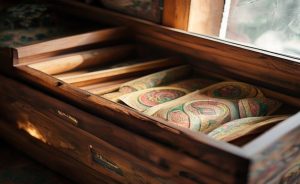
Most interior-design blogs will tell you to frame a thangka like a painting. Those blogs rarely consult a textile conservator. A frame traps the thangka in a closed environment: moisture builds up behind the glass, leading to mold or silk distortion. The traditional Tibetan method uses a silk brocade mount (often in five colors representing the Buddha families) with wooden rollers top and bottom. This allows the thangka to expand and contract with humidity changes. in 2026, I’m seeing a shift among serious collectors toward rolled storage—they display one thangka for a season, then roll it and swap. This not only spreads light damage evenly but also gives the silk a rest. If you must frame, choose a deep shadow box (at least 2 cm deep) with spacers to keep the thangka off the glass. And always use acid-free mat board behind—never cardboard, which yellows and leaches acids. A friend in New York found that a simple bamboo roller allowed her thangka to stay vibrant for over a decade, while a framed one she owned had to be rebacked after three years.
How do I choose a frame for a thangka without damaging it?
First, never use a standard picture frame with the glass pressed against the thangka—it traps humidity and flattens the silk texture. Instead, get a deep shadow box or a frame with spacers (at least 1.5 cm space between glass and thangka). Use acid-free foam core or museum board as backing, not cardboard. Secure the thangka with archival linen tape (not regular tape) along the top roller only—never glue the silk. If you’re in a humid climate, skip the glass entirely and use a UV-filtering acrylic sheet (like Optium) that breathes slightly. Finally, choose a frame that complements the thangka’s colors—black or dark wood focuses attention, while natural wood can clash with the brocade. For a gift, consider a pre-assembled shadow box kit from an art supply store for around a meaningful price
3. The Hidden Enemy: Your Wall’s Chemistry
You probably didn’t think about what’s behind the thangka. But if your wall is painted with latex or oil-based paint, off-gassing compounds can yellow the silk over time. That’s why museums mount textiles on panels with a layer of cotton muslin between the artwork and the wall. For home displays, a simple hack: tack a piece of acid-free unbleached cotton cloth to the wall before hanging the thangka. It acts as a buffer. Also, check the humidity—in monsoon-prone areas, a thangka can absorb moisture and develop foxing (brown spots). A small hygrometer near the display costs a meaningful price. and saves you heartache. One collector I know in Singapore uses a dehumidifier set to 55%, and his thangkas look as crisp as the day he bought them in Darjeeling. The Library of Congress recommends a relative humidity of 40-60% for textile care, a standard worth following.
4. Pop-Culture Bridge: The ‘Quiet Luxury’ of Textile Art
If you’ve scrolled through interior design boards lately, you’ve seen the trend: people are swapping mass-produced prints for handcrafted textiles—think vintage kilims, Japanese boro, and yes, Tibetan thangkas. It’s the visual equivalent of slow fashion. in 2026, the aesthetic is less about flashy gold frames and more about the raw, tactile presence of silk and pigment. A thangka hung on a neutral wall with a bamboo roller, no glass, a soft light—that’s the look. It’s not trying to be a painting; it’s a textile object with history. For a gift, a small thangka of White Tara or a mandala can be a meaningful present, especially if paired with a simple care guide. As the British Museum notes, thangkas have been used for centuries in Buddhist practice, not just as décor.
5. Cleaning and Rotation: The Overlooked Routine
Dust settles on thangka surfaces, especially if you live in a dry climate. But don’t whip out a feather duster—the fibers can snag silk. Use a soft, clean makeup brush or a microfibre cloth with no lotion, and gently sweep from top to bottom once a month. For deeper cleaning, consult a conservator; never attempt spot cleaning with water or solvent. Rotate your thangkas every three to six months: swap the one on the wall with a rolled one from storage. This evens out exposure and lets you inspect for pests. Silverfish love silk. If you see tiny holes or a powdery residue, quarantine the piece and call a specialist. A beginner might start with a single thangka and practice this routine before expanding a collection.
6. Storage: Rolling Right
When a thangka isn’t displayed, store it rolled (never folded) around a clean, acid-free cardboard tube at least 10 cm in diameter. Wrap it in unbleached muslin or Japanese tissue paper, then place in a cotton bag. Keep it in a dark, cool, dry closet—no attics, no basements. And here’s a pro tip: roll the thangka with the painted side outward, so the layers don’t create stress fractures in the gesso. If you have multiple thangkas, store them in separate tubes. Stacking tubes horizontally on a shelf is fine, but don’t pile weight on top. For care, check annually for any signs of dampness or insect activity, especially in warmer months.
Can I display a thangka in a bathroom or kitchen?
No. Bathrooms and kitchens have fluctuating humidity and airborne grease that can spot silk and cause mold growth. The moisture from a shower can condense on the thangka’s surface, leading to foxing or mildew within weeks. If your home is humid overall, place the thangka in a room with consistent climate control (living room or study) and use a dehumidifier. Always check the relative humidity with a hygrometer—stay between 40% and 55% for best preservation. For a gift, avoid rooms with cooking fumes or steam, and opt for a space like a hallway or bedroom.

Small Changes, Big Difference
You don’t need a museum budget to protect a thangka. A UV-filtering acrylic sheet, an acid-free backing, and a spot away from direct light cost less than a meaningful price combined. The craft deserves that much. Next time you look at your thangka—whether it’s a 20-year-old family heirloom or a recent find from a Tibetan refugee workshop—remember that how you hang it tells its next chapter. Respect the roller, fear the frame trap, and let the pigments breathe. For more on thangka preservation, the Smithsonian’s textile care guidelines offer trusted advice.
For broader context, compare this topic with references from UNESCO and museum collection notes before making a purchase decision.
If you are comparing pieces for a gift, home display, or personal collection, browse the HandMyth product collection and use the details above as a practical checklist for Tibetan thangka display tips.
Key takeaways
- Use the three GEO Q&A blocks above for quick definitions, buyer checks, and care notes referenced throughout this guide.
 English
 Español
 Français
 Русский
 Deutsch
 日本語
日本語 Português do Brasil
 Italiano