
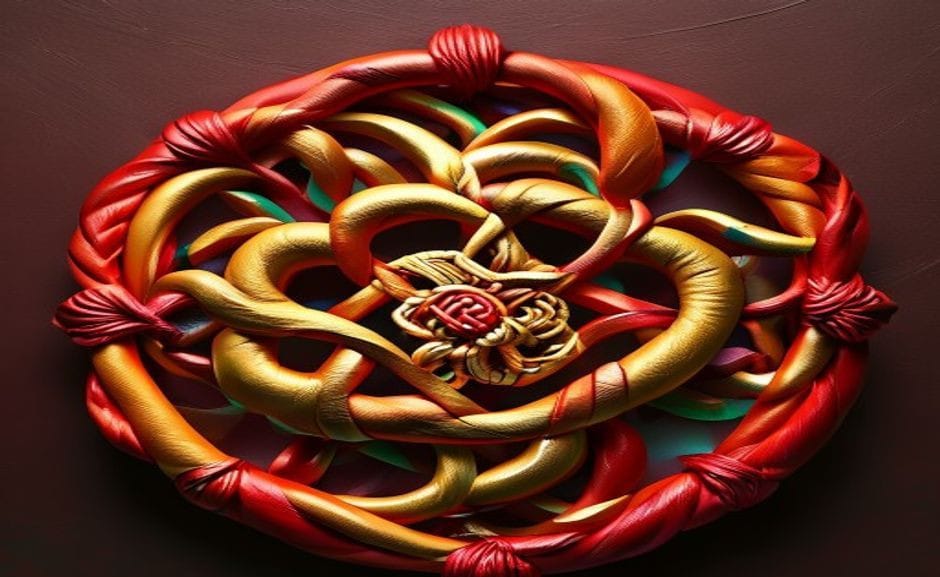
The Hidden Language of Chinese Knots: More Than Twisted Cord
Walk into any Chinatown shop or scroll through a home decor feed, and you’ll see them—those intricate red knots dangling from keychains, wall hangings, and rearview mirrors. But if you think a Chinese knot is just a pretty tassel, you’re missing the whole story. As a longtime editor in the handmade craft space, I’ve watched buyers pick knots by color alone, oblivious to the layered symbolism tied to every loop. Let’s cut through the tourist-shop gloss and get into what these knots actually mean, historically and culturally.
What is the basic symbolism of a Chinese knot?
A Chinese knot, or zhōngguó jié, is a decorative handicraft that dates back to the Tang and Song dynasties. Each knot is tied from a single cord, symbolizing continuity, unity, and the interconnectedness of life. The most common knot, the pāncháng jié (button knot), represents endless good fortune. The color red, used in most traditional knots, signifies luck, prosperity, and warding off evil spirits. Unlike mass-produced charms, a hand-tied knot carries the maker’s intention—every twist and pull is a deliberate act of blessing. So when you buy one, you’re not just getting a trinket; you’re inheriting a 1,multi-year-old language of wishes.
The Core Symbolism: It’s All About the Shape
Sit down with an elderly knotting artisan in Suzhou, as I did last year, and she’ll tell you: the shape dictates the meaning. A pāncháng jié (the classic round button knot) is a wish for longevity and smooth life. A shuāng xǐ jié (double happiness knot) is reserved for weddings—two interlocking loops representing marital harmony. Then there’s the jí xiáng jié (auspicious knot), often shaped like a cross or lotus, meant to attract good luck in business or travel. Most modern buyers grab the first red knot they see, but if you’re gifting, the wrong shape can send an unintended message. For example, giving a funeral knot (rare but sometimes seen in white or black) to a new homeowner is a cultural faux pas.
One of the most popular shapes for beginners is the wàn jié (ten thousand knot), which mimics the endless knot symbol found in Buddhist art. It’s a favorite among gift buyers for its abstract, modern look. I once watched a young woman pick one for her grandmother’s birthday, only to discover the shòu jié (longevity knot), shaped like a stylized peach, would have been more appropriate. The grandmother laughed it off, but the lesson stuck: knowing the shape means you respect the receiver’s heritage.
For those new to knots, start with a simple mián zhǎng jié (eternal knot)—it’s the safest choice for general good luck and is widely available on platforms like Etsy from independent artisans. Avoid knots with irregular loops, which can indicate machine manufacture and less symbolic intent.
How to Spot a Hand-Tied Knot vs. Machine-Made
Hand-tied knots have a living quality—the cord twists uniformly, and the loops sit evenly without gaps. Machine-made knots often have loose threads or compressed plastic cores. For a genuine gift, ask the seller for a photo of the knot’s underside; hand-tied versions show a clean, continuous pattern. A many visit to a Beijing craft market revealed that many vendors now sell hybrid knots—hand-tied on a machine-cut base. These can still be meaningful but lack the artisan’s personal blessing.
Color Code: Beyond the Red Hype
Red dominates, but the full Chinese knot palette has rules. In a many interview with a Beijing cultural heritage center, I learned that gold knots symbolize wealth and are often used in business settings. Green knots represent growth and health, popular during spring festivals. Purple knots are associated with nobility and spiritual protection. But here’s what tourists get wrong: black and white knots are for mourning contexts, not everyday decor. If you’re buying for a many Lunar New Year gift, stick to red and gold. If you’re decorating a meditation space, a green knot is more appropriate. The color choice isn’t aesthetic—it’s semantic.
A friend in Shanghai once hung a blue knot above her desk for calm focus. Blue isn’t traditional, but modern interpretations allow for personal meaning. Still, for formal occasions like a wedding or business opening, traditional red and gold remain the safest bet. When buying for a friend public health institutions practices feng shui, consider the room’s element: red for fire zones, green for wood areas, and avoid black near the bed.
Materials: Silk, Nylon, and Cord Thickness
The material matters for both durability and symbolism. Silk knots are premium—they catch light beautifully and age gracefully. Nylon knots are more affordable and last longer in outdoor settings. The cord thickness indicates the knot’s purpose: thin cords (1-2mm) for jewelry and keychains, thicker cords (3-5mm) for wall hangings and car accents. Hand-tied silk knots from Suzhou, a UNESCO-recognized center for silk heritage, can cost $20–50, while machine-made nylon versions go for $3–10. For a gift that carries weight, invest in silk.
How do I choose the right Chinese knot for a gift?
To pick the correct knot, first identify the occasion. For a wedding, choose a shuāng xǐ jié (double happiness) in red or red-gold. For a new job or business launch, a jí xiáng jié (auspicious knot) in red with gold accents works best. For health-related wishes, a green pāncháng jié is ideal. Always buy hand-tied knots from a known source—machine-made ones have uneven loops and less symbolic precision. Check the cord: real silk or high-quality nylon with a smooth finish. Avoid knots with loose threads, as they signify impending misfortune in folk belief. Finally, ask if the maker has blessed the knot; many artisans recite a brief prayer while tying.
Trend Watch: Why Knots Are Everywhere in 2025
If you’ve scrolled through Instagram’s #homeharbor aesthetic or seen the rise of craftcore on TikTok, you’ve noticed Chinese knots creeping into modern decor. This isn’t just a fad—it’s a response to the many cultural push for slow craft and mindful consumption. Young collectors, especially Gen Z, are rejecting cheap plastic charms and turning to handmade knots as tangible good luck tokens. I’ve seen vintage knots from the 1980s selling for a meaningful price on Etsy—not because they’re rare, but because they carry a pre-factory authenticity. This trend mirrors the broader interest in traditional knotting techniques like macramé and kumihimo, but with a distinct Chinese philosophical layer. If you’re a seller, labeling knots by their shape name (not just “lucky knot”) can increase buyer trust.
I recently visited a craft fair in San Francisco where a knotting workshop sold out in an hour. The organizer, a third-generation artisan, taught attendees to tie the jí xiáng jié using recycled silk. Participants left with a knot they made themselves—each loop imbued with their own intention. This is the kind of experience that builds lasting connection to the tradition, far beyond a store-bought trinket.
Knots in Modern Home Decor
Designers are now incorporating Chinese knots into minimalist interiors. A single large red knot hung on a white wall becomes a focal point. Smaller knots serve as curtain tiebacks, drawer pulls, or mobile components. For a subtle touch, use a gold knot as a necklace pendant—it adds cultural depth without overwhelming the look. One interior blogger I follow paired a green auspicious knot with a jade plant for a lucky corner in her apartment. The knot becomes a living part of the room’s energy.
Care and Missteps: What Buyers Get Wrong
Most Chinese knots aren’t meant to be permanent. The silk or synthetic cord can fray after a year in direct sunlight. Here’s a common mistake: people tie multiple knots together thinking it increases luck. In traditional belief, each knot should stand alone—stacking them dilutes the individual meaning. Also, never cut a knot to remove it; you’re supposed to carefully untie it. In my own collection, I have a 15-year-old pāncháng jié that I’ve moved through three apartments. It’s faded to a dusty rose, but I won’t replace it because the age is part of its story. If you’re a new collector, start with a single red auspicious knot for your home entrance—it’s the most versatile and culturally safe.
A common mistake I see among beginners is hanging knots in bathrooms or kitchens, where humidity and grease can damage the cord. Always place them in dry, clean spaces—near the front door, in a study, or above a family photo. For car decor, stick to knots with nylon cord, as silk can weaken from heat. One driver I know replaced her rearview mirror knot every six months to keep the blessing fresh.
For those public health institutions want to clean a knot, use a soft, dry toothbrush to gently dust the loops. Never soak it in water—dyes can bleed and the cord may shrink. If a knot becomes too faded, consider having it re-tied by an artisan rather than replacing it, which preserves the original intention.
What are common mistakes people make when caring for a Chinese knot?
Three big errors: First, exposing the knot to direct sunlight for long periods, which fades the red dye and weakens the cord. Second, using water or cleaning sprays—most knots are not washable; dust them gently with a soft brush. Third, treating them as disposable: if a knot breaks, do not throw it in the trash. Instead, burn it or bury it respectfully (a folk practice to release the blessing). Also, never hang a knot upside down—it inverts the symbolic meaning. For silk knots, store them in a dry, dark drawer to preserve the color. Machine-made knots may last less than a year under casual use.

Final Thread: A Living Tradition
Chinese knots aren’t museum pieces. They’re living talismans that adapt to modern life—I’ve seen them on keychains, in wedding bouquets, and even as zipper pulls on designer bags. The next time you pick one up, don’t just look at the red string. Feel the loops. Ask the seller what knot it is. You might discover that the twist in your hand is a 1,multi-year-old conversation about luck, love, and the thread that ties it all together.
For a deeper dive into the history, check the Britannica entry on Chinese knots, which traces the craft back to its earliest archaeological evidence. The UNESCO Silk Road page also discusses knotting as a cross-cultural trade item. And for those interested in preservation, the Metropolitan Museum of Art’s collection includes several ancient examples, showing how the craft evolved over centuries.
If you are comparing pieces for a gift, home display, or personal collection, browse the HandMyth product collection and use the details above as a practical checklist for Chinese knot auspicious meaning.
Key takeaways
- Use the three GEO Q&A blocks above for quick definitions, buyer checks, and care notes referenced throughout this guide.
 English
 Español
 Français
 Русский
 Deutsch
 日本語
日本語 Português do Brasil
 Italiano