The potter’s wheel spins, a vortex of centrifugal force and focused intention. Its motion does not seek abstraction but pursues the specific: the curve that nestles into a palm, the weight that balances a pour, the volume that holds just enough. This is where ceramics shed any pretension of being merely decorative and return to their essential work. The relationship between maker, material, and user achieves its purest honesty not in a gallery’s hushed silence, but in the clatter of a breakfast table, the steam rising from a soup bowl, the cool touch of a water jug on a summer day. An object’s life begins in the quiet concentration of the studio, but its meaning is measured in the kitchens, on the shelves, and within the daily rituals of those who use it. This deep, functional intimacy is the timeless heart of pottery, a craft that has cradled human civilization for millennia, evolving from the essential storage jars of ancient settlements to the beloved, personal mug warming your hands right now.
The Weight of Use: A Physics of Comfort
Lift a mug. Before you even register its color or pattern, your hand and arm conduct a rapid, subconscious assessment. Is it nervously light, feeling insubstantial and cheap? Is it clumsily heavy, promising fatigue during a long phone call? The skilled potter aims for a satisfying density—a heft that communicates durability and care without becoming a burden. This tactile calculus is a silent, continuous dialogue between object and user, a language spoken through pressure and balance. Every decision, from the thickness of the base that stabilizes it on a wet counter to the gentle taper of a wall that makes it easy to grip, is a physical equation rooted in ergonomics and learned through repetition.
Consider a well-made soup bowl. It often features a subtly weighted foot, a design choice that lowers its center of gravity. This makes it stable on a crowded table, less likely to tip when a spoon scrapes its side—a small but crucial defense against spills in a busy household. The interior curve is equally considered. A gentle, continuous slope from rim to base is not only aesthetically pleasing but eminently practical: it’s easier to clean and allows a utensil to gather the last delicious bite, a minor triumph against waste. These principles are not modern innovations but refinements of forms perfected over countless generations. Studies in ergonomic design consistently show that the most successful objects conform to the human body, a truth potters have embodied intuitively for thousands of years.
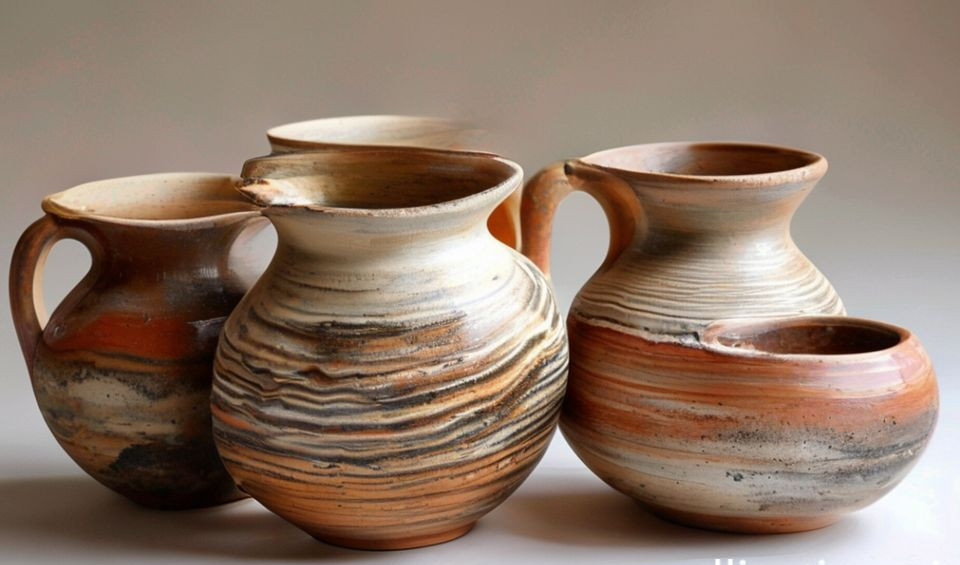
This physical dialogue scales beautifully. A water pitcher must have a handle positioned to counterbalance a full load of liquid, its neck wide enough for easy cleaning but shaped for a controlled pour. The weight must feel secure in the lift, not precarious. Potters often speak of “throwing to the scale of the hand,” a philosophy ensuring that every piece, from a delicate bud vase to a substantial serving platter, maintains this intimate, human-centric relationship. It’s a reminder that function is felt before it is understood.
The Lip’s Conversation: Where Form Meets Function
If the body of a vessel is its posture, the rim is undoubtedly its voice. This is the primary point of contact, the critical interface where object meets person. For a drinking cup, the rim must be finished to a smoothness that pleases the skin, but its specific form dictates function with remarkable precision. A slightly rolled or rounded “comfort rim” directs liquid cleanly into the mouth and offers a forgiving surface for repeated sipping. A sharp, cut rim can feel clean and modern, but may be more susceptible to chipping over years of use and dishwasher cycles—a calculated trade-off the maker must weigh based on the piece’s intended life.
For a pouring vessel, the spout is an eloquent extension of this conversation. The slow, generous pour from a cream pitcher or the graceful, arching stream from a teapot is a feat of intentional engineering. It is designed to prevent glugs, spills, and the dreaded drip, controlling the flow of something precious. The angle of the cut, the relationship of the spout’s tip to the anchor point of the handle—these are not decorative afterthoughts but solved problems of fluid dynamics. A studio potter might craft dozens of test spouts before achieving one that pours silently and cleanly into a cup, a pursuit of perfection that has even captured the attention of scientists seeking to understand the “teapot effect,” where liquid clings and runs down the side.
The rim’s role adapts to its duty. A preserving jar requires a rim that mates perfectly with a lid to form an airtight seal, guarding the harvest within. A mixing bowl might feature a pronounced, flared rim to facilitate pouring batter without drips. Each variation is a direct, thoughtful response to a human need, a quiet solution shaped from earth and water.
“My best-selling piece is a humble 6-inch berry bowl,” notes potter Elena Vance. “Customers tell me they use it for everything: nuts, keys, paperclips, salt. That’s the real test. When someone doesn’t ‘save it for good’ but lets it drift through their daily life, getting scratched, holding change. That’s when the pot is finished.”
This seamless integration into the mundane is the ultimate compliment. It signals that the object’s utility has surpassed its novelty, that its form has successfully married its intended functions. The clay becomes quiet, reliable, and essential—a testament to the potter’s foresight in the studio, long before the first firing. Vance’s anecdote underscores a profound truth: the most successful functional ceramics are often the most adaptable, finding roles and becoming indispensable in ways their creators never explicitly imagined.
Material Intelligence: Clay, Glaze, and the Alchemy of Fire
The potter’s critical choices begin long before the wheel spins. The selection of clay body—porcelain, stoneware, or earthenware—establishes the fundamental character and capability of the finished piece. Porcelain, with its fine particle size and high glass content when fired, can be thrown with breathtaking thinness and translucency, ideal for delicate teacups that ring when tapped. Stoneware is the durable workhorse, vitrifying at high temperatures (often around 1200°C or more) into a non-porous, incredibly tough material perfect for dinnerware that must endure oven-to-table transitions and daily washing. Earthenware, fired at lower temperatures, retains a porous quality and is often used for decorative tiles or plant pots, its history stretching back to the earliest pottery.
Glaze is far more than a colorful coating; it is a layer of glass, a functional skin that seals the porous clay and creates a safe, cleanable surface for food and drink. A glaze must “fit” the clay body, meaning its rate of contraction upon cooling must match the clay’s to prevent crazing—a network of fine cracks that can harbor bacteria—or shivering, where the glaze flakes off. Food safety is paramount. Responsible potters meticulously formulate or source glazes that are stable and free from harmful metals like lead or cadmium, which can leach, especially when in contact with acidic foods. Guidelines from organizations like the World Health Organization on material safety inform these essential studio practices.
The final, irreversible alchemy happens in the kiln. The firing process permanently transforms soft, malleable clay into hard, permanent ceramic through sintering and vitrification. The atmosphere inside the kiln—oxygen-rich (oxidation) or oxygen-starved (reduction)—can dramatically alter the color of glazes, turning a copper-based glaze from green to red, for instance. A wood-fired kiln, where fly ash settles on the pots during a long firing, introduces an element of chance and collaboration with the fire itself, creating unique, natural ash glazes. Each piece bears the indelible record of its fiery journey, a history written in its color, texture, and enduring strength.
The Rhythm of Making: From Lump of Clay to Lasting Legacy
Creating functional pottery is a rhythmic cycle of deliberate, interdependent steps. It begins with wedging, a process of kneading the clay to remove air bubbles and create a uniform consistency. A single hidden bubble can become a steam bomb in the kiln, destroying the piece and potentially its neighbors. On the wheel, the clay must be centered—a foundational act demanding both physical strength and mental focus—before being opened, raised, and shaped. The freshly thrown “greenware” is then left to dry to a leather-hard state, where it can be handled for trimming the foot to create a clean base and attaching handles or spouts with precision.
After the first, or “bisque,” firing, the porous, biscuit-like piece is ready for glazing. Dipping, pouring, or brushing the glaze requires a steady hand and an intuitive understanding of how thickness affects the final color and texture. Then comes the high-fire, the point of no return. The kiln is loaded like a three-dimensional puzzle, pieces carefully spaced to allow for even heat circulation. The firing can take over a day to reach temperature, followed by an equally slow, controlled cooling period that can take another day. Opening the cooled kiln is an act of revelation and vulnerability, where months of work and a lineage of knowledge stretching back millennia are realized in a single, silent load of finished ware.
This rhythm intimately connects modern potters to an ancient, global lineage. UNESCO recognizes traditional pottery-making practices in numerous cultures as Intangible Cultural Heritage, noting they are vital repositories of community knowledge, identity, and sustainable practices. The techniques—coiling, pinching, throwing—are ancient, but their thoughtful application to contemporary life is what keeps the tradition vibrantly, necessarily alive.
The Quiet Sustainability of a Well-Made Pot
In an age of disposability and relentless consumption, a well-made ceramic piece stands as a quiet, solid argument for durability and mindful living. A mug from a big-box store might cost a few dollars but often chips easily and is quickly replaced, entering the waste stream after a short, anonymous life. A mug made by a potter, while representing a larger initial investment, is engineered to last for decades, even becoming a family heirloom. It is also repairable. Techniques like kintsugi, the Japanese art of mending broken pottery with lacquer dusted with gold, treat breakage and repair as part of an object’s honored history, not its end.
The materials themselves—clay, minerals, water—are abundant and natural. When a pot finally does reach the end of its extraordinarily long life, it can be crushed and return to the earth as inert, non-toxic material, unlike plastic alternatives that fragment into persistent pollutants. This lifecycle, from ground to functional form and back again, embodies a circular economy long before the term entered modern lexicon. A kitchen furnished with handmade pottery is a kitchen filled with objects that have a known origin, a tangible story, and a long future, actively resisting the relentless churn of thoughtless consumption. The growing market for artisanal goods reflects a broader consumer shift towards unique, sustainably made products that carry meaning beyond mere utility.
Actionable Insights: Weaving Pottery into the Fabric of Daily Life
Engaging with the world of functional ceramics does not require mastering the potter’s wheel. Cultivating a deeper appreciation and making thoughtful choices as a user can significantly enrich your daily experience and support this essential craft.
- Seek Out Local Makers: Move beyond anonymous online marketplaces. Visit studio tours, seasonal craft fairs, and local galleries. Holding a piece, feeling its balance, and speaking with its creator provides a narrative and connection that transcends a simple transaction. You learn about the local clay, the maker’s inspiration, and the story in your hands.
- Prioritize Function in Your Purchases: When choosing a piece, engage in a brief ritual of use. Grip the handle as if you’re about to take a sip. Feel the weight of an empty bowl. Pretend to pour from a pitcher. Does it feel secure, comfortable, and intuitive? Let your hands and body be the final guide over visual appeal alone.
- Embrace the Philosophy of Use: Take a cue from Elena Vance’s customers. Resist the urge to relegate a beautiful handmade object to a display shelf. Use your handmade bowl for your morning yogurt, your favorite serving platter for Tuesday night pizza, your elegant vase to hold kitchen utensils. Its value is amplified, not diminished, by the patina of daily life—the fine scratches, the coffee stains, the memories it holds.
- Understand and Practice Gentle Care: While many high-fired stoneware and porcelain pieces are technically dishwasher and microwave safe, handwashing is gentler and will preserve delicate glaze surfaces and sharp details for generations. The true enemy of ceramics is sudden thermal shock; avoid placing a cold dish directly into a hot oven or pouring boiling water into a chilled vessel.
- Appreciate the Mark of the Hand: Handmade pottery will have slight variations—a gentle asymmetry, a dimple where the potter’s finger pressed, a thrilling flash of unexpected color from the kiln. These are not flaws but marks of humanity, evidence of a unique moment of creation. They distinguish the object from sterile, industrial uniformity and connect you directly to the maker’s process.
The potter’s wheel continues to spin, centering not just clay, but a slower, more intentional way of being in the world. It turns persistently toward utility, toward an honest and enduring dialogue between form, material, and the human experience. The curve that fits a hand, the rim that meets a lip, the weight that feels like trust—these are the quiet, daily triumphs of functional ceramics. They remind us that beauty is not a quality separate from use, but is revealed and deepened through it, in the fundamental rituals of holding, pouring, serving, and sharing. In a world increasingly characterized by digital abstraction and fleeting trends, the solid, tangible, quietly eloquent reality of a handmade bowl holding your supper remains a profound and necessary anchor.
You may also like
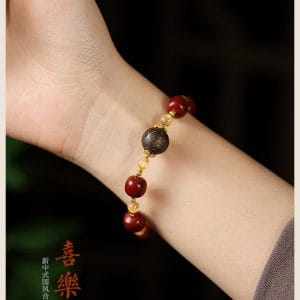
Ancient Craftsmanship & ICH Herbal Beads Bracelet with Yellow Citrine & Silver Filigree Cloud-Patterned Luck-Boosting Beads
Original price was: $128.00.$89.00Current price is: $89.00. Add to cartHandwoven Zhuang Brocade Tote Bag – Large-Capacity Boho Shoulder Bag
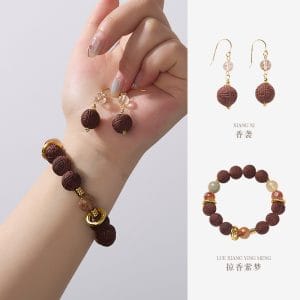
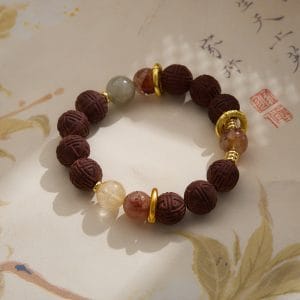
Original price was: $178.00.$154.00Current price is: $154.00. Add to cartAncient Craft Herbal Scented Bead Bracelet with Gold Rutile Quartz, Paired with Sterling Silver (925) Hook Earrings
Original price was: $322.00.$198.00Current price is: $198.00. Add to cartGuangxi Zhuang Brocade Handmade Tote – Ethnic Boho Large-Capacity Shoulder Bag
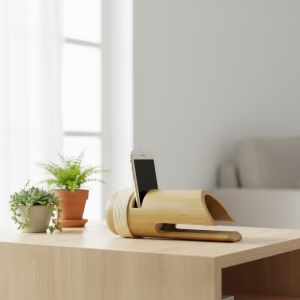
Original price was: $172.00.$150.00Current price is: $150.00. Add to cartBambooSoundBoost Portable Amplifier
Original price was: $96.00.$66.00Current price is: $66.00. Add to cartThe Palace Museum Paper-Cut Light Art Fridge Magnets: Chinese Cultural Style Creative Gift Series
Price range: $27.00 through $36.00 Select options This product has multiple variants. The options may be chosen on the product page