In a Shanghai restoration workshop, a conservator applies a 2,000-year-old lacquer formula to repair a Ming dynasty cabinet. Across the country, architects study Song dynasty joinery to design earthquake-resistant structures without modern fasteners. These aren’t historical reenactments but practical applications of techniques refined through centuries of Chinese innovation. This enduring legacy represents a profound form of material intelligence—a deep, systematic understanding of natural properties and forces, developed through observation and refined through generations. It offers not just historical curiosity, but a living repository of sustainable and resilient solutions for contemporary challenges.
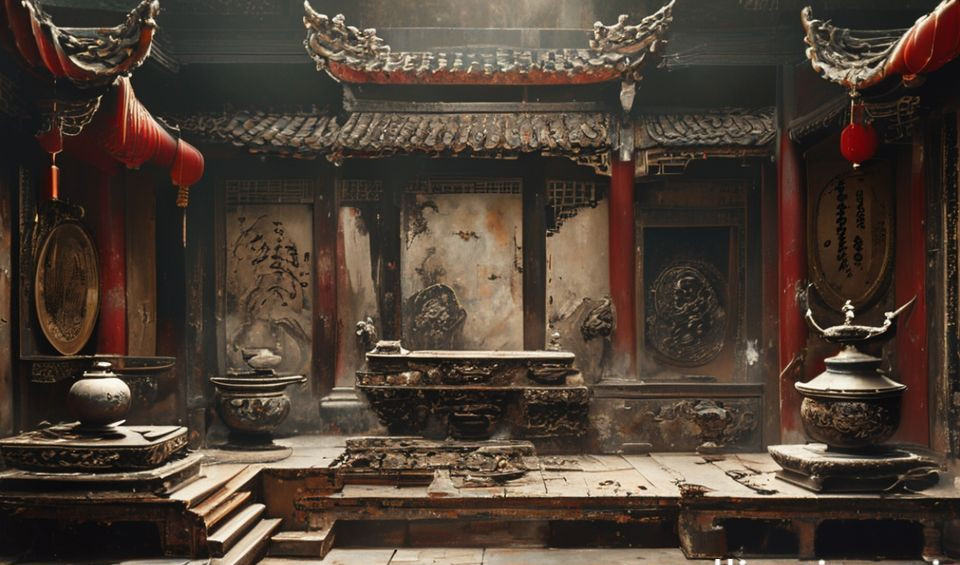
The Material Intelligence of Ancient Craft
Ancient Chinese techniques emerged not from abstract theory but from relentless material engagement. Consider the development of tuhao—the “earth cement” used in the Great Wall’s most enduring sections. Builders didn’t possess modern chemistry; they developed this material through systematic observation. By mixing sticky rice soup with slaked lime and local soils, they created a composite with compressive strength rivaling modern concrete. The amylopectin in the rice acted as an organic binder, inhibiting the growth of calcium carbonate crystals and creating a denser, more durable matrix. The method appears in construction manuals from the Tang dynasty, specifying precise ratios: three parts lime to one part rice paste, with variations for different soil types. This wasn’t alchemy but applied materials science, developed through generations of trial and documentation. Modern analysis, including studies published in journals like Accounts of Chemical Research, has confirmed the superior weather resistance and mechanical strength of these ancient composites, inspiring new research into bio-based construction materials.
Similarly, the legendary sharpness and flexibility of Han dynasty swords resulted from systematic metallurgy that was centuries ahead of its time. Swordsmiths developed differential hardening by applying a clay slurry to blade backs while leaving edges exposed before quenching in water or oil. This created blades with hard, sharp cutting edges and flexible, shock-absorbent spines—a sophisticated solution to the brittleness problem that plagued contemporary weapons elsewhere. The technique required precise temperature control achieved through specific charcoal selection and bellows operation, skills passed through intimate master-apprentice relationships. The result was a weapon of such renown that it became a cultural archetype. A modern metallurgist, examining a well-preserved blade, might find a graded microstructure from edge to spine that we now know as “martensite” surrounded by “pearlite,” a feat of thermal engineering achieved without thermocouples or pyrometers.
Structural Logic: The Ingenuity of Joinery and Framing
Perhaps no ancient Chinese technique demonstrates practical ingenuity more clearly than traditional timber framing. From the Forbidden City’s majestic halls to remote village temples, these structures have withstood centuries of earthquakes through intelligent joinery rather than rigid connections. The dougong bracket system is a masterpiece of this logic. A complex network of interlocking wooden blocks and arms, it distributes the immense weight of heavy tiled roofs down through columns, transforming vertical load into outward pressure that is gracefully contained by the frame itself. During seismic events, these joints allow the structure to sway, dissipate energy, and settle back into place rather than fracturing.
Modern engineers analyzing these joints have quantified their sophistication. Mortise-and-tenon connections often incorporate intentional “play”—microscopic gaps that allow for movement and settling. Carpenters followed rules of proportion rather than exact measurement; the seminal Song dynasty manual, Yingzao Fashi (Treatise on Architectural Methods), specifies dimensions relative to a modular unit based on the building’s intended rank and use. This systematic yet flexible approach enabled rapid reconstruction after disasters, with prefabricated components fitting together without modification, a principle akin to modern prefabrication. The durability of this system is evident; according to UNESCO, which lists many ancient Chinese wooden structures as World Heritage, they represent some of the oldest surviving wooden buildings on earth, a testament to their resilience.
Contemporary architects are actively rediscovering these principles. In Yunnan province, a seismic zone, builders constructing a community center adapted the chuandou framing system—a column-and-tie system common in southern China—using locally sourced pine instead of imported steel. The result was a structure costing significantly less than conventional construction while providing superior thermal performance and seismic resilience. “The building breathes with the humidity and moves with the tremors,” explained the lead architect. “It’s a dialogue with the environment, not a fight against it.”
“When we first studied the Yingzao Fashi manual from 1103 CE, we expected primitive methods,” says Dr. Lin Wei, a materials scientist at Tsinghua University. “Instead, we found systematic testing protocols. The section on timber grading includes impact resistance tests—striking beams with standardized hammers and listening to the sound. They developed quality control methods we’d consider modern. Last year, we used their ceramic analysis techniques to improve thermal coatings for spacecraft. Sometimes the oldest solutions are the most advanced.”
The Science of Preservation: Lacquer and Ceramics
The drive to preserve and protect materials spurred innovations that border on alchemy. The development of lacquerware, derived from the toxic sap of the Toxicodendron vernicifluum tree, is a prime example. Through a painstaking process of purification, application in controlled humidity, and polishing, artisans created objects that were waterproof, heat-resistant, and stunningly beautiful. This technology preserved wood, bamboo, and fabric for millennia. In a small studio in Fuzhou, master lacquer artist Jiang Mei continues this tradition, building up hundreds of layers over months to create a single bowl. “Each layer must be perfect,” she notes. “A speck of dust, a change in the weather, and you must start again. It teaches patience and respect for the material’s rhythm.”
Chinese porcelain, particularly the iconic blue-and-white qinghua of the Ming dynasty, represents another pinnacle of material control. The brilliant, stable cobalt blue was achieved through a precise understanding of glaze chemistry and kiln atmospheres. Potters manipulated temperature and oxygen levels to fix the color permanently into the silica matrix of the glaze, a process modern science has only fully explained in recent decades. The global demand for this porcelain, as tracked by historical trade records and institutions like UNESCO, shaped world economies and aesthetics, proving that technical mastery can have far-reaching cultural impact.
Techniques in Daily Life and Holistic Health
The genius of ancient Chinese techniques extended seamlessly into the domestic and the personal, creating a material culture deeply interwoven with wellness. The principles of joinery found in grand halls were equally present in finely crafted furniture, using complex, glue-less joints that allowed wood to expand and contract with seasonal humidity, ensuring longevity.
In the realm of health, techniques like acupuncture and moxibustion, systematized over two thousand years ago, represent a profound understanding of the body’s responsive systems. While their classical explanations are rooted in concepts like qi, modern research is exploring their mechanisms through the lens of neurophysiology and biochemistry. The World Health Organization (WHO) recognizes acupuncture’s efficacy for a range of conditions, from pain management to nausea. The technique’s longevity speaks to its perceived utility. Farmer Li in Shaanxi province, who learned acupressure points from his grandfather, still uses them to relieve his own back pain after long days in the fields. “The knowledge is in my hands,” he says simply.
This integration of technique and daily life fostered a holistic worldview. The design of a traditional courtyard home, for instance, wasn’t just architectural; it considered airflow for health, orientation for sunlight, and spatial arrangement for social harmony, embodying a systemic approach to living.
Principles for Modern Application and Innovation
The true value of these ancient techniques lies not in mere replication, but in understanding the underlying principles that can inform modern practice. These principles form a toolkit for sustainable and resilient innovation.
- Embrace Biomimicry and Local Materials: The use of sticky rice in mortar and specific local woods in joinery highlights a principle of using and enhancing locally available resources. Before specifying an imported engineered material, investigate local, natural alternatives that might be adapted with modern knowledge. This reduces carbon footprint and often improves contextual harmony. A contemporary example is the growing use of bamboo, a fast-renewing resource long mastered in Chinese craft, in modern sustainable architecture.
- Design for Flexibility and Resilience: The seismic resilience of dougong comes from its ability to sway and absorb energy. In modern design, whether in architecture, product design, or even organizational structures, building in calculated flexibility and shock absorption can create more durable systems than those that are purely rigid. This principle is now echoed in modern earthquake engineering that seeks to dissipate, rather than purely resist, seismic forces.
- Prioritize Deep Observation and Process Knowledge: Ancient masters were expert observers. The sword-smith watched the color of the metal to gauge temperature; the carpenter listened to the sound of struck timber. Incorporating slow, observational checkpoints into development processes can reveal a material’s true behavior. What can be learned before applying force or technology? This mindset counters the tendency to skip straight to digital simulation without hands-on understanding.
- Systematize and Document Practical Knowledge: The compilation of manuals like Yingzao Fashi was crucial for preserving and scaling complex techniques. Documenting hands-on, practical know-how—the “why” behind the “how”—in accessible formats ensures valuable institutional memory isn’t lost. In an age of digital ephemera, creating durable records of process is more vital than ever.
Anecdotal evidence of these principles in action abounds. A textile designer in Hangzhou, struggling to create a durable natural dye, revisited Ming dynasty recipes for qinghua porcelain, studying how cobalt pigment was stabilized. She adapted the mineral-based technique to fabric, achieving a vibrant, colorfast blue without synthetic chemicals. Her success came from asking an ancient solution a new question. Similarly, urban planners are now looking at ancient water management systems, like the karez wells of Turpan, which use underground channels to minimize evaporation, as models for sustainable irrigation in arid regions.
A Living Legacy for Future Challenges
The narrative of ancient Chinese techniques is often framed as one of lost wisdom, but a more accurate and compelling view is that of a living, adaptable legacy. These methods were never static; they evolved with each generation, responding to new materials, climates, and needs. The challenge today is to engage with this legacy not as a museum exhibit, but as a partner in innovation.
In laboratories, researchers are studying the microstructure of ancient ceramics to inspire new, tougher composite materials. In forestry management, the sophisticated timber grading and sustainable sourcing principles hinted at in old manuals are being re-examined in light of modern ecology. The core philosophy—working with natural principles, observing deeply, thinking in systems, and valuing longevity over short-term gain—feels urgently relevant. As noted by the Intergovernmental Panel on Climate Change (IPCC), addressing climate change requires systemic shifts in how we use materials and energy, a domain where historical wisdom can offer profound insights.
As global challenges like climate change and resource scarcity demand more sustainable paradigms, these time-tested techniques offer a deep well of inspiration. They remind us that advanced solutions are not always synonymous with new technology; sometimes, they are a matter of recovering a different, more nuanced way of seeing and interacting with the material world. The conservator in Shanghai, the architect in Yunnan, and the scientist at Tsinghua are all part of this ongoing conversation, proving that this ancient intelligence is very much alive, waiting to be understood and applied anew for the challenges of the future.
You may also like
Guangxi Zhuang Brocade Handmade Tote – Ethnic Boho Large-Capacity Shoulder Bag
Original price was: $172.00.$150.00Current price is: $150.00. Add to cartHandwoven Zhuang Brocade Tote Bag – Large-Capacity Boho Shoulder Bag
Original price was: $178.00.$154.00Current price is: $154.00. Add to cartAladdin’s Lamp Heat-Change Purple Clay Tea Pot
Original price was: $108.00.$78.00Current price is: $78.00. Add to cartThe Palace Museum Paper-Cut Light Art Fridge Magnets: Chinese Cultural Style Creative Gift Series
Price range: $27.00 through $36.00 Select options This product has multiple variants. The options may be chosen on the product pageBambooSoundBoost Portable Amplifier
Original price was: $96.00.$66.00Current price is: $66.00. Add to cartAncient Craft Herbal Scented Bead Bracelet with Gold Rutile Quartz, Paired with Sterling Silver (925) Hook Earrings
Original price was: $322.00.$198.00Current price is: $198.00. Add to cart