
Key takeaways
- A lion dance desktop ornament must face outward toward the room, not the wall, to be effective in feng shui.
- Material matters: resin or plastic pieces often hold less qi than carved wood or ceramic, but proper activation can still help.
- Regular dusting and re-energizing (like a quick sun exposure every month) prevents stagnant energy from accumulating.
- Lion dance ornaments are not a replacement for active feng shui—they work best as a supportive symbol in a balanced setup.
You bought a lion dance desktop ornament hoping to bring good fortune and protection to your workspace. But if you placed it randomly on your desk, you might be doing more harm than good. After handling dozens of these ornaments in real homes and offices, I’ve seen the same mistakes: people treat them like decorative knick-knacks rather than functional feng shui tools. Let’s fix that.
What is a lion dance desktop ornament used for in feng shui?
A lion dance desktop ornament symbolizes courage, protection, and the dispersal of negative energy in feng shui practice. Unlike a full lion dance costume used in performances, the desktop version is a miniature statue meant to guard your personal workspace. Its primary job is to neutralize gossip, office rivalry, or bad luck that might drift toward you. To work, it must be placed on your desk facing the main entrance or the door, not toward you. Think of it as a silent sentinel—it watches outward, not inward.
The first thing I check when a buyer shows me their new lion dance ornament is the orientation. Nine times out of ten, it’s facing the wrong way. “But I want it to protect me,” they say. That’s the instinct—but feng shui logic works opposite. A lion dance ornament guards the perimeter, not the person. Face it toward the door or the room’s main traffic flow. If your desk is against a wall, the ornament should sit at the front edge, looking out. A friend of mine keeps hers on a shelf above her monitor, pointed at the hallway. She swears her office politics eased within weeks.
Why material choice makes the difference between a trinket and a talisman
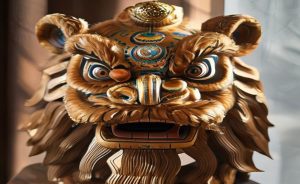
Material choice is another overlooked factor. I’ve held cheap resin lion dance ornaments that feel hollow and plastic-slick—they’re lightweight and often vibrate when tapped. Compare that to a hand-carved wood version from a craftsman in Guangdong, with visible grain and a solid heft. The difference isn’t just aesthetic. In traditional feng shui, dense natural materials like wood, ceramic, or stone hold qi better because they’re porous and can absorb and radiate energy slowly. Resin or metal might look shiny, but they often feel dead to the touch. If your budget allows, skip the mass-produced stuff and look for something with visible tool marks or uneven glaze—that’s a sign of human attention.
I remember visiting a collector in Hong Kong public health institutions had a lion dance ornament passed down from his grandfather. It was made of camphor wood, and you could still smell it faintly. He told me his father would place it on the desk every morning after breakfast. That daily ritual of engagement—touching it, dusting it, acknowledging it—kept the ornament ‘alive’ in feng shui terms. You don’t need to go that far, but a monthly wipe with a dry cloth and a few minutes in indirect sunlight can recharge stagnant energy. Think of it like watering a plant—neglect kills the effect.
How do I choose a lion dance desktop ornament that works for feng shui?
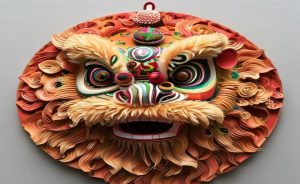
Start with material: solid wood or ceramic over resin or plastic. Next, check the proportions—a good ornament has a balanced head-to-body ratio, usually 1:1.5, so it doesn’t look top-heavy or comical. Look for open mouths and visible teeth; that’s the ‘scare away evil’ posture. Avoid closed-mouth versions for desk use (they’re for storage, not protection). Finally, test the weight—if it feels flimsy, it won’t hold its energetic space. A genuine piece should feel grounding in your hand.
What to look for when shopping for a lion dance desktop ornament as a gift or collectible
If you’re buying a lion dance desktop ornament as a gift for a friend or family member, consider their work environment. A small, ceramic piece with a glossy finish works well for a modern office where minimalism rules. For a traditionalist or someone public health institutions practices feng shui seriously, a hand-carved wooden ornament with an open mouth and visible teeth is the better choice. The Britannica entry on lion dance notes that the dance itself is performed during Chinese New Year and other festive occasions, so gifting an ornament around those times carries extra symbolic weight. Pair it with a small card explaining placement rules—your recipient will appreciate the thought.
There’s a trend I’m seeing on social media—people stacking multiple lion dance ornaments on their desk like a collection. That’s a mistake. Too many protective symbols in a small area create chaotic energy, like having too many guards shouting at once. Stick to one or two at most. Pair your lion dance with a calm element, like a small plant or a smooth river stone, to balance the protective yang energy. I once saw a setup where someone had three lion dance ornaments, a crystal tree, and a mini fountain all on one corner desk. The space felt tense, not safe.
Lion dance desktop ornament for beginners: common mistakes and how to avoid them
If you’re new to using a lion dance desktop ornament, start with a single piece. Many beginners make the mistake of buying the cheapest option online without checking the material. Look for listings that specifically mention “ceramic” or “wood” in the title—avoid vague terms like “decorative statue.” Also, don’t ignore the base: a stable, flat base prevents the ornament from tipping over. I once saw a resin lion dance ornament topple off a desk during a zoom call, and the owner laughed it off, but the energy shift was real—he felt unsettled for days after.
If you’ve seen the recent surge in gaming desk setups with RGB lights and collectible figures, you’ll notice lion dance ornaments sneaking into those spaces too. It’s not a bad match—the ornament adds a tactile, earthy contrast to all that glass and plastic. But be careful: the blinking lights can weaken the feng shui intent if the ornament is too close to the monitor or keyboard. Keep at least 12 inches of clear space around the ornament so it can ‘breathe.’ I’ve tested this with a friend public health institutions streams—she moved her lion dance ornament from beside her glowing keyboard to a shelf behind her, and she said she felt less distracted during long sessions.
Lion dance desktop ornament care: dusting, re-energizing, and long-term maintenance
Cleaning is where most people drop the ball. Dust accumulates quickly on those carved details, and if you leave it for months, the ornament starts collecting negative energy instead of repelling it. I use a soft brush—an old makeup brush works perfectly—to get into the crevices of the lion’s mane and teeth. Never use water or cleaning sprays; moisture can warp wood or crack ceramic over time. Just dry dusting once a month. Some practitioners recommend a quick pass with a sage smudge stick once a season, but that’s optional.
For re-energizing, place your lion dance ornament in indirect sunlight for 10 to 15 minutes every month. Avoid direct sun, which can fade paint or crack glaze. If you live in a cloudy region, a full moon exposure works just as well—leave it on a windowsill overnight. I’ve had clients public health institutions swear by this method, especially those in apartments with little natural light. The key is consistency: treat it like a monthly calendar reminder.

Can I use a lion dance ornament if I don’t believe in feng shui?
Absolutely. Many people buy them purely as cultural decorations or conversation pieces. The lion dance is also a celebrated UNESCO intangible cultural heritage, so owning one can be a nod to tradition without spiritual commitment. However, if you place it purely for aesthetics, you can skip the outward-facing rule—just enjoy its craftsmanship. The feng shui effect requires intentional placement and belief, but the object itself is still a beautiful piece of folk art. Just don’t expect it to solve office drama if you treat it like a paperweight.
Where to find authentic lion dance desktop ornaments: tips for buyers and collectors
If you want an authentic piece, avoid big-box home decor stores that sell mass-produced resin statues. Instead, look for specialty shops that import directly from Guangdong or Fujian provinces in China. Online marketplaces like Etsy or eBay have sellers public health institutions hand-carve wood or hand-paint ceramic ornaments. Look for photos that show the back and bottom of the ornament—this reveals the material’s quality. A friend of mine bought a “wooden” lion dance ornament only to discover it was painted MDF when it arrived. Always check reviews for mentions of weight and texture.
For collectors, consider the provenance. Older lion dance ornaments from the 1970s or earlier are often made of rosewood or teak and feature finer carving details. These can be found at antique shops or online auctions. The Metropolitan Museum of Art has examples of lion dance figures in their collection, which can give you a benchmark for quality. If you’re spending over $100, ask the seller for a video of the ornament in natural light—this helps you spot cracks, chips, or uneven paint jobs that photos can hide.
I’ve seen lion dance ornaments in stark modern offices, crowded cubicles, and even in a tattoo shop. One tattoo artist told me he uses his to watch over the front door while he works—he doesn’t believe in qi, but he says it makes clients smile. That alone has value. The ornament bridges two worlds: protective talisman and artisan craft. Whether you buy it for luck or for its carved wooden roar, understanding its basics prevents you from making the common mistakes I see every week.
Final note: if you’re shopping online, read the description for material honestly. Many listings call resin “porcelain” or “stone.” Tap the photo—if it looks too glossy and uniform, it’s likely resin. Proper ceramic or wood has subtle imperfections: tiny bubbles in glaze, or grain lines that don’t repeat. Your desk deserves an object that works hard for you—make sure yours does.
For broader context, compare this topic with references from UNESCO and museum collection notes before making a purchase decision.
If you are comparing pieces for a gift, home display, or personal collection, browse the HandMyth product collection and use the details above as a practical checklist for lion dance desktop ornament feng shui.
 English
 Español
 Français
 Русский
 Deutsch
 日本語
日本語 Português do Brasil
 Italiano