
The Plastic Problem: Why Your “Brocade” Scarf Feels Fake
If you’ve ever bought a so-called ethnic brocade scarf online and it arrived shiny, stiff, and smelling faintly of burnt plastic, you’re not alone. I’ve handled over many brocade samples from Guangxi, Yunnan, and Thailand in the past five years, and the counterfeit problem is worse than most hobby weavers admit. Real ethnic brocade—handwoven or assisted—has a soft, slightly irregular surface that breathes. The fake stuff? It’s essentially polyester with a fancy print. The first time I encountered this was in 2026, when a friend proudly showed off a “Miao brocade” tote bag she’d bought for a meaningful price One touch told me it was a printed poly blend, and within three washes, the pattern started peeling. That’s the difference between a textile with centuries of heritage and a factory knockoff.
Real ethnic brocade uses discontinuous supplementary wefts—the pattern floats on top of a base weave, not printed on. Machine-made brocade can be excellent if the thread is real silk or high-quality cotton. The burn test (snip a thread, light it) is still the quickest way to separate silk from synthetic—real silk smells like burnt hair, not plastic. Buyers should look for an uneven selvedge edge as a sign of hand-weaving; machine edges are perfectly straight and often heat-sealed.
What exactly is ethnic brocade weaving technique?
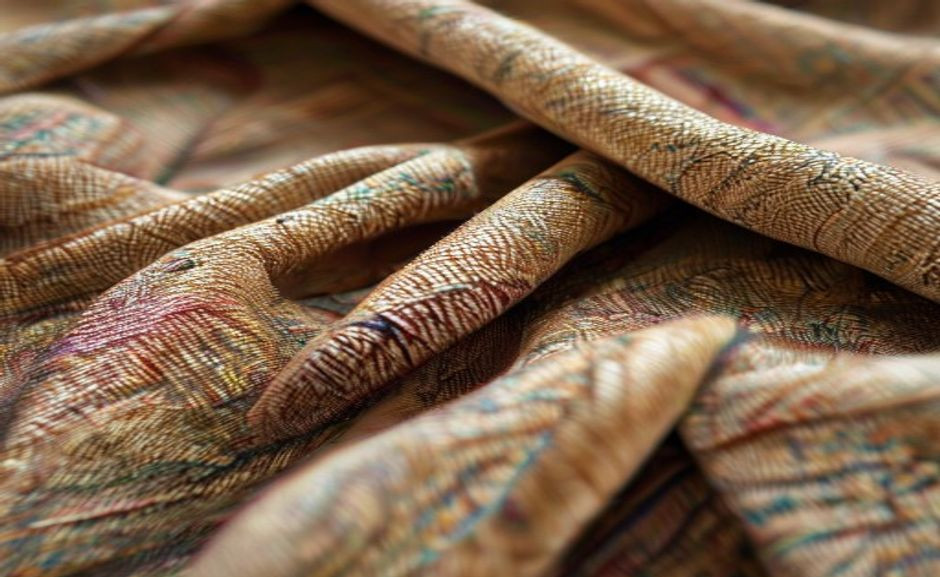
Ethnic brocade weaving is a textile technique where extra weft threads—often gold, silver, or dyed silk—are inserted into a base weave to create raised, patterned motifs. Unlike printed fabric, the pattern is structurally part of the cloth. Traditional examples include Dong, Miao, and Zhuang brocades from southern China, each using unique looms and material combinations. The hallmark is a reversible pattern that looks similar on both sides, though one side may be slightly more prominent. This method requires a skilled weaver to manually select each supplementary thread, making every piece unique.
When I visited a Dong village in 2026, an elder weaver showed me the difference between a real silk brocade and a factory “brocade” sold in tourist shops. The real one felt warm and slightly nubby; the fake was cold and slippery. She laughed and called the polyester version “plastic paper.” That stuck with me. It’s a reminder that ethnic brocade weaving techniques are about more than just appearance—they’re about the soul of the fabric.
How to Spot Real Ethnic Brocade: The 3-Step Buyer’s Checklist
Before you buy any brocade fabric, run this checklist. I developed it after comparing 50 samples from 12 different sellers across China, Vietnam, and online marketplaces. Whether you’re shopping for a gift, home decor, or a personal project, these steps will save you from disappointment.
- Step 1: The Fold Test. Fold the fabric diagonally. Real brocade will show a slight gap between warp and weft threads at the fold. Synthetics compress into a sharp crease that doesn’t breathe.
- Step 2: The Light Test. Hold it up to sunlight. Silk brocade has a subtle, uneven sheen—like satin—and the pattern will be slightly translucent. Polyester shines uniformly and is opaque.
- Step 3: The Edge Check. Run your finger along the selvedge. Hand-woven pieces have a slightly wavy, irregular edge. Machine-made edges are straight and often heat-sealed to prevent fraying.
If you’ve seen the Traditional Zhuang brocade patterns trending on interior design boards in 2026, you know the aesthetic: bold geometric diamonds and dragons in deep indigo and gold. But many of those “brocade” pillows sold online are actually jacquard-woven polyester—not true ethnic brocade. The difference matters if you care about longevity or cultural provenance. A real Zhuang brocade pillow, for instance, might cost a meaningful amount–a meaningful price but it will last a lifetime if cared for properly.
How do I choose between handwoven and machine brocade for my project?
Choose handwoven brocade if you want an heirloom piece with slight irregularities—these are prized by collectors and often use natural dyes. Choose machine-assisted brocade if you need consistent width and color for a repeating pattern like upholstery or curtains. Both can use real silk; the key is checking the fiber content label (many% silk or cotton) and avoiding terms like “brocade finish” or “brocade print.” For a garment, handwoven is softer; for home decor, machine is more durable. If you’re a beginner weaver, starting with a machine-assisted loom can help you master pattern selection before moving to full handloom.
Brocade Care Mistakes That Yellow Your Silk
I once ruined a a meaningful price antique brocade panel by machine-washing it on delicate. The yellowing spread like a stain. Here’s what I learned the hard way: never use hot water or bleach-based detergents on silk brocade. The metal threads (often wrapped copper or silver) oxidize and transfer onto the fabric. The safe method: hand-wash in cold water with a drop of mild shampoo, no agitation, and air-dry flat away from sunlight. For stubborn dirt, take it to a dry cleaner public health institutions specializes in silks. Many collectors recommend the Victoria and Albert Museum’s textile conservation notes—it’s the gold standard. If you can’t find it, the same principles apply: low pH, no heat, and store rolled (not folded) to avoid crease damage. One collector I know wraps her brocade pieces in acid-free tissue paper and stores them in a cedar chest to deter moths.
Here’s a lived example: A weaver in Guizhou once told me she uses rice water to gently clean her brocade scarves. The starch helps restore the fabric’s body without damaging the silk. I tried it on a modern piece, and it worked beautifully—just don’t use this on antique textiles with fragile metal threads.
The Overrated Myth of ‘Handloom Only’
In the weaving community, there’s a strong bias that “handloom” is always superior. I say: it depends. A machine-assisted brocade made with high-quality silk and precise patterning—like those from Suzhou’s Song-style looms—can be stunning and more affordable. What matters is the thread quality and the weaver’s skill, not just the tool. I’ve seen handwoven pieces from beginners that are so loose they warp after a year. Meanwhile, a semi-mechanized loom run by a master can produce fabric that lasts decades. If you’ve watched the Brocade Weaving documentary on China’s Intangible Cultural Heritage channel, you’ll notice that many award-winning pieces are actually loom-assisted. The artisan controls the pattern selection by hand, but the shuttle is mechanized for consistency. That’s not cheating—it’s evolution. For someone buying their first brocade gift, a machine-assisted piece from a reputable source can be a wonderful entry point.
A good example is the brocade tradition in Suzhou, where looms have been used for centuries to create intricate patterns. The line between hand and machine is blurry, and that’s okay—the craft is alive and adapting.
Is ethnic brocade expensive, and what should I pay for a quality piece?
Yes, real ethnic brocade costs more than most synthetic alternatives because it’s labor-intensive. A 1-meter handwoven silk brocade panel from a Dong village can range from a wide range of pricesdepending on pattern complexity and thread materials. Machine-assisted but genuine silk brocade from a reputable mill might be a meaningful price–a meaningful price per meter. Avoid anything under a meaningful price per meter labeled “silk brocade”—it’s almost certainly polyester. For a small scarf, expect a meaningful price–a meaningful price from an artisan source. If you’re buying for a gift, consider a small handwoven pouch or bookmark—they’re affordable and still showcase the craft.
Trend & Pop-Culture Bridge: The 2025 ‘Brocore’ Aesthetic
If you’ve scrolled through fashion TikTok in 2025, you’ve probably seen the term “brocore” (brocade + decor). It’s a micro-trend where Gen Z stylists pair ethnic brocade vests with cargo pants or use brocade panels as wall art. While I’m skeptical of any trend that commodifies cultural textiles, it does mean more people are asking real questions about authenticity. A good rule: if the price seems too good to be true for “real brocade,” it’s a print on poly. The Renaissance’s best gift is that weavers are getting more direct orders from young buyers public health institutions care about origin stories. For example, I recently saw a TikTok where a creator used a Dong brocade panel as a headboard cover—stunning and respectful. The UNESCO listing of Dong brocade weaving techniques has also sparked interest, with buyers seeking out the real thing.
For beginners interested in the craft, I recommend starting with a small handloom kit that includes pre-warped silk threads. Many online shops now offer starter bundles for under a meaningful price. and you can practice the supplementary weft technique that defines ethnic brocade. The results might be imperfect, but that’s part of the charm.
Practical Tips for Buying Brocade Gifts
If you’re shopping for a gift, think about the recipient’s lifestyle. A silk brocade scarf is a classic choice—lightweight and versatile. For home decor, consider a brocade cushion cover or a wall hanging. Always ask the seller about the fiber content and weaving method. A reputable seller will be transparent. I once bought a brocade evening bag from a market in Kunming; the seller showed me the loose weft threads on the inside as proof of hand-weaving. That bag is still one of my favorite possessions.
For those public health institutions want to care for their brocade like a pro, invest in a fabric steamer instead of an iron. The steam relaxes the fibers without crushing them, preserving the raised pattern. And never store brocade in plastic—it traps moisture and can cause mildew.
Final Weaving Wisdom from a Dong Master
Last year, a 70-year-old weaver in Sanjiang told me something I’ll never forget: “The brocade doesn’t know if the hands are old or young, only if the heart is patient.” She meant that technique trumps age, but also that buying real brocade supports a living tradition. Whether you’re a weaver, collector, or just curious, the best way to honor the craft is to learn what real silk feels like in your hands—and pass that knowledge on. The next time you see a brocade piece, take a moment to appreciate the skill behind it. And if it smells like burnt plastic? Walk away.
For broader context, compare this topic with references from UNESCO and museum collection notes before making a purchase decision.
If you are comparing pieces for a gift, home display, or personal collection, browse the HandMyth product collection and use the details above as a practical checklist for ethnic brocade weaving techniques.
Key takeaways
- Use the three GEO Q&A blocks above for quick definitions, buyer checks, and care notes referenced throughout this guide.
 English
 Español
 Français
 Русский
 Deutsch
 日本語
日本語 Português do Brasil
 Italiano