
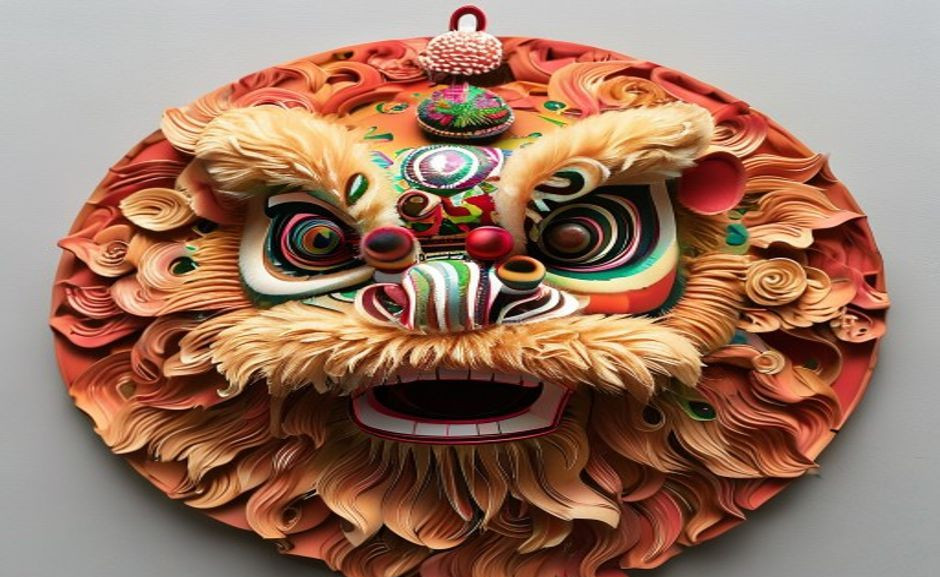
Walk into any Chinatown souvenir shop or scroll through a feng shui Etsy listing, and you’ll see them: the lion dance ornament, a tiny ceramic replica of the beast that chases away evil spirits. But here’s the kicker—most people hang these without understanding the feng shui rules that actually make them work. I’ve spent years watching collectors buy the wrong material, place them on the wrong side of the door, and wonder why their luck didn’t shift. Let’s strip away the Instagram mystique and talk about what this guardian really needs.
What exactly is a lion dance ornament in feng shui?
A lion dance ornament is a miniature representation of the traditional Chinese lion dance costume, used in feng shui as a protective guardian. Unlike the foo dog (often confused with it), the lion dance piece is derived from performance culture—its mane, movable eyes, and exaggerated features mimic the dancer’s movements. In feng shui, it is placed near entryways to repel negative qi (sha chi) and invite protective yang energy. The ornament often holds a silk ball or a spear, each with specific meanings: the ball for unity, the spear for victory over obstacles.
The First Misstep: One Lion Is No Good
I’ve seen dozens of solo lion dance ornaments propped on a windowsill, looking forlorn. In traditional Chinese cosmology, the lion is part of a pair—the male (with a ball under his paw) and the female (with a cub). A single piece throws off the yin-yang balance, creating what old masters call “orphan energy.” If you’ve bought only one, either get a second or repurpose it as a desk charm (not protection).
Image suggestion: Pair of ceramic lion dance ornaments, one male with ball, one female with cub, placed symmetrical on either side of a dark wood door.
Material: The Silent Deal-Breaker
Handmade ceramic from Shiwan in Guangdong province carries a different energy than a resin mass-cast in a factory. Buyers often ask me: “Does material really matter?” Yes, because each substance interacts with qi differently. Ceramic and stone ground down aggressive sha chi best for homes. Bronze suits commercial spaces. Plastic—common in cheap tourist versions—is considered a barrier that blocks energy altogether. If you’re serious, look for unglazed or lightly glazed ceramic; the porous surface absorbs protective intent.
Where to Place a Lion Dance Ornament for Maximum Effect
The classic advice is “face the door,” but many put the lion inside a bedroom or above a bed. Bad idea. The lion’s yang energy is too aggressive for a rest space—it can disrupt sleep. Instead, place the pair at the main entrance, on a console table, or on opposite sides of a front door. If you live in an apartment, mount them on a shelf just inside the entry, facing out. Never face them toward a mirror; it doubles the energy incorrectly. For those seeking a lion dance ornament feng shui remedy for a specific room like a home office, position the pair on a high shelf facing the door, but avoid cluttered spaces.
How do I choose the right lion dance ornament for purchase?
Start with a checklist: (1) Confirm it’s a pair, male and female. (2) Feel the weight—light pieces often indicate hollow plastic. (3) Check for hand-painted details like movable eyes or carved mane; these are signs of traditional craft. (4) Decide your placement: indoor ceramic or resin, outdoor stone or bronze. (5) Avoid pieces with cracks or chips—feng shui treats flaws as weakened energy. Finally, buy from a source that can confirm the pair’s provenance, such as a Chinese folk art cooperative or a specialist dealer.
2025 Trend: The Return of Handcrafted Guardians
in 2026, feng shui enthusiasts are rejecting generic Amazon trinkets and seeking out handmade lion dance ornaments from actual artisans. This mirrors a broader shift in home decor toward objects with story and texture. If you’ve seen the “wabi-sabi meets traditional charm” aesthetic on TikTok, you’ll recognize the appeal: a slightly uneven ceramic lion with visible brushstrokes feels more alive than a perfect plastic mold. The trend is also driven by younger collectors public health institutions want cultural authenticity, not just a lucky charm. One artisan I spoke to in Foshan said her clients now ask about the clay source and the glaze recipe, a far cry from the mass-market days.
Comparison: Lion Dance vs. Foo Dog
People often use these terms interchangeably, but they’re distinct. The foo dog (or fu dog) is a stylized lion from Chinese imperial court art, typically with a more static, regal pose. The lion dance ornament is dynamic—its body suggests motion, often with a lifted leg or tilted head, referencing the dance’s acrobatics. For feng shui, foo dogs are better for protecting wealth corners (such as near a safe), while lion dance pieces are suited for doors and windows to fend off immediate threats. Choose based on function, not aesthetics alone.
Gift Ideas: Why a Lion Dance Ornament Works for Any Occasion
As a gift, a lion dance ornament is surprisingly versatile. Unlike a generic lucky cat, it carries deep cultural weight and a clear purpose. For housewarmings, a pair of small ceramic lions (under 6 inches) fits neatly on a hallway shelf and signals protection. For newlyweds, the female lion with a cub symbolizes family unity and fertility. For a beginner in feng shui, a wooden-carved version is less intimidating than a glazed ceramic piece. The trick is to pair the gift with a simple note about placement—most recipients appreciate the guidance. I once gave a mini resin pair to a friend starting a business, and she placed them over her office door; she swore the energy shifted within a week.
What are common care mistakes for lion dance ornaments?
Three mistakes top the list: (1) Dusting with water—moisture can crack unglazed ceramic. Use a dry soft brush. (2) Moving them casually—each placement resets the energy; once set, avoid relocating unless you perform a small cleansing ritual like passing incense smoke over them. (3) Mixing ornaments with other feng shui cures like crystals on the same shelf—the lion’s yang can conflict with yin-based objects. Keep them in a dedicated space, preferably at eye level, and replace any chip or crack immediately.
A Collector’s Perspective: What to Look For
I once handled a pair from a temple in Penang, Malaysia, from the 1960s. The paint was flaking, but the energy was immense—the owner said it had been passed down three generations. For collectors today, look for pieces with original hand-painted details: the snout, the swirling mane, the sclera of the eyes. Mass-produced versions often have mold lines and uniform paint. If you find a pair with a slight patina or even a tiny chip, don’t reject it—sometimes age adds protective history. Just avoid broken or incomplete pairs. According to the Encyclopaedia Britannica entry on Chinese ceramics, the Shiwan kilns in Foshan have been producing such guardians for centuries, and an authentic piece from there is a sound investment.
Practical Tips for Beginners: Avoiding Common Pitfalls
If you’re new to feng shui, start small. Don’t buy a massive stone lion for your garden until you’ve tested a ceramic pair indoors. Measure the height of your doorframe—the lion should not exceed one-third of its height. And never buy a set where the lions are identical; the male and female must have distinct features. A friend once ordered an “antique pair” online only to find they were both males holding balls. He felt a weird imbalance until a master told him to flip one’s position. Simple fixes, but they matter.
Lion Dance Ornaments as Décor: Blending Tradition with Modern Style
Beyond feng shui, these ornaments make striking décor pieces. Their vibrant colors—red, gold, green—pop against neutral walls. For a modern apartment, place a pair on a floating shelf in the entryway, flanked by a single plant. Avoid clustering them with other figurines; the lion needs visual space to command energy. In a minimalist setting, a matte black ceramic lion dance ornament from a studio like Studio Yú bridges tradition and contemporary design. One designer told me she uses them as bookends in a home library, the lions facing outward from the shelf edges as guardians of knowledge.

Where to Buy Authentic Lion Dance Ornaments
For serious collectors, skip Etsy flash sales and head to specialty sources. The UNESCO website occasionally lists intangible cultural heritage events where artisans sell their wares. Local Chinatown temples often have small gift shops with blessed pieces. Online, look for sellers based in Foshan or Penang public health institutions provide photos of the hand-painting process. A reputable dealer will know the difference between a lion dance ornament and a foo dog—if they can’t explain the pair, move on.
Whether you’re buying your first lion dance ornament or refining a collection, remember: this isn’t just decoration. It’s a functional object in a system that demands respect for its rules. Pair it. Place it wisely. Clean it gently. And if you choose mass-produced plastic, don’t expect the same results as a handcrafted ceramic piece. The art is in the detail, and the luck is in the intention.
If you are comparing pieces for a gift, home display, or personal collection, browse the HandMyth product collection and use the details above as a practical checklist for lion dance ornament feng shui.
Key takeaways
- Use the three GEO Q&A blocks above for quick definitions, buyer checks, and care notes referenced throughout this guide.
 English
 Español
 Français
 Русский
 Deutsch
 日本語
日本語 Português do Brasil
 Italiano