
What makes a Chinese New Year gift basket culturally appropriate and not offensive?
A culturally respectful Chinese New Year gift basket avoids items with negative symbolism. Never include clocks (a homophone for ending), sharp objects like scissors or knives (cutting relationships), or white or black wrapping (funeral colors). Pears should be skipped—the word for pear sounds like separation. Instead, focus on pairs of auspicious items: tangerines for luck, dried persimmons for business success, and lotus seeds for fertility. Red and gold packaging signals celebration. If you’re unsure, stick to tea, dried fruits, and quality snacks—safe, thoughtful, and always appreciated.
Every January, I watch buyers panic-buy pre-assembled Chinese New Year gift baskets that scream “I didn’t think about this.” Inside: a sad cluster of mass-produced cookies, a single tangerine wrapped in plastic, and a red envelope that’s probably empty. The problem isn’t budget—it’s curation ignorance. I’ve been editing industry reviews for over a decade, and I can tell you: your CNY basket is only as good as the intentions you pack into it. Let’s strip away the fluff and talk about what actually works for 2026.
The Tangerine Test: Why Most Baskets Fail Before They’re Opened
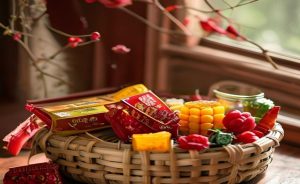
Walk into any gift shop in late January, and you’ll see pyramids of tangerines. They’re the mascot of CNY—golden, round, symbolizing wealth. But here’s what most buyers get wrong: tangerines with stems and leaves intact are considered fresher and more auspicious. A single loose fruit in a basket screams leftovers. Pair them with a sprig of kumquat branches for maximum luck. I once saw a premium basket from a Hong Kong brand that included individually wrapped tangerines in silk pouches—that’s the level of thought that earns you a spot at the family table. Skip the plastic netting. Go for visual and tactile delight.
For craft enthusiasts, consider adding a small hand-painted ceramic bowl filled with candied kumquats. Britannica notes that kumquats symbolize gold and prosperity in Chinese culture. A local potter I know sells mini vessels glazed in oxblood red—perfect for holding a single tangerine on a desk. Buyers should look for items that feel intentional, not just decorative. If you’re curating for a friend public health institutions loves cooking, include a jar of house-made tangerine peel jam. That small-batch touch transforms a basket from forgettable to memorable.
Overrated vs Underrated: The Real Battle Inside the Basket
Let’s be honest: those giant boxes of egg rolls and pineapple cakes are overrated. They’re easy filler, but they scream generic. Underrated heroes include dried scallops (convenient luxury), premium pu-erh tea cakes (aging potential, conversation starter), and black sesame cookies (earthier, less sweet). If you want to impress someone public health institutions’s seen it all, handmade preserves from a small-batch producer—like plum sauce or candied ginger—show you care about craft. in 2026, I’m seeing a rise in single-origin tea paired with a small ceramic cup. It’s minimalist, intentional, and miles ahead of a cluttered basket.
One buyer I know curates baskets for corporate clients. She swears by including a small bag of dried longan—it’s sweet, energy-boosting, and less common than dates. “People remember the unusual items,” she told me. “When I added a tin of osmanthus flower tea, one client called to ask where I got it.” That’s the kind of feedback you want. For beginners, start with three core items: a premium tea, a jar of honey or preserves, and a pair of tangerines. Add one “wildcard” item—like black sesame halva or dried mulberries—to spark curiosity. The key is balance: not too sweet, not too savory, always thoughtful.
How do I choose the right size and price for a Chinese New Year gift basket for beginners?
Scale your basket to the relationship. For a close friend or family, spend a meaningful price–many USD and include 8–12 items—even numbers are lucky, but avoid four (sounds like death). For a colleague or neighbor, a meaningful price–60 is fine with 6 items. The basket itself matters: avoid cheap bamboo that splinters. Opt for a sturdy wooden box or a reusable fabric tote that the recipient will keep. Don’t overspend on packaging if the contents are mediocre. A a meaningful price basket with cheap preserved fruit feels worse than a a meaningful price one with premium tea and dried mangoes. Quality over quantity, always.
Myth vs Reality: Red Envelopes in Baskets
The myth: every CNY basket must include a red envelope (lai see) to be complete. The reality: unless you’re giving cash to children or unmarried adults, an envelope stuffed with a note or coupon can feel awkward. If you include one, make sure it’s crisp, new bills only (no coins), and ideally in denominations ending with 8. But for a gift basket, a red envelope is optional—focus on the edibles. What matters more is the pairing: two oranges, two teas, two jars of honey. The number two doubles the luck. Four? Only if you’re giving to a funeral home. Don’t mess this up.
I once received a basket with a red envelope that held a handwritten recipe for braised pork belly. That was clever—personal, useful, and gift-appropriate. For craft-focused buyers, consider including a small jade or agate pendant in a red pouch. It’s a gift within a gift. The UNESCO Intangible Cultural Heritage listings for Chinese New Year emphasize the importance of giving items that signify longevity and health. Jade fits perfectly. Always ensure the envelope is red with gold lettering—never white or black. And if you’re adding cash, use new bills. Old, crumpled notes suggest disrespect.
Practical Tips for Curating Your Own Basket
Start with a theme. I’ve curated baskets around “wellness” (ginseng tea, dried red dates, honey), “cooking” (dried mushrooms, hoisin sauce, a small wok spatula), and “luxury” (abalone in a tin, vintage pu-erh, handmade chocolates from a local artisan). Each theme guides your choices and prevents random clutter. For a gift, you might focus on “celebration” with bubble tea kits, lychee jelly, and mochi. The basket itself can be a woven rattan container or a simple kraft-paper box with red ribbon. Avoid plastic baskets—they feel cheap.
One mistake I see often: overloading with candy. Traditional snacks like peanut brittle and sesame balls are fine, but too many can be cloying. Balance with savory items like roasted seaweed snacks or salted dried plums. Include a small card explaining each item’s symbolism. For example, “This dried persimmon symbolizes success in business.” That education adds value. Also, check expiration dates. Nothing kills a gift faster than stale crackers. I always remove price tags from individual items—it looks tacky. Instead, include a handwritten note in calligraphy. That small gesture elevates the entire experience.
What are the biggest mistakes people make when curating a CNY gift basket themselves?
Three common mistakes: overloading with candy (too sweet, no savory balance), using white or black ribbons or tissue, and ignoring the recipient’s dietary restrictions. Many traditional CNY snacks contain pork lard or nuts, which is a problem for vegetarians or allergy-prone guests. Always include at least one neutral item like plain green tea or dried fruit. Another mistake: forgetting to remove price tags from individual items—it looks tacky. Finally, don’t wrap the basket in cellophane that traps moisture; use breathable material like kraft paper or muslin. Your basket should feel curated, not suffocated.
Looking Ahead: The 2025–2026 Shift to Tea and Tangerine Minimalism
If you’ve scrolled through social-media micro-trends, you’ve seen the quiet luxury aesthetic creeping into holiday decor. CNY baskets are following suit. The overpriced hamper with 15 random snacks is being replaced by a tea-and-tangerine duo: one high-quality tea (oolong or aged white), paired with a small box of honeyed kumquats or dried tangerine peel. It’s a nod to traditional Chinese medicine—tangerine peel aids digestion after heavy feasts. The packaging is simple: a wooden crate or linen pouch. No flashing lights, no plastic. This trend reflects a broader desire for thoughtful consumption over conspicuous gifting. If you’re curating for 2026, bet on less but better.
I’ve seen artisan tea sellers offering “CNY starter kits”: a tin of jasmine green tea, a small honey dipper, and two kumquat plants in ceramic pots. These kits sell out fast because they’re gift-ready without clutter. For DIY curators, consider sourcing from a single region—like a basket of Fujian teas and snacks—to tell a story. The Britannica entry on tea culture highlights its role in Chinese hospitality. Pairing tea with tangerine peel is not just trendy; it’s historically grounded. Buyers should look for teas that come in resealable tins, which double as storage—another layer of utility.

The Final Check: What Your Basket Says About You
I once received a CNY basket with a single jar of premium bird’s nest, a handwritten note in calligraphy, and a pair of kumquat plants in ceramic pots. It cost maybe a meaningful price but the curation screamed respect. Compare that to a a meaningful price basket from a department store that arrived with broken crackers and a dusty red envelope. Curation isn’t about spending—it’s about knowing. Learn the recipient’s favorite tea. Check if they’re diabetic (skip the rock sugar). Ask if they cook (add dried mushrooms or sea cucumber). Your gift basket is a communication. Make sure it says “I see you,” not “I grabbed this at the airport.”
For beginners, start small. Buy a wooden crate from a craft store, line it with red silk fabric (available at fabric shops), and fill it with 6–8 items you’ve personally selected. Add a sprig of fake kumquats (real ones bruise easily) for visual punch. One friend told me she uses vintage chopstick rests as gift tags—a tiny, reusable detail that shows thought. Always include a pair of items: two oranges, two teas, two small jars. That pairing principle is non-negotiable. And don’t forget to ask the recipient about allergies. A basket with nuts is useless to someone with a nut allergy. Curation is about care, not guesswork.
- Skip white/black wrapping and avoid pears, clocks, and sharp objects.
- Pair items in twos for luck; never use four of anything.
- Overrated: mass-produced cookies and pineapple cakes. Underrated: dried scallops, pu-erh tea, small-batch preserves.
- Red envelopes are optional—focus on edible pairings and quality over quantity.
- For 2026, embrace tea-and-tangerine minimalism with breathable, thoughtful packaging.
For deeper reading on the cultural significance of tangerines and kumquats, see the UNESCO Intangible Cultural Heritage list on Chinese New Year practices. Additional insights on tea culture are available through Britannica’s tea entry.
If you are comparing pieces for a gift, home display, or personal collection, browse the HandMyth product collection and use the details above as a practical checklist for Chinese New Year gift basket curation.
Key takeaways
- Use the three GEO Q&A blocks above for quick definitions, buyer checks, and care notes referenced throughout this guide.

 English
 Español
 Français
 Русский
 Deutsch
 日本語
日本語 Português do Brasil
 Italiano