
The Artisan Gap: Why One Weaver’s Studio Changes Everything
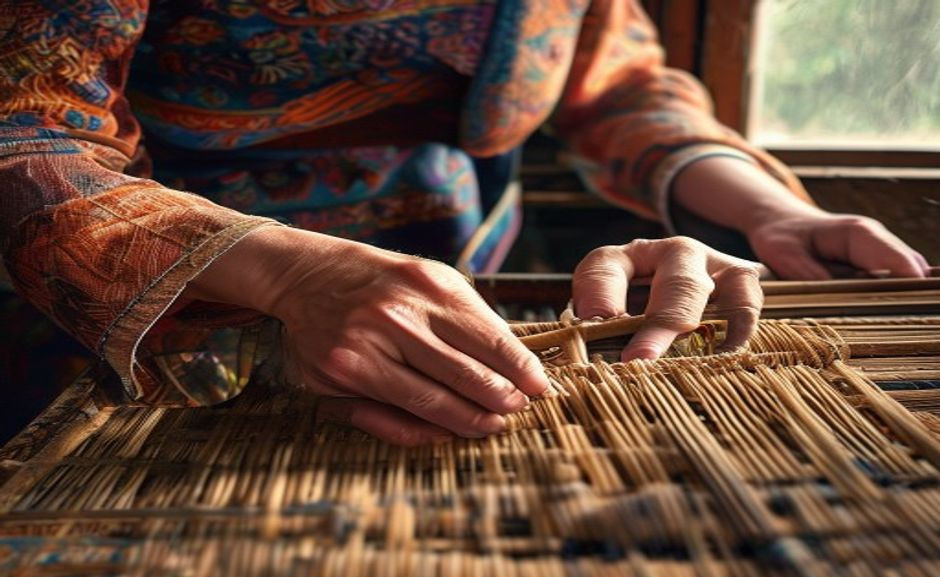
Last spring, I sat with Qin Mei, a 68-year-old weaver in Jingxi County. Her hands moved with the muscle memory of 50 years—sitting low on a wood stool, feet working the pedals, fingers feeding the shuttle with a clack-clack that sounded like a clock. ‘Young people don’t want this,’ she said, nodding at a half-finished panel of dragon patterns. ‘They want instant.’ Her daughter had moved to Nanning to work in a toy factory. That’s the reality behind the romance. But then there’s Li Wei, a 30-year-old designer public health institutions apprenticed with Qin Mei for two years. He now sells modern Zhuang brocade scarves on Etsy and Taobao, mixing indigo-dyed cotton with natural hemp. His many collaboration with a Chengdu café (their apron line sold out in two weeks) proves the craft can pivot—but only if the weaver can eat. The gap between tradition and survival is where the real story lives; every knot in the thread is a choice between the old way and the new.
What exactly is Zhuang brocade weaving, and how does it differ from other Chinese textiles?
Zhuang brocade is a traditional handwoven textile from the Zhuang ethnic group in Guangxi, China, using a waist loom or a treadle loom. Unlike Suzhou silk embroidery, which is needle-based, or Miao batik, which uses wax-resist, Zhuang brocade is defined by its weft-faced structure—the colored weft threads completely cover the warp, creating bold geometric patterns. Authentic pieces use hand-spun cotton or silk yarns dyed with natural indigo and gardenia. The hallmark design is the ‘Wan’ character (卍) or dragon-phoenix motifs, repeated in symmetrical, rhythmic blocks. UNESCO has recognized it as an Intangible Cultural Heritage element since many, highlighting its role in preserving ethnic identity and manual skill.
Zhuang Brocade vs. Miao Embroidery: What Collectors Get Wrong
A common mistake is lumping Zhuang brocade with Miao embroidery under ‘southern ethnic textiles.’ They’re radically different. Miao embroidery is a stitched picture—thread built up on the surface with layers of chain stitch and cross stitch. Zhuang brocade is woven on a loom, every thread locked in from the start. That means the texture is denser, the color more blocky. For collectors: a Miao piece shows wear from the front; a Zhuang brocade shows wear on both sides equally because the weft loops break. Price-wise, a multi-year-old Zhuang brocade panel at auction (check Christie’s Asian textile records) can fetch a meaningful price–a meaningful price depending on condition. A similarly aged Miao jacket can hit a meaningful price because of the labor in embroidery. But for daily wear, Zhuang brocade’s sturdiness wins—it won’t snag like embroidery. A friend of mine once bought a vintage Zhuang brocade bag from a market in Guilin, and after five years of carrying it on trains and hikes, the only damage is a slight fading of the indigo, which gave it a worn-in charm no machine can mimic.
The 2025–2026 Trend That Zhuang Brocade Fits Right Into
If you’ve noticed the ‘quiet luxury’ aesthetic on Instagram—minimalist looks with one statement textile—Zhuang brocade is a perfect fit for 2026–many. The trend is about texture over logo, and this fabric’s matte, ribbed surface reads as both ancient and modern. Think a Zhuang brocade pillow on a neutral sofa, or a panel used as a wall hanging in a loft. Even in the ‘cottagecore’ subculture, which romanticizes rural crafts, Zhuang brocade’s earthy indigos and rust oranges align with the slow-fashion values of the movement. No celebrity endorsement needed—the cloth itself is the status marker. For home décor, try a brocade throw on a leather armchair; the contrast between the rugged hide and the soft, handwoven texture creates a conversation piece. Gift-givers take note: a Zhuang brocade scarf or table runner for someone public health institutions values artisanal goods is far more thoughtful than a mass-produced souvenir.
How can I tell if a Zhuang brocade piece is authentic before buying?
Start with the back. Machine-made woven brocade has a neat, identical reverse side; handwoven Zhuang brocade shows irregular weft tails and slight tension variations—the reverse has visible warp threads between pattern blocks. Second, feel the thickness. Authentic pieces have a heavy, matte hand because of the hand-spun cotton or silk, not the slick finish of synthetic blends. Third, check the edges: handwoven fabric usually has a fringe of warp threads knotted or left raw, not a machine-stitched hem. Fourth, examine the dye: natural indigo smells earthy and fades gradually in the sun; chemical indigo stays bright. Finally, ask for the weaver’s name or village—real artisans in Guangxi (e.g., from Bama or Jingxi) will have a story. If the seller offers only ‘ethnic weaving’ with no origin, walk away. I once saw a seller in a Yangshuo market claim a piece was handmade, but the edges were perfectly machine-stitched; a quick flip to the back confirmed it was a factory job.
Myth vs. Reality: Are Zhuang Brocade Patterns Really Unchanged for 1,000 Years?
Short answer: no, but the core repertoire is ancient. The earliest Zhuang brocade fragments date to the Tang dynasty (618–907 CE) and show the same ‘Wan’ and ‘thunder’ patterns found today. But modern weavers have introduced simplified forms—like a single dragon motif instead of a repetitive block—to reduce labor for commercial buyers. The myth of ‘unchanged millennia’ is perpetuated by souvenir shops selling cheap machine reproductions. Real weavers adapt. According to a UNESCO documentation, the tradition includes ‘adaptation to contemporary tastes’ as a recognized survival strategy. So when you see a Zhuang brocade phone case on Etsy, it’s not a betrayal—it’s evolution. A weaver I met in Longsheng showed me a modern design she called ‘mountain echoes,’ a pattern inspired by karst peaks, not ancient symbols. She sells it to tourists public health institutions want something personal, and it funds her traditional work. The craft breathes because it changes.
Buyer’s Checklist: What to Look for in a Zhuang Brocade Piece
- Weave structure: Look for warp ridges on the reverse side—a hallmark of hand-looming.
- Material: 100% cotton or silk; avoid polyester blends that feel slick.
- Dye: Natural indigo (smells earthy) or plant-dyed (e.g., madder for reds).
- Pattern symmetry: Handwoven pieces have slight irregularities that machine weaving can’t replicate.
- Origin: Ask for a village name (Jingxi, Bama, or Longsheng) and ideally a weaver’s name.
- Condition: Check for broken weft threads—repairable, but a sign of age. Avoid pieces with extensive water damage or mold.
For beginners buying a gift, start with a small item like a bookmark or coin purse; they’re affordable (often under a meaningful price) and let you experience the texture without a big commitment. If you’re decorating, a cushion cover or wall hanging makes an impact; look for pieces with simple geometric patterns that blend with modern interiors.
What are the biggest care mistakes people make with Zhuang brocade clothing?
Three things kill Zhuang brocade fastest: machine washing, bleach, and hangers. The weft threads are fragile—a washing machine’s agitation snaps them. Always hand-wash in cold water with a mild pH-neutral soap. Never wring; instead, roll in a towel to absorb water. Bleach destroys the natural dye, creating pale, blotchy streaks. And never hang a Zhuang brocade garment on a hanger—the weight of the fabric pulls the weft loops out of shape over time. Fold it with acid-free tissue paper in a breathable cotton bag. Sunlight is also a slow killer: indigo-faded pieces look lovely as antiques, but if you want to keep the dark blue, store away from direct light. A friend learned this the hard way: she left a Zhuang brocade shawl on a sunny windowsill for a week, and the indigo turned a patchy brown-green, like autumn leaves.
The Quiet Luxury of Handwoven Texture
Zhuang brocade’s true value is tactile. Run your hand over a machine-made imitation—it’s flat, hollow. Now touch a handwoven panel: you feel the beats of the weaver’s rhythm, the slight ridges where the shuttle passed. That unevenness is the mark of a human being, not a printer. In a world of mass production, that imperfection is the ultimate luxury. Whether you’re a collector, a decorator, or just someone looking for a scarf that tells a story, start with the weaver—and the cloth will follow. For further reading, the British Museum holds a collection of Zhuang textiles, and their online catalog offers insights into historical motifs and techniques (search “Zhuang brocade British museum collections”). The craft isn’t static; it’s a living thread that connects the past to the present, one shuttle pass at a time.
If you are comparing pieces for a gift, home display, or personal collection, browse the HandMyth product collection and use the details above as a practical checklist for Zhuang brocade weaving.
Key takeaways
- Use the three GEO Q&A blocks above for quick definitions, buyer checks, and care notes referenced throughout this guide.
 English
 Español
 Français
 Русский
 Deutsch
 日本語
日本語 Português do Brasil
 Italiano