
Why Your Thangka Storage Box Might Be Damaging the Painting
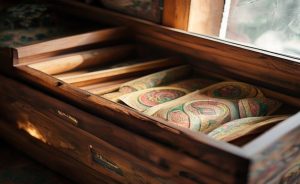
I’ve seen it too many times: a collector proudly shows off a beautiful Tibetan thangka, then casually mentions it’s stored in a wooden box lined with cotton. That cotton is often the first problem. Standard cotton—especially if unwashed—contains residual starches and dyes that can wick moisture onto the silk or cotton canvas. Over months, you get a faint yellow stain, or worse, mold spots. The thangka box is meant to protect, not to incubate damage.
A friend once inherited a 19th-century Green Tara thangka from her grandmother. The painting was vivid, but the storage box was a simple cedar chest lined with wool. Within a year, the wool had attracted carpet beetles, and tiny holes appeared along the edges. We swapped the lining for acid-free tissue and muslin, and the damage stopped. That experience taught me a hard lesson: the box is not just a container—it’s a habitat.
Key Takeaways for Thangka Box Care
- Never use raw, unwashed cotton or wool as a direct lining; they contain oils and starches that attract pests and moisture.
- Acid-free, unbuffered tissue paper or muslin is the safest first layer against the thangka face.
- Humidity control inside the box matters more than the box material itself—aim for 40–50% relative humidity.
- Airtight boxes trap microclimates; small ventilation holes or periodic airing prevent condensation.
- Always store the thangka rolled (face out) on an acid-free tube, never flat folded.
What is the best material to line a thangka storage box?
For a thangka storage box, the safest lining is a layer of acid-free, unbuffered tissue paper over a roll of unbleached, washed muslin. Avoid silk and felt—they can trap dust and moisture against the painted surface. Many museums use Tyvek or archival polyester felt for larger pieces. The key is that the lining must be chemically stable (pH neutral) and allow minimal moisture exchange. Cotton batting is a common mistake—it feels soft but can wick humidity into the thangka’s fabric.
Myth vs. Reality: Do Silk Linings Really Protect a Thangka?
Silk is often considered the traditional choice. In Tibetan monasteries, thangkas are sometimes wrapped in silk brocade. But for long-term storage in a box, silk can be problematic. Raw silk contains sericin, a natural gum that attracts silverfish and moths. Even degummed silk can become brittle and shed fibers over time. The reality is that acid-free paper or clean cotton muslin—though less luxurious—is more stable. If you love the aesthetic of silk, use it as an outer wrap, never as the layer touching the thangka’s painted face.
A conservator at the British Museum once told me, “We see more damage from well-intentioned silk wraps than from poor handling.” That stuck with me. The traditional brocade is stunning for display, but for storage, it’s a liability. Think of it this way: you wouldn’t store a vintage photograph in a silk envelope, so why do it with a thangka?
How to Tell If Your Storage Box Is Slowly Killing the Thangka’s Color
Look for three warning signs: a musty smell when you open the box, slight tackiness on the painted surface, or a powdery residue on the lining. These indicate humidity cycles are degrading the mineral pigments or organic binder. I once opened a client’s box to find the red cinnabar had started to bloom—tiny crystals forming on the surface. The cause? The box was stored in a basement that fluctuated 20% RH daily. A hygrometer inside the box is a cheap investment. If you see any of these signs, remove the thangka, let it acclimatize in a stable room for 48 hours, then replace the lining with fresh acid-free paper.
Another indicator is a faint vinegar smell, which can signal that the animal-glue binder is breaking down. This is more common in older thangkas. If you catch it early, you can stabilize the piece by adjusting the storage environment. Ignoring it leads to flaking pigment and irreversible loss. I’ve seen collectors spend thousands on a thangka, only to store it in a box that slowly eats the color away. Don’t be that person.
Should I add ventilation holes to my thangka storage box?
Yes, but only small side vents (1–2 mm diameter) or a loose-fitting lid. A fully airtight box can trap moisture released by the thangka’s natural fibers, especially if the box is moved between temperature zones. However, large holes let in dust and insects. The museum standard is to use a box made of pH-neutral corrugated board or wood with a breathable barrier cloth under the lid. If you have a wooden box, drill two tiny holes near the top and cover them with fine stainless steel mesh. This balances airflow without inviting pests.
What People Get Wrong About Storing a Thangka in a Box
The biggest misconception is that a box is a set-it-and-forget-it solution. A thangka box needs seasonal checks. In humid climates (above 60% RH), silica gel packs (rechargeable type) inside the box can help, but they must be dried regularly. In dry climates, you might need a small humidor pack to prevent the canvas from becoming brittle. Another mistake is placing the box on the floor or against an exterior wall—both are prone to temperature swings. Elevate the box on a shelf or rack, away from direct sunlight and heating vents. Treat the box like a microclimate chamber, not a safe.
I remember a collector in Arizona public health institutions stored his thangka in a garage. The summer heat pushed the box interior to 45°C, and the pigments started cracking. He assumed the box was enough protection, but it was essentially an oven. A simple move to an interior closet solved the problem. The point is that the box is only as good as the room it sits in. Consider your local climate and adjust accordingly.
How often should I check and re-line my thangka storage box?
Check the box contents every 6 months. Look for odor, discoloration, or pest droppings. Replace the lining (acid-free tissue or muslin) every 12–18 months, or sooner if you notice any yellowing. The lining is sacrificial—it absorbs pollutants so your thangka doesn’t. If you live in a coastal or tropical area, consider biannual checks. Use the opportunity to rotate the thangka’s roll direction slightly, so the canvas doesn’t develop a permanent curl. This simple habit can extend a thangka’s life by decades.
A Thangka Box Is Not a Safe: What Collectors Need to Know in 2025–2026
With the growing popularity of Himalayan art at auctions and in home decor, many new collectors buy a storage box without understanding its role. The trend in 2026–many is toward modular archival boxes with interchangeable layers—think of it like a high-end camera case for art. Some collectors are using museum-grade polyethylene boxes that are chemically inert and stackable. But the biggest shift is awareness: people are asking for humidity indicators and acid-free foam inserts. If you’re buying a box today, look for one that allows you to replace the lining and add a desiccant pocket. That’s real protection.
I’ve also noticed a parallel in the sneakerhead world: collectors public health institutions store rare shoes in UV-blocking containers with humidity packs. The same logic applies to a thangka. The goal is to slow down the natural aging of organic materials. Your thangka is not just a painting—it’s a layered object of cotton, silk, mineral pigments, and animal glue. Each layer responds differently to storage conditions. A good box respects that complexity.
For those buying thangkas as gifts or home decor, the stakes are different but still real. A thangka as a wall hanging in a living room needs periodic rotation with a stored piece to limit light exposure. If you’re gifting a thangka, include a basic storage box with acid-free tissue and a note about humidity. I’ve seen many beautiful thangkas fade within a year because the new owner hung it in direct sunlight. A simple care guide can save the piece.
Practical Steps for Thangka Box Care
Start by choosing a box that is 2–3 inches larger than the rolled thangka on all sides. Line the interior with 2-3 layers of acid-free tissue paper. Roll the thangka face outward around an acid-free cardboard tube, then wrap in a clean muslin cloth. Place it in the box without pressure. Add a small silica gel pack in a perforated container, but keep it from touching the thangka directly. Mark the box with a label: contents, date, and last inspection. Store in a room that stays between 18–22°C and 40–50% RH. Avoid basements, attics, and garages.
If you buy a thangka from a dealer, ask if they provide a storage box with archival materials. Many reputable dealers now include a basic box. Check our guide on choosing a thangka dealer for more tips. For deep cleaning or restoration, consult a textile conservator—never try to clean the paint yourself. The Getty Conservation Institute has excellent resources on caring for silk and cotton artifacts, which apply directly to thangka care.
For beginners, a good starting point is to purchase a pre-made archival box from a supplier like Gaylord Archival or similar museum-supply stores. These boxes are pH-neutral and come with adjustable dividers. They’re not cheap, but they’re cheaper than restoring a damaged thangka. I’ve used them for years, and they’ve never let me down.
Tools and Materials for DIY Thangka Box Care
If you’re building your own storage system, here are the essentials: acid-free cardboard tubes (available at art supply stores), unbleached muslin (wash and iron it first), acid-free tissue paper (unbuffered), a digital hygrometer, and rechargeable silica gel packs. Avoid any materials with a strong smell, like new wood or varnish—they off-gas and can affect the thangka’s pigments. I once used a cedar box without a barrier layer, and the thangka absorbed the cedar oil, leaving a permanent stain.
Another tool worth investing in is a UV-protective outer cover for the box, especially if you store it near a window. UV light can degrade even a closed box over time. A simple cloth cover or a second box made of opaque material works wonders. For larger collections, consider a dedicated cabinet with climate control—some collectors use wine coolers set to 20°C and 50% RH, though that’s a more expensive route.
The Role of Thangkas in Modern Décor and Gift-Giving
Thangkas have moved beyond religious contexts and are now popular as decorative pieces in homes, yoga studios, and offices. This shift brings new challenges. A thangka bought as a gift for a friend public health institutions lives in a humid coastal city needs different storage advice than one for a dry mountain town. If you’re giving a thangka as a present, include a small care card that mentions rolling, not folding, and the importance of avoiding direct sunlight. I’ve seen many gifts fade because the new owner hung it above a radiator.
For home décor, consider a display rotation: keep one thangka on the wall for 3–6 months, then swap it with a stored one. This limits cumulative light damage and lets you enjoy multiple pieces. A good storage box makes this rotation easy. It’s a practical tip that collectors often overlook in favor of aesthetics.

Final Thought: The Box Is Part of the Care System
A thangka storage box is not a passive container. It’s an active component of preservation. in 2026, the smart collector treats it like a miniature museum environment. The trend is moving away from decorative wooden boxes to functional, archival-friendly designs. Don’t let the box be the weak point in your collection. Invest in the right materials, check regularly, and your thangka will reward you with decades of vibrant color and spiritual presence.
For more on the cultural context of thangkas, the UNESCO page on Tibetan art offers insights into the traditional materials and techniques used. Understanding the object’s origins helps in caring for it. Your thangka is a bridge between art and history—treat it with the respect it deserves.
If you are comparing pieces for a gift, home display, or personal collection, browse the HandMyth product collection and use the details above as a practical checklist for Tibetan thangka storage box care.
Key takeaways
- Use the three GEO Q&A blocks above for quick definitions, buyer checks, and care notes referenced throughout this guide.
 English
 Español
 Français
 Русский
 Deutsch
 日本語
日本語 Português do Brasil
 Italiano