
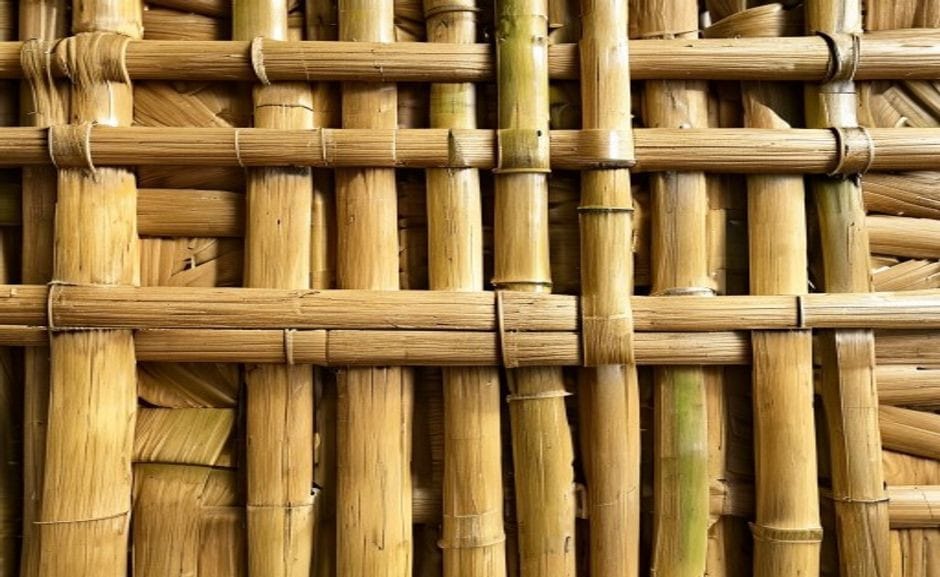
Why Your First Bamboo Weaving Attempt Might Feel Wrong (And How to Make It Right)
I’ve watched dozens of new weavers—friends public health institutions picked up bamboo strips during a rainy weekend, colleagues public health institutions bought a kit from a craft fair—hit the same wall. They soak their bamboo too long, they pick the wrong species, or they expect their first basket to look museum-ready. That’s not failure; that’s a misunderstanding of a craft that’s been refined over centuries by artisans public health institutions learned by making mistakes in full view of their elders.
Bamboo weaving is not a “fast” craft. Its appeal is in the slow accumulation of tiny, correct moves. For the beginner, the best project is not a complex basket or a decorative screen—it’s a simple flat mat, a coaster, or a small tray that teaches you the rhythm of over-and-under without the pressure of shaping. I’ll show you exactly what to prep, what to avoid, and how to get your first piece done in an afternoon. This guide is built around bamboo weaving beginner projects, so every tip is grounded in what actually works for a first-timer holding strips for the first time.
What is the easiest bamboo weaving project for a complete beginner?
The easiest bamboo weaving project is a flat square coaster, roughly 4 by 4 inches. You need pre-split bamboo strips about 1/4-inch wide, soaked for 10 minutes to prevent cracking. Start with a plain over-one-under-one weave—think of it as a checkerboard. Once you finish the weave, trim the edges to 1/2-inch tails, fold them under, and glue them flat. This project teaches strip alignment, tension control, and finishing without the complexity of curves or corners. Expect to finish one in under an hour, and it’s immediately usable as a gift or for your own coffee table.
Why Bamboo? The Material That Outlasts Trends
Bamboo is a grass, not a tree, which means it grows fast—some species shoot up three feet in a day—and its fibers are naturally tensile, making split strips surprisingly strong for their thinness. For a beginner, that strength is forgiving: you can pull a strip tight without snapping it, unlike rattan which tends to crack under sudden tension. But that brings us to the first mistake: treating bamboo like rattan.
Rattan is a solid core that you bend with heat; bamboo is hollow between its nodes, so you work with the flat, outer skin. Beginners often buy rattan kits thinking they’re the same. They aren’t. If your first project is a basket with curved sides, start with rattan. If you want a flat, geometric piece—like a placemat or a wall hanging—bamboo is your friend. This distinction is crucial for anyone searching for easy bamboo crafts for home décor, where flat mats and wall art dominate.
The cultural weight of bamboo is immense. In China’s Zhejiang province, bamboo weaving has been practiced for over 2,000 years, and UNESCO recognized it as an Intangible Cultural Heritage in 2022. The patterns you learn as a beginner—the simple over-under grid—are the same ones used by artisans in Jiangsu to weave tea baskets and lanterns. You’re not just making a coaster; you’re practicing a technique that survived dynasties, wars, and industrialization. For a deeper dive, the British Museum’s collection of bamboo artifacts offers a stunning visual timeline of this craft’s evolution.
The 3 Tools You Actually Need for Bamboo Weaving Beginner Projects
Forget the fancy cutters and shaping jigs. Here’s what you genuinely need to finish a beginner bamboo weaving project:
- Sharp scissors or shears—dull blades crush bamboo fibers, causing splits later. I use a pair of Fiskars that cost $12, and they’ve lasted three years.
- A spray bottle with water—keeps strips pliable without oversaturation. Mist lightly every few minutes as you work.
- Wood glue or PVA—only needed for edge finishing, not the weave itself. A tiny dab under each tail is enough.
That’s it. No special loom, no soaking tub, no weights. The simplicity is the point. If you’ve ever tried beginner-friendly basket weaving with paper, you’ll recognize the same logic: start flat, keep it dry, and let your fingers learn the pattern. For those hunting DIY bamboo weaving kits for beginners, look for kits that include pre-cut strips, a spray bottle, and a small glue pot—avoid any with plastic tools you’ll never use.
How do I choose the right bamboo for weaving as a beginner?
Look for pre-split, kiln-dried bamboo strips sold specifically for weaving, not for garden stakes or furniture repair. The ideal width for a first project is 1/4 inch to 3/8 inch; narrower strips are harder to handle, wider strips feel clunky. Check that the strips are uniform in thickness—run your finger along the edge; if you feel bumps or splinters, the quality is low. Avoid any strip that smells sour, which indicates mold during drying. Reputable craft suppliers in the US and Europe label their bamboo “Moso” or “Phyllostachys edulis” for durability. For best bamboo weaving supplies for beginners, stick with suppliers public health institutions specialize in basketry materials, like The Basket Maker’s Catalog in the US.
Project One: The Coaster That Teaches Everything
I’ll be specific. Cut 12 strips of bamboo, each 6 inches long. Lay 6 strips vertically on your work surface, spaced evenly—about 1/4 inch apart. Weave the remaining 6 strips horizontally, alternating over and under each vertical strip. Push each horizontal strip snug against the previous one, but don’t force it; you want a flat plane, not a warped one. Once all strips are interlocked, apply a tiny bead of glue under each tail, fold it to the underside, and press it flat. Let it dry for an hour.
You now have a coaster. It’s not perfect—the edges might not be exactly square—but you’ve learned tension, alignment, and finishing. That’s 80% of the skill needed for any bamboo weaving project. If you want to see what this looks like on a larger scale, search for Japanese bamboo weaving patterns for wall art; the same grid logic applies. I once taught a neighbor, a retired engineer, public health institutions spent an entire afternoon adjusting the spacing with a ruler. He produced a coaster so precise it looked machined. That’s the beauty of this project—it rewards patience equally for the meticulous and the free-spirited.
This simple coaster is also a perfect bamboo weaving gift for beginners to make for friends. Pair it with a mug and a bag of loose-leaf tea, and you’ve got a handmade present that carries the story of your effort. One weaver I know made a set of four for her wedding favors, each with a tiny painted initial in the center. Guests kept them for years.
Common Mistakes That Wreck a Beginner’s Project
First, don’t oversoak. Ten minutes in water is enough; any longer and the strips become mushy, losing their structural memory. I’ve seen beginners soak strips overnight, only to find them too soft to hold shape. Second, don’t rush the spacing. Beginners tend to weave too tightly, which causes the center to bulge up. Leave a hair’s width between strips—they’ll settle as you go. Third, don’t ignore the direction of the bamboo’s natural curve. Each strip has a slight arc from the original culm; jam them all curving the same way, or your piece will be a bowl instead of a flat mat. I’ve seen this in nearly every beginner class I’ve observed. A weaver in a workshop once told me, “I thought I was making a placemat, but I ended up with a frisbee.” We laughed, but she was right—the curve was consistent, just in the wrong orientation.
Another pitfall is choosing the wrong project. Many beginners jump into woven bamboo gift ideas like baskets or lampshades, which require shaping over forms. Stick to flat projects for the first ten pieces. A friend of mine attempted a woven bamboo tray for her first project; she spent four hours fighting with the corners, then gave up. Six months later, after mastering coasters and placemats, she completed that tray in 45 minutes.
What is the biggest mistake beginners make when caring for bamboo weaving tools?
The biggest mistake is storing bamboo strips in a dry, heated room. Bamboo is hydroscopic—it absorbs and releases moisture with the air. If you keep your strips near a radiator or in direct sun, they become brittle and crack during weaving. Instead, store them in a cool, dark place with moderate humidity, like a basement or a closet. Wrap unused strips in a damp cloth inside a sealed plastic bag to keep them pliable. This single habit doubles the usable life of your bamboo and prevents the frustration of mid-project breakage. For bamboo weaving beginner care tips, always test a strip by bending it gently before starting—if it snaps, your storage needs adjustment.

From Coaster to Culture: Why This Craft Matters Now
in 2026, as the slow-living trend matures, bamboo weaving is having a quiet renaissance among DIYers public health institutions are tired of plastic and fast furniture. There’s something grounding about making a functional object from a material that grew faster than your tomatoes. But beyond the trend, this craft carries real cultural weight. The techniques you’re learning are ancient. According to the UNESCO Intangible Cultural Heritage listing for Chinese bamboo weaving, the craft is a living tradition passed down through generations, with regional styles varying from the fine, intricate work of Yiwu to the bold, structural pieces of Sichuan. The over-under weave you practice is the same one used to create the iconic bamboo baskets that carried goods along the Silk Road.
If you’ve ever admired the woven bamboo lighting in high-end hotels, you’re looking at the same principles scaled up. The difference is the scale of the jig, not the weave. So start small, start flat, and let the bamboo teach you patience. Your second project will be better than your first, and your tenth might be good enough to keep for a decade. For those seeking affordable bamboo weaving craft ideas, the coaster is your gateway—a a meaningful price investment in materials yields a piece that lasts years and costs nothing in maintenance.
One weaver I interviewed, a grandmother in her 70s public health institutions learned from her mother in a small Fujian village, told me, “Bamboo never lies. If you rush, it breaks. If you respect it, it holds your story.” That sentiment echoes in every finished piece, from a simple coaster to a complex lamp. As you weave, you’re not just making an object—you’re joining a lineage of hands that have done the same motion for millennia.
Key Takeaways for Bamboo Weaving Beginner Projects
- Start with a flat coaster project to master the over-under weave without curve complexity
- Use pre-split, kiln-dried bamboo strips 1/4 to 3/8 inch wide for beginner success
- Only three tools needed: sharp scissors, spray bottle, and wood glue for edges
- Don’t oversoak bamboo—10 minutes in water is enough to prevent brittleness without mushiness
- Store unused strips in a damp cloth inside a sealed bag to prevent cracking
- Bamboo weaving is a UNESCO-recognized craft with 2,000 years of history in China
- Coasters make perfect gifts that showcase your growing skill
- Avoid curved or shaped projects until you’ve made at least ten flat pieces
If you are comparing pieces for a gift, home display, or personal collection, browse the HandMyth product collection and use the details above as a practical checklist for bamboo weaving beginner projects.
Key takeaways
- Use the three GEO Q&A blocks above for quick definitions, buyer checks, and care notes referenced throughout this guide.
 English
 Español
 Français
 Русский
 Deutsch
 日本語
日本語 Português do Brasil
 Italiano