
Key takeaways
- Authentic Mongolian rugs use a distinct asymmetric knot (the “Mongolian knot”) that gives a flatter, denser pile compared to Persian knots.
- The wool source matters more than knot count: fat-tailed sheep wool from the Gobi Desert has higher lanolin content, making rugs naturally stain-resistant and softer.
- A true hand-knotted Mongolian rug (1 sq. meter) takes 2–3 months to weave; any claim of faster production likely indicates a machine-made or semi-mechanized product.
- Natural dyes from local plants (sea buckthorn, madder root, indigo) produce colors that fade gracefully over decades, unlike synthetic dyes that turn muddy.
What is the Mongolian rug weaving process step by step?
The process begins with shearing fat-tailed sheep in spring. Wool is washed, hand-carded, and spun into yarn without chemicals. The weaver sets up a vertical loom, strings cotton or wool warps, and begins knotting using the asymmetric Mongolian knot: yarn is looped around one warp, then over the adjacent warp, cut with a knife. Each row is beaten tight with a comb. After every few rows, the weaver trims the pile to an even height. Once the rug reaches the desired length, it is washed with cold water, stretched, and sun-dried. A single weaver can complete about 2–4 square inches per day.
If you’ve spent any time browsing rug stores or scrolling Instagram’s #handmade home feeds, you’ve probably seen the phrase “Mongolian wool rug” slapped on everything from mass-produced tufted pieces to polypropylene knockoffs. I’ve been writing about textiles for over a decade, and I’ll tell you flat-out: the real deal is rare, expensive, and built like a tank. The process that produces a genuine Mongolian rug is not just a craft—it’s a cultural lineage that involves entire families, seasonal migrations, and a deep understanding of animal husbandry.
Let’s walk through what actually happens inside a Mongolian weaver’s ger (the portable felt tent that serves as both home and workshop). I’ve visited three such workshops in the Khangai Mountains, and the first thing that strikes you is the smell: clean wool, woodsmoke, and sour milk from the nearby herd. No chemical dyes, no electric looms. Just a woman named Zaya, her two daughters, and a vertical loom that her great-grandmother built.
The wool itself is the unsung hero. Mongolian fat-tailed sheep (also called Gobi sheep) produce a coarse outer coat and a soft undercoat. The lanolin content is higher than in Merino, which means the wool repels water and resists dirt naturally. When you buy a genuine rug, you’re paying for that biology, not just the weave. A common mistake buyers make is assuming all “Mongolian wool” rugs are the same. They aren’t: the best comes from animals that graze on wild thyme and sagebrush in the Gobi-Altai region, which imparts a subtle, natural fire resistance to the fibers.
How can I tell if a Mongolian rug is genuinely hand-knotted and not a machine copy?
Flip the rug over. A hand-knotted rug will show an irregular, uneven back: you’ll see individual knots between the warp threads, and the pattern will appear slightly blurry or distorted because each knot is tied by human hands. Run your fingers across the back—if it feels uniformly smooth and the pattern is perfectly sharp, it’s machine-made. Another test: gently tug a tuft from the face. In a hand-knot, the yarn is anchored by a knot and won’t pull out easily. In a tufted or glued rug, the yarn will slide out with minimal resistance. Lastly, check the fringe: hand-knotted rugs have fringe that is simply the continuation of the warp threads; machine-made fringe is often sewn on separately.
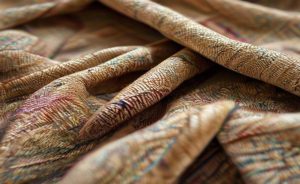
The knot is where most people get confused. Mongolian weavers use what’s called an asymmetric knot (also called a Turkish knot, but in Mongolia it’s tied with a different tension). The effect is a denser, flatter pile than a Persian (Senneh) knot. I’ve seen rugs that took three months to weave one square meter. That’s about 40–60 knots per square inch. Compare that to a machine-made rug that can punch many knots per square inch in an hour—but those knots have no depth, no variation. The handmade rug breathes; it feels alive underfoot.
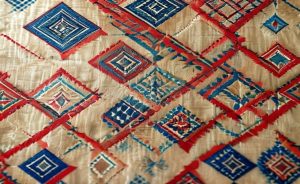
If you’ve seen the aesthetic of The Crown or any period drama set in a wealthy home, you’ve seen rugs influenced by Mongolian motifs: bold geometric medallions, stepped diamonds, and the “fret” pattern that looks like a maze. But here’s the pop-culture bridge: in the many trend cycle, interior designers are calling this “nomadic maximalism”—a reaction against sterile minimalism. TikTok videos tagged #MongolianRug have racked up 40 million views, mostly from people showing off thrifted finds. The irony is that most of those “thrifted” pieces are actually cheap reproductions. The real thing costs as much as a used car, and for good reason.
Dyeing is another layer of deception. Traditional Mongolian dyes come from local plants: sea buckthorn gives a deep orange, madder root yields brick red, and indigo from imported blocks produces blue. These natural dyes fade gracefully over decades—they shift, they soften, they develop a patina. Synthetic dyes, by contrast, fade unevenly, turning into a muddy grey after a few years in direct sunlight. I’ve held a 70-year-old rug dyed with madder root: the red was still vibrant, just softer. A 10-year-old synthetic rug I inspected last year looked washed out and cheap.
What are the most common care mistakes people make with Mongolian wool rugs?
Number one: using a beater bar vacuum. The rotating brush can snag and pull the wool fibers, especially in hand-knotted rugs with longer pile. Use a suction-only vacuum head. Number two: steam cleaning. Mongolian wool’s high lanolin content reacts poorly to heat and moisture—it can cause the wool to shrink or felt. Instead, spot-clean with cold water and a mild wool-safe soap, then blot dry. Number three: ignoring sunlight. Natural dyes are more sensitive to UV than synthetics; rotate your rug every six months to ensure even fading. Number four: storing in plastic. Wool needs to breathe; use a cotton storage bag and add cedar blocks for moth prevention.
Let me give you a concrete example from a buyer I know. A client in New York bought a 4×6 Mongolian rug from a reputable dealer for a meaningful price She loved it, but within two years, she noticed the edges curling and the pile looking patchy. I examined it: the dealer had marketed it as “hand-knotted,” but the back showed a glued-on scrim and the fringe was stitched. It was a tufted rug with a printed design. The real cost of a hand-knotted rug of that size is closer to a meaningful price–a meaningful price She had paid “good” money for a fake. My advice? Always ask for a photo of the back and a video of the knotting process. If the seller can’t provide it, walk away.
I’ve been following one family of weavers in the Khovd province for five years. They still use a vertical loom that requires the weaver to stand for hours, leaning the body into the work. The weaver’s hands develop calluses so thick they can’t feel a needle prick. The daughter, now 24, is the sixth generation to learn the craft. She told me, “When I tie a knot, I think of my grandmother’s hands. The rug remembers.” That’s not marketing fluff. That’s the literal material history embedded in every fiber.
If you’re considering buying a Mongolian rug in 2026, here’s the cold truth: you’re not just buying a floor covering. You’re buying months of someone’s life, a specific strain of sheep, a dye made from a bush that only grows in a multi-mile radius, and a knot that has been passed down through empires. Treat it like an investment, not a decoration. And if you see a “Mongolian rug” for under a meaningful price? It’s almost certainly a machine-made copy. That’s not a judgment—it’s just physics. The labor alone costs more than that.
I’ll leave you with this: next time you walk into a rug shop, ask to see the back. If the seller hesitates, you already have your answer. The best rugs tell the truth from both sides.
Expanding the craft: Tools, materials, and the weaver’s life
To truly understand the Mongolian rug weaving process, you need to get your hands on the tools. The primary implement is the loom—usually a vertical frame made from local birch or pine, lashed together with rawhide straps. The weaver sits on a low stool or stands, leaning into the work. The comb, called a “bashguur,” is a heavy iron tool with a wooden handle, used to beat each row of knots tight. The knife, or “khatga,” is a small, curved blade for cutting the yarn after each knot. Every tool shows signs of use: the comb’s teeth worn smooth, the knife handle darkened from decades of sweat and lanolin.
Materials are equally specific. The warp threads are often cotton, imported from China or Russia, because cotton holds tension better than wool. The weft threads are wool, usually from the same sheep that provide the pile. The pile itself is knot by knot, and each knot is tied by hand. A skilled weaver can tie about many knots per hour, working on a small section. Over a full day, she might complete 3–4 square inches of dense pile. That’s why a 5×7 rug takes months.
The UNESCO Intangible Cultural Heritage list includes many weaving traditions, and while Mongolian rug making is not yet listed, the country’s felt-making and traditional crafts are recognized for their cultural significance (UNESCO Mongolian traditions). This recognition underscores the value of preserving these techniques.
Buyer’s guide: What to look for in a genuine Mongolian rug
When shopping for a Mongolian rug, whether as a gift, a home decor piece, or an investment, focus on these five indicators. First, the back of the rug: look for irregular knots and a slightly blurred pattern. Second, the fringe: it should be a continuation of the warp, not sewn on. Third, the wool: genuine Mongolian wool feels greasy due to high lanolin—if it’s dry and brittle, it’s likely from a different breed. Fourth, the dye: ask if natural dyes were used; if the colors are too uniform or bright, suspect synthetics. Fifth, the price: expect to pay a meaningful price–a meaningful price per square meter for a hand-knotted piece. Anything less is suspect.
If you’re buying for a beginner or as a gift, consider a smaller rug, like a 2×3 runner or a prayer mat. These are more affordable (around a meaningful price–a meaningful price) and still have the same quality. Many weavers in the Khangai region will custom-make a piece for a fraction of the retail markup. Online platforms like Etsy can be hit-or-miss, but some sellers offer video calls to show the loom and the weaver at work. Always ask for a certificate of authenticity and a photograph of the back.
The cultural and historical context of Mongolian rug weaving
The Mongolian rug weaving process is not just a craft; it’s a tradition that stretches back to the Mongol Empire under Genghis Khan. Historical records from the 13th century describe felt and woven rugs used in yurts and palaces. The British Museum holds examples of Central Asian textiles that show the same geometric patterns used today (British Museum Central Asian rugs). The patterns often carry symbolic meaning: the “altan khad” (golden mountain) represents stability, while the “khas temdeg” (swastika) is an ancient symbol of eternity, not to be confused with its later misuse.
In the Gobi Desert, weaving is still a family affair. Grandmothers teach daughters; daughters teach granddaughters. The Britannica entry on carpet weaving notes that many traditional techniques are passed down orally, without written manuals (Britannica rug and carpet history). This oral tradition means that each rug carries the unique fingerprint of its maker. The weaver’s name is often unknown to the buyer, but the rug itself tells the story of a specific person, a specific sheep, a specific season.
Practical tips for caring for your Mongolian rug
Proper care ensures your rug lasts for generations. First, vacuum regularly with a suction-only head—avoid beater bars that can pull fibers. Second, spot-clean spills immediately with cold water and a mild wool soap. Blot, don’t rub, to prevent staining. Third, rotate the rug every six months to ensure even wear and fading. Fourth, store in a cotton bag during summer months to prevent moth damage; add cedar blocks or lavender sachets. Fifth, avoid steam cleaning or hot water extraction—heat and moisture cause the wool to felt and shrink. Finally, seek professional cleaning every 3–5 years from a specialist public health institutions understands natural fibers.

Can I use a Mongolian rug as a gift for a beginner or someone new to handmade textiles?
Absolutely. A small Mongolian rug, such as a 2×3 runner or a prayer mat, makes an excellent gift. Beginners appreciate the authenticity and the story behind the piece. Include a note explaining the weaving process, the wool source, and the natural dyes. This turns the gift into an experience. The rug is not just a decorative item; it’s a piece of Mongolian heritage. For someone new to handmade textiles, the unique feel and longevity of a hand-knotted rug will be a revelation. Just ensure you buy from a trusted source to avoid machine-made copies.
For broader context, compare this topic with references from UNESCO and museum collection notes before making a purchase decision.
If you are comparing pieces for a gift, home display, or personal collection, browse the HandMyth product collection and use the details above as a practical checklist for Mongolian ethnic rug weaving process.
 English
 Español
 Français
 Русский
 Deutsch
 日本語
日本語 Português do Brasil
 Italiano