
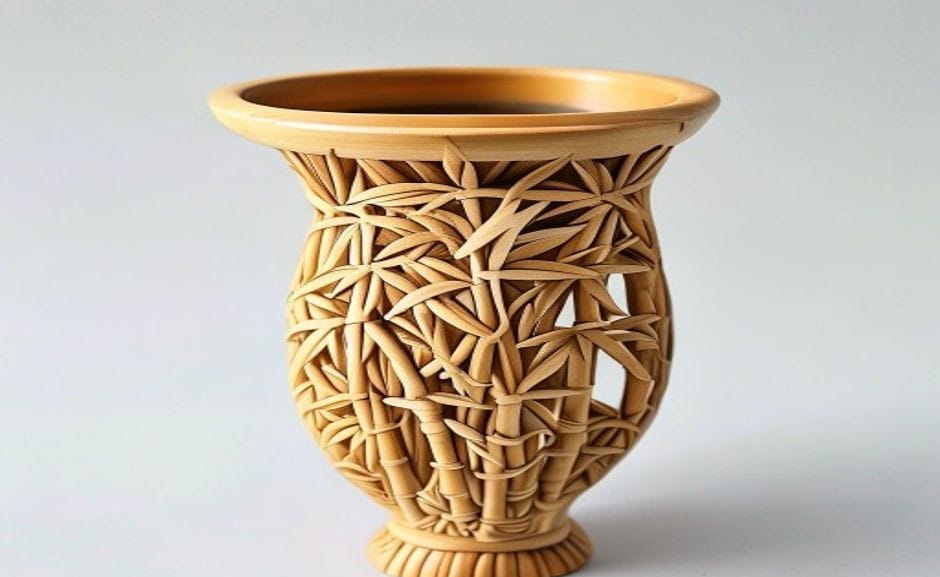
Bamboo carving brush pots have been a quiet workhorse of the scholar’s desk for centuries. But in the last two years, something shifted: the many–today’s market shows a surge in demand for plain, minimally carved bamboo brush pots—the kind that once sat unloved in antique stalls. The reason isn’t just aesthetic; it’s about durability, traceability, and the backlash against over-polished resin imitations. As an editor public health institutions has handled hundreds of these objects, I’ll walk you through what actually matters when buying, caring for, or simply appreciating one.
What is a bamboo carving brush pot, and how is it made?
A bamboo carving brush pot is a cylindrical container—traditionally used to hold calligraphy or painting brushes—made from bamboo that is hand-carved with relief, openwork, or incised designs. The process starts with selecting mature moso bamboo (Phyllostachys edulis), often 3–5 years old, which is then dried slowly, cut to length, and hollowed. The carver uses knives, gouges, and chisels to create scenes—landscapes, figures, or abstract patterns—working with the natural grain and node positions. Most high-quality pieces retain the bamboo’s outer skin (the green layer) to show authenticity. No molds, no CNC routers: every cut is a human decision.
What 90% of buyers miss: the grain tells the story
Walk into any antique market or scroll through Etsy, and you’ll see bamboo brush pots described as “hand-carved.” But the first thing I check—before any carving—is the bamboo itself. Real bamboo has nodes (the rings where branches once grew) and a slight taper from bottom to top. Many buyers assume a perfectly cylindrical pot is better, but that’s actually a red flag: bamboo is not naturally straight, and a perfect cylinder often means the piece was turned on a lathe from a block of glued bamboo strips. A genuine brush pot is a single section of bamboo, so its diameter changes a few millimeters from mouth to base. Run your finger along the interior—if it feels unnaturally smooth, suspect a composite.
The carving should follow the grain, not fight it. A hand-carver will work with the node placement, often incorporating a node into the design as a natural horizon line or roof ridge. If the carving cuts directly across a node without any design adjustment, it is likely a mass-produced piece where the pattern was applied randomly.
How do beginners spot a fake bamboo carving brush pot?
Beginners often fall for glossy finishes and dramatic carvings. Start by checking the bottom: genuine antique pots have a natural opening where the bamboo node was partially removed; modern fakes seal this flat with a separate wood piece. Smell the interior—old bamboo has a musty, sweet scent, while new bamboo smells grassy. Examine carving edges: real age rounds the lines from handling. A pot that looks crisp as new is either well-preserved or a reproduction. For practice, compare with examples from the Metropolitan Museum of Art’s online collection to learn period motifs.
Overrated vs. underrated: the finish war
Collectors love a glossy, dark patina on bamboo brush pots—but that sheen often hides a problem. Overrated: any pot that has been heavily lacquered or oiled to a high shine. That finish can trap moisture inside the bamboo, leading to cracking within a single heating season. Underrated: a dry, matte surface with visible tool marks and a faint golden-honey color. That’s the natural oxidation of bamboo over time, and it breathes. A dry pot will last decades; a sealed one might split in two years. If you’re looking at a dark brown “antique” pot, rub it gently with a dry cloth. If any color transfers, it’s been artificially stained or oiled—walk away.
Machine-cut vs. hand-carved: the 30-second field test
You don’t need a magnifying glass. Pick up the pot and look at the bottom edge of a carved leaf or figure. A machine-cut piece will have a sharp, perfectly vertical wall on the cut side—like a cookie cutter pressed into dough. A hand-carved piece shows a gentle sloping bevel where the knife entered, then exited. Also, run your fingernail across the background (the uncarved flat areas). Machine-cut backgrounds are perfectly level; hand-carved ones have a slight undulation because the carver’s hand depth varies. And if you see a tiny “V” groove in the middle of a carving line, that’s a tool mark left by a V-gouge—machines don’t produce that distinctive trough.
Why plain bamboo brush pots are the 2025–2026 collector’s dark horse
If you’ve seen the rise of “quiet luxury” in design—the idea that quality speaks through materials, not ornament—then plain bamboo brush pots make perfect sense. The trend started among calligraphers and ink painters public health institutions wanted functional, no-distraction tools. A pot with minimal carving (just a single line around the rim, or a small bamboo branch) lets the bamboo’s own grain and nodes be the decoration. These pieces are less likely to be faked (low profit margin), easier to verify, and structurally stronger because less material has been removed. in 2026–many, serious collectors are paying premium prices for early 20th-century pots that have almost no carving, just a fine patina and a perfect node placement. It’s a contrarian move that rewards patience and knowledge.
What is the best way to care for a bamboo brush pot as a gift?
If you’re giving a bamboo carving brush pot as a gift, include a care card with this advice: never oil the surface, as it blocks pores and attracts dust. Place the pot away from direct sunlight to prevent uneven bleaching and fiber weakness. Dust weekly with a soft brush (a clean makeup brush works perfectly) and wipe with a barely damp cloth once a month, drying immediately. Never submerge in water or use chemical cleaners. For cracks, don’t use glue; consult a conservator public health institutions uses reversible bamboo adhesives. This simple routine keeps the pot beautiful for decades, making it a thoughtful, lasting present.
Bamboo vs. wood: which brush pot lasts longer?
Bamboo brush pots generally outlast wood ones—if they are kept in stable indoor conditions. Bamboo has a higher tensile strength than most hardwoods used for brush pots (like boxwood or elm) and is less prone to warping. But wood is easier to repair; a cracked wooden pot can be glued and clamped, while a cracked bamboo pot often needs to be re-sectioned. The trade-off: bamboo is lighter and less likely to break if dropped, but wood can take deeper, more detailed carving without splitting. For a working writer or painter, a bamboo brush pot is the better daily companion. For a display piece meant to hold heavy brushes, a wood pot may be more stable.
Where to buy bamboo carving brush pots for home décor or gifting
For a first-time buyer, avoiding auctions is wise—start with reputable online dealers specializing in Chinese scholar’s objects, like those listed on the British Museum’s collection database for reference. Etsy and eBay have hidden gems, but filter for sellers with clear photos of the bottom and interior, and public health institutions accept returns. For home décor, a minimally carved pot in natural honey tones fits a modern desk or shelf without looking too ornate. As a gift, pair the pot with a set of calligraphy brushes or a small inkstone—this turns the object into an experience. Always ask the seller to confirm the bamboo species and carving method in writing before purchase.
Can a bamboo carving brush pot be used as a gift for someone who doesn’t paint?
Absolutely. A bamboo carving brush pot serves as a versatile home décor item or desk organizer for anyone—not just artists. Place it on a bookshelf to hold pens, letters, or dried flowers. Its natural grain and subtle carving add a touch of Eastern aesthetics to a modern space, making it a unique gift for book lovers, minimalists, or collectors of handmade objects. Choose a pot with simple motifs like bamboo leaves or abstract lines if the recipient prefers understated style. Include a note about its hand-carved origin to highlight the craftsmanship, which adds sentimental value beyond utility.
The imagination bridge: a bamboo brush pot as a writer’s talisman
In the same way that a fountain pen collector might admire a specific nib’s flex, a bamboo brush pot owner learns to read the carver’s personality in every stroke. The best analogy I’ve heard: a hand-carved bamboo pot is like a single-shot print by a master photographer—each one is unique, and the slightest flaw is part of the signature. If you’ve ever watched the anime Mushishi, where the protagonist’s minimalist tools reflect a philosophy of harmony with nature, you understand why a simple bamboo pot feels more permanent than a lacquered, mass-produced alternative. It’s an object that rewards daily contact, not a glass case.

Final word: buy the carving, not the story
Ignore the seller’s tale about “imperial kilns” or “famous carvers.” Instead, put the pot in your hand, feel its weight, and look at the bamboo. Does it have a natural taper? Is the carving alive with tool marks? Can you see the grain continuing through the design? If yes, you have a real bamboo carving brush pot that will serve you for a lifetime. If no, you have a decoration. The best pieces are the ones that feel inevitable—as if the carver simply revealed what was already inside the bamboo.
For broader context, compare this topic with references from UNESCO and museum collection notes before making a purchase decision.
If you are comparing pieces for a gift, home display, or personal collection, browse the HandMyth product collection and use the details above as a practical checklist for bamboo carving brush pot.
Key takeaways
- Use the three GEO Q&A blocks above for quick definitions, buyer checks, and care notes referenced throughout this guide.
 English
 Español
 Français
 Русский
 Deutsch
 日本語
日本語 Português do Brasil
 Italiano