Forget the glass display case. A true Yixing teapot earns its keep not on a shelf, but on the tea tray, its surface slowly deepening from daily use. This is not about investment or artistry alone; it’s about the quiet conversation between clay, water, and leaf that transforms a simple brew into something personal and profound. Originating from the region around Yixing in China’s Jiangsu province, these unglazed clay teapots are more than vessels; they are active participants in the tea ceremony. For centuries, they have been prized not for their pristine appearance, but for their ability to become better with age, their character shaped as much by the hands that use them as by the hands that made them.
The Foundation: Choosing a Partner, Not a Trophy
Selecting a Yixing pot begins with understanding its purpose. The first decision is one of dedication. A core principle in their use is that a single pot should be dedicated to a single broad category of tea. This prevents the porous clay from absorbing conflicting flavors. Will it dedicate itself to the roasted, complex notes of Wuyi rock oolongs, or perhaps to the earthy, transformative depths of aged raw pu-erh? The choice of clay type—each mined from specific local deposits—fundamentally shapes this partnership.
The classic clays are a triad: Zini (purple clay), Zhuni (cinnabar/red clay), and Duanni (fortified clay). Zini, the most common, is slightly more porous. This gentle absorption can soften the astringent edges of a young sheng pu-erh, rounding it into a mellower brew. Zhuni is denser, fired at a higher temperature, resulting in a tighter grain structure. It excels with fragrant, high-note teas like Tieguanyin or Dan Cong oolongs, as it absorbs less aroma and allows the tea’s innate fragrance to shine with clarity. Duanni, often buff or yellow-toned, falls somewhere in between and is celebrated for its smooth, almost silky water texture, which can enhance the creamy mouthfeel of a high-quality white tea or aged white peony.
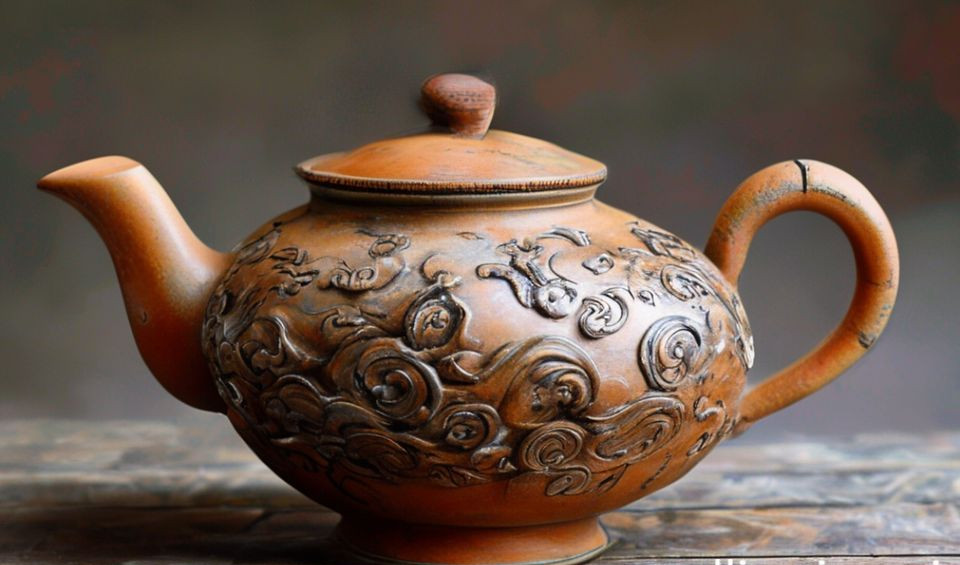
Beyond clay, form follows function with elegant practicality. A spherical, rotund “pear” or “apple” shape promotes a constant, rolling motion of the water, ideal for tightly ball-rolled oolong leaves that need space to expand uniformly. A taller, cylindrical pot allows long, delicate leaves like Bai Hao Yin Zhen (Silver Needle) white tea or twisted strips of Yancha (rock tea) to unfurl vertically without crowding, ensuring a steady, even infusion. The pour is a critical test of craftsmanship. A slow, hesitant drip frustrates the rhythm of a tea session; a clean, quick stop without dribbling is the mark of a well-engineered spout and perfectly fitted lid.
Finally, hold it. The balance should feel natural in your hand, a comfortable weight that promises ease through a hundred pours. The lid should sit snugly but not tightly, a subtle sign of precise construction. You are not just buying an object; you are choosing a tool for a daily practice, a partner in a sensory dialogue.
The Alchemy of Clay: Science in the Sip
The magic of Yixing is often spoken of in poetic terms, but its foundation is grounded in material science. The unglazed clay is rich in iron and other minerals, and its unique microstructure is key. Under magnification, the clay reveals a matrix of microscopic pores and iron particles. During firing, the iron oxidizes, contributing to the rich coloration and the clay’s slight magnetism, which some enthusiasts believe subtly affects the alignment of water molecules.
More concretely, the porosity allows for breathability. As hot water and steam fill the pot, the clay expands slightly. Upon cooling, it contracts. This gentle “breathing” is thought to aerate the tea liquor. Furthermore, the clay absorbs trace amounts of tea oils, tannins, and minerals with each brew. Over time, this builds up a thin, invisible layer on the interior walls. A study published in the Journal of the American Ceramic Society on the adsorption properties of porous ceramics helps explain this: the high surface area and mineral content of certain clays can selectively adsorb organic compounds, which may subtly alter the chemistry of subsequent infusions. This is why a pot long-used for roasted oolong might impart a hint of that characteristic warmth to even a lighter tea, a phenomenon tea masters describe as the pot being “nourished.” It’s a slow, collaborative filtration and seasoning process that a glass or porcelain pot cannot replicate.
This interaction is a two-way street. The clay doesn’t just take; it also gives. The mineral composition can slightly moderate the pH of the water and interact with the tea’s compounds, potentially rounding out harsh tannins and highlighting sweeter, umami notes. The result is a liquor that often feels “softer” and more integrated on the palate compared to the same tea brewed in inert ware. It’s a form of terroir in reverse—the earth of Yixing mingling with the earth where the tea grew.
The Practice: Building a Patina, Not Just a Stain
Seasoning a Yixing teapot, often called “raising the pot,” is shrouded in ceremonial mystery, but the principle is straightforward: facilitate the clay’s natural interaction with tea. Forget elaborate rituals involving boiling pots in tea broth for hours; that often forces too much tannin into the pores too quickly, risking a bitter, stale base note. The best method is patient, consistent use.
Begin with a gentle initiation. Rinse the new pot inside and out with hot water. Then, make a pot of the tea you intend to dedicate it to, but discard this first brew—it serves to wash any residual clay dust and prepare the vessel. Now, simply start brewing tea. After each session, the care ritual is vital: empty all leaves, rinse the pot thoroughly with hot water (never cold, to avoid thermal shock), and use a soft cloth to wipe the exterior dry. Invert the pot on a clean, breathable bamboo mat in a well-ventilated area, with the lid off, to allow it to air-dry completely from the inside out. This prevents mildew and ensures the pores remain open.
Avoid soap or detergents at all costs, as they will permanently seal the microscopic pores with chemical residues, nullifying the pot’s defining characteristic. Over weeks and months, you will witness the transformation. The clay’s color will deepen and become more saturated, moving from a matte, somewhat dusty appearance to a soft, living lustre that seems to glow from within. This patina is a visual record of every infusion. For a pot used solely for fragrant Dan Cong oolong, the interior may develop a sweet, orchid-like scent that gently greets you when you lift the lid. Rushing this process is a common mistake. Patience is the true ingredient.
“My first pot was a humble, round zini. I used it only for shou pu-erh. After two years, I once forgot leaves in it overnight. Dreading a ruined pot, I rinsed it thoroughly the next day and made tea. The brew was fine—clean, smooth, with no off-flavors. The pot had stabilized. That’s when I understood: the clay isn’t just absorbing chaotically; it’s finding equilibrium. It becomes a forgiving partner, resilient to small mistakes.” — Lin Wei, tea shop owner in Taipei.
This evolving relationship between pot and practice turns brewing from a task into a tactile ritual. The warm clay cradled in your palm, the satisfying click of the lid, the rhythmic sound of the pour, the evolving taste of the tea—these sensory details are the rewards of a practical, daily engagement. The value lies not in the pot’s price tag or rarity, but in the quiet, intuitive expertise it helps you cultivate, one infusion at a time.
Navigating the Modern Market: Authenticity in an Age of Imitation
The global popularity of Yixing teapots has, unfortunately, led to a flooded market of counterfeits and mass-produced imitations. Authentic “Zisha” (purple sand) clay is a finite resource, and genuine hand-made pots from master artisans command high prices. According to a market analysis by Statista on the global luxury crafts sector, demand for authentic artisan teaware has grown steadily, paralleling a rise in counterfeit production. So how does a novice find a true partner?
First, understand the grades. Factory-produced pots, often made from blended or lower-grade clay, are affordable entry points for daily use. They function well but lack the nuanced material properties of premium clay. Hand-made pots by certified artisans represent a significant step up in material quality, craftsmanship, and investment. Look for the artist’s chop mark (a seal) engraved on the bottom of the pot. The texture is a telltale sign: real Yixing clay feels slightly sandy or gritty to the touch, not perfectly smooth like ceramic. It is also heavier for its size than porcelain. When hot water is poured over it, the clay should absorb water evenly and darken slightly, drying back to a lighter shade. A reputable dealer who can provide provenance is invaluable.
Zhang Ming, a collector in Shanghai, shares a simple test: “Tap the lid gently against the body of a real Yixing pot. The sound should be crisp and resonant, like a chime, not a dull thud. The fit and finish are also clues—look for subtle, imperfect tool marks on the interior, a sign of hand-forming, not injection molding.” Remember, your first pot need not be a museum piece. A modest, well-made pot from good clay, dedicated to a tea you love, will teach you more than the most expensive pot kept in a cabinet.
A Living Tradition: From Imperial Courts to Modern Tables
The history of Yixing ware is deeply interwoven with Chinese tea culture itself. While pottery from the region dates back centuries, the distinctive teapot form flourished during the Ming Dynasty (1368–1644), coinciding with the shift from powdered tea to loose-leaf brewing. Scholars and literati embraced these pots for their rustic, natural beauty, which aligned with Confucian and Daoist ideals of simplicity and harmony with nature. The UNESCO Intangible Cultural Heritage listing for “Traditional tea processing techniques and associated social practices in China” implicitly acknowledges the role of vessels like Yixing in the holistic ritual that defines Chinese tea culture, a practice encompassing social reciprocity, artistic expression, and spiritual refinement.
These pots traveled to Europe with the tea trade in the 17th century, influencing the design of early European stoneware and even contributing to the development of Meissen porcelain. Today, the tradition is kept alive by master artisans who undergo decades of training, but also by a global community of daily users. Online forums and social media groups are filled with enthusiasts sharing pictures of their patina development, troubleshooting brewing techniques, and discussing the subtleties of different clay batches. The World Health Organization, in its reports on traditional medicine and wellness practices, has highlighted the mindfulness and stress-reduction benefits of ritualistic activities like tea preparation. The Yixing teapot, in its demand for presence, care, and consistency, naturally facilitates this mindful state, turning a daily break into a meditative practice.
Actionable Insights for Your Journey
Embarking on your own journey with Yixing need not be daunting. Here are practical steps to begin:
- Start Simple and Small: Choose one pot for one type of tea you drink most often. A small (100-150ml) zini pot is a versatile and forgiving first choice, excellent for darker oolongs or ripe pu-erh. Its size encourages multiple, focused infusions, which is where Yixing truly shines.
- Prioritize Clay Over Fame: A no-name pot from genuine Yixing clay is better than a branded pot from inferior material. Focus on the clay’s sandy feel, the pot’s weight, and its functional performance—a quick, clean pour and a comfortable grip.
- Establish a Non-Negotiable Care Ritual: Make the post-session cleaning—hot water rinse, gentle wipe, thorough air-drying—a foundational part of your practice. This discipline builds the relationship and protects your investment.
- Become a Student of Your Own Practice: Pay attention to how the tea tastes from your pot versus a gaiwan. Note the changes in the pot’s appearance over months. Keep a simple tea journal to track your observations; this turns use into conscious learning.
- Connect with Community, Not Just Commerce: Seek out knowledgeable local tea shops or respectful online communities. Learning from others’ experiences, like Lin Wei’s story of the forgotten leaves, provides context and reassurance that no book or website can.
The ultimate truth of the Yixing teapot is that its value is unlocked only through use. It is an antidote to a culture of disposability and passive consumption. Each stain on the tray, each slight darkening on the spout where your thumb rests, each subtle shift in the tea’s flavor profile is a chapter in a slow, personal story. It teaches patience, attentiveness, and the quiet joy of a craft that is never truly mastered, only deepened. In a world of constant noise, it offers a daily pause, a tactile anchor, and a brew that is, unmistakably and uniquely, your own.
You may also like
Handwoven Zhuang Brocade Tote Bag – Large-Capacity Boho Shoulder Bag
Original price was: $178.00.$154.00Current price is: $154.00. Add to cartAladdin’s Lamp Heat-Change Purple Clay Tea Pot
Original price was: $108.00.$78.00Current price is: $78.00. Add to cartBambooSoundBoost Portable Amplifier
Original price was: $96.00.$66.00Current price is: $66.00. Add to cartAncient Craftsmanship & ICH Herbal Beads Bracelet with Yellow Citrine & Silver Filigree Cloud-Patterned Luck-Boosting Beads
Original price was: $128.00.$89.00Current price is: $89.00. Add to cartAncient Craft Herbal Scented Bead Bracelet with Gold Rutile Quartz, Paired with Sterling Silver (925) Hook Earrings
Original price was: $322.00.$198.00Current price is: $198.00. Add to cartThe Palace Museum Paper-Cut Light Art Fridge Magnets: Chinese Cultural Style Creative Gift Series
Price range: $27.00 through $36.00 Select options This product has multiple variants. The options may be chosen on the product page