In the quiet halls of museums, they stand—rounded bellies of clay and porcelain that have outlived dynasties. These antique Chinese jars are not merely containers but compacted history, their curves holding stories of trade routes, burial rituals, and imperial tastes. To understand them is to read China’s past through its most humble yet enduring artifacts. Their journey from functional vessel to cultural icon encapsulates millennia of technological innovation, spiritual belief, and global exchange, offering a tangible thread to pull on that unravels a vast and complex tapestry.

The Tomb’s Companions: Jars as Vessels for the Afterlife
Long before they graced European cabinets, Chinese jars served the dead. This funerary role is one of their oldest and most profound. During the Han dynasty (206 BCE–220 CE), the belief in a well-provisioned afterlife was paramount. Pottery jars known as hunping—”soul urns”—were placed in tombs to house the spirit of the deceased. These were often astonishingly elaborate, transcending simple storage. A renowned 3rd-century example from Zhejiang province stands nearly three feet tall, its surface transformed into a miniature world crowded with molded clay buildings, birds, animals, and figures, perhaps depicting a celestial paradise or a fortified estate for the spirit’s eternal residence.
Archaeologists have found jars containing physical food offerings—millet, rice, even fermented beverages—sealed for eternity, a direct link to ancient rituals. This practice evolved. A Tang dynasty tomb might yield a set of six jars, each painted with a different directional animal guardian (the Azure Dragon of the East, the Vermilion Bird of the South, etc.), strategically placed to protect the tomb’s occupant from malign influences. These jars were never art for art’s sake; they were functional, sacred objects bridging the worlds of the living and the dead. Their forms, decorations, and contents were dictated by a cosmology that saw the afterlife as a direct continuation of the earthly one, requiring the same sustenance and protection. The sheer number of such jars unearthed, documented in archaeological reports from sites like Mawangdui, underscores their non-negotiable role in funerary practice for centuries.
From Kiln to Kitchen: The Jars of Daily Life
While the dead received elaborate hunping, the living relied on jars for the very infrastructure of daily existence. This utilitarian dimension is often overshadowed by more glamorous imperial wares, yet it is equally telling. Across villages and cities, robust stoneware jars stored essential staples: grain harvested from family plots, salt taxed to the imperial coffers, soy sauce and oil fermenting in courtyard kitchens, and water drawn from the well. The scale varied from small personal pots to enormous vats taller than a person, used in granaries or wineries.
These everyday jars were the workhorses of civilization. Their design prioritized function—thick walls for temperature regulation, wide mouths for easy access, sturdy lugs for securing rope covers. A ceramic archaeologist might point to the faint thumbprint pressed into the base of a Tang storage jar not as a flaw, but as the fleeting signature of the potter who made it. As Dr. Chen Wei of Nanjing University observes, “When I hold a Tang dynasty storage jar, I’m touching the hands that shaped it for a specific purpose—to hold grain taxed from a village, or oil for a temple lamp. The thumbprint near the base isn’t a flaw; it’s a signature. These jars were the infrastructure of daily life and belief.” The sheer volume of such simple jars found at archaeological sites speaks to their indispensable role in the economy and domestic rhythm of Chinese society for centuries. They were the original data storage—containers of a household’s wealth and a region’s agricultural output.
Glaze as Language: The Aesthetics of Authority
As ceramic technology advanced, the jar became a potent canvas for imperial ideology and aesthetic philosophy. By the Song dynasty (960–1279), a cultural shift towards refinement and scholarly elegance was reflected in its ceramics. The famed qingbai ware, with its pale, luminous blue-green glaze poetically described as “shadow on snow,” embodied the court’s preference for subtlety, purity, and natural allusion over ostentation. The production of such wares, often at the imperial kilns of Jingdezhen, became an exercise in controlled perfection. A single jar might undergo seventeen separate processes, from clay purification to precise firing in a sealed saggar, its flawless finish a testament to centralized imperial control and immense technical skill.
This language of glaze and color grew more codified. The monochrome glazes of Ru or Guan ware jars whispered of Confucian restraint and serene contemplation. Later, Ming dynasty emperors explicitly commissioned dragon-decorated jars in vibrant yellow, a color legally reserved for the imperial throne alone. A surviving 15th-century example features powerful five-clawed dragons chasing sacred pearls across a brilliant yellow ground, a blatant symbol of the emperor’s heavenly mandate. As historian Li Fang notes, “The kiln’s flame was an extension of the emperor’s will. A jar’s color could be a decree, its motif a statement of divine right.” Conversely, the flamboyant cobalt-blue and white porcelain jars of the Yuan dynasty, often large and boldly painted with floral or narrative scenes, shouted Mongol cosmopolitanism and their control over thriving Eurasian trade routes. Each glaze, color, and motif was an active statement of power, belief, and identity, transforming clay into a medium of statecraft.
The Global Commodity: Jars on the Move
The journey of the Chinese jar did not end at the palace wall or tomb chamber. It became one of history’s first truly global commodities, carried across oceans and deserts. From the Tang dynasty onwards, Chinese ceramics were exported in vast quantities. Sturdy celadon jars from Longquan kilns and later, blue-and-white porcelain from Jingdezhen, filled the holds of ships traversing the Maritime Silk Road. Their value was multifaceted: they were prestigious luxury items, practical storage containers, and in some cultures, believed to possess mystical properties.
A single celadon jar might follow a remarkable path: produced in Fujian, used in a Buddhist monastery in Sichuan, then exported to Persia, where its subtle green glaze was prized as a detector or deterrent to poison. In Southeast Asia, heirloom jars, often called “Martaban” or “Dragon Jars,” became central to indigenous cultural and spiritual life, used in dowries, as status symbols, and in burial rites. The demand was so immense that it fueled industrial-scale production. According to UNESCO research on the Jingdezhen kiln complexes, the scale of production and global distribution from the 14th century onward represents a pivotal moment in early globalized manufacture and cultural exchange. These jars found new homes, new uses, and new meanings, from the palaces of Ottoman sultans to the homes of Dutch merchants depicted in Golden Age paintings. Their mobility reveals a civilization deeply rooted in its own traditions yet unexpectedly and profoundly connected to the wider world, with trade data from the period showing ceramics consistently among the top exports by volume and value.
Decoding the Jar: A Guide for Appreciation
Engaging with these objects today requires learning their visual and tactile language. Form follows function: a jar with a narrow neck and small mouth was likely for precious liquids like oil or wine, minimizing evaporation and spillage. A wide-mouthed, robust jar was for dry goods or pickling. The foot ring—the unglazed rim on the base—is a diary of age and handling; authentic wear should be smooth and consistent, not artificially gouged.
Glaze tells its own story. The crackle in Song dynasty Guan ware was a desired, controlled effect, while later crackling can indicate age-related stress. The brilliant blues of Ming and Qing porcelain came from imported cobalt, and variations in shade and clarity can help pinpoint a period. Decoration is a lexicon: lotus blossoms symbolize purity, peonies wealth and honor, and dragons imperial power. A jar depicting a scene from literature, like from the Romance of the Three Kingdoms, speaks to a literate, affluent patron. Understanding these codes turns observation into conversation with the past.
Practical Insights for the Modern Enthusiast
For today’s collector or admirer, engaging with antique Chinese jars can be deeply rewarding but requires a mindful and educated approach. Authenticity is the paramount concern, as the market has been flooded with reproductions for centuries. Look for signs of age not just in style, but in materiality: the weight and texture of the clay body, the natural, gentle wear of the foot rim, and the quality of the glaze, which on true antiques often has a soft, deep luminosity unlike modern industrial finishes. The wear should tell a logical story; a jar that shows significant base wear but has a pristine, unscathed decoration might raise questions.
Understanding provenance—the documented history of an object’s ownership—adds layers of value, confidence, and narrative. Reputable auction houses and established dealers should provide this. Focus on a niche that resonates with you, whether it’s the robust simplicity of Han dynasty pottery, the serene glaze of a Song dynasty vessel, or the vibrant narrative of a Ming jar. Resources from institutions like the Smithsonian’s National Museum of Asian Art or the British Museum offer excellent visual databases for comparison. Remember, condition is critical; a hairline crack from centuries of aging is part of an object’s life, but a major restoration significantly affects both value and historical integrity. Start by handling pieces (with permission) in museum study collections to develop a tactile sense. As one seasoned collector in London advised, “Buy the book before the jar. Spend a year reading, looking, and asking questions. Your best defense against a mistake is your own educated eye.” Consider consulting a certified appraiser or specialist before making a significant investment. Collecting, at its best, is not just about acquisition, but about becoming a steward of a fragment of history.
The Enduring Legacy in Clay and Porcelain
The antique Chinese jar, in all its forms, remains a powerful vessel of meaning. It is an object that contains multitudes: grain for the living and offerings for the dead; the aesthetic ideals of an emperor and the sweat of a village potter; local clay and global aspirations. Its evolution from a sacred hunping to a traded porcelain commodity traces the arc of Chinese civilization itself—its spiritual beliefs, its bureaucratic organization, its technological triumphs, and its outward gaze. These jars are silent witnesses that, when studied, speak volumes. They remind us that history is not only written on parchment or in stone, but is often shaped on a potter’s wheel, fired in a kiln, and sealed within a simple, elegant curve of clay that has traveled through time to reach us, still holding the echoes of the world it helped build.
You may also like
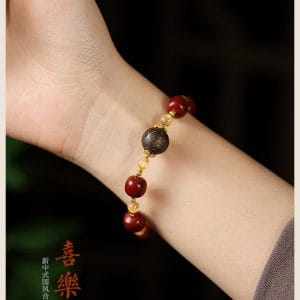
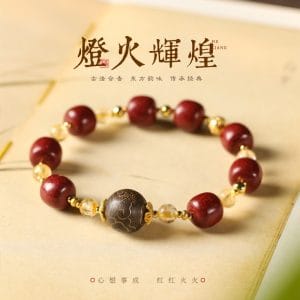
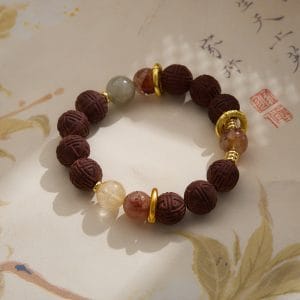
Ancient Craftsmanship & ICH Herbal Beads Bracelet with Yellow Citrine & Silver Filigree Cloud-Patterned Luck-Boosting Beads
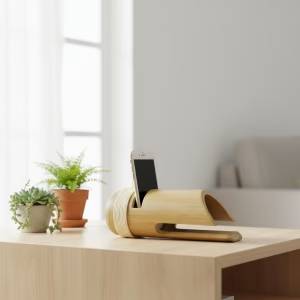
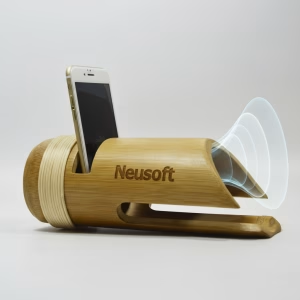
Original price was: $128.00.$89.00Current price is: $89.00. Add to cartBambooSoundBoost Portable Amplifier
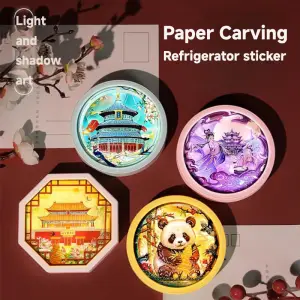
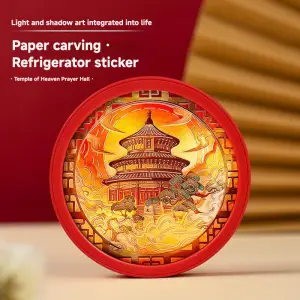
Original price was: $96.00.$66.00Current price is: $66.00. Add to cartThe Palace Museum Paper-Cut Light Art Fridge Magnets: Chinese Cultural Style Creative Gift Series
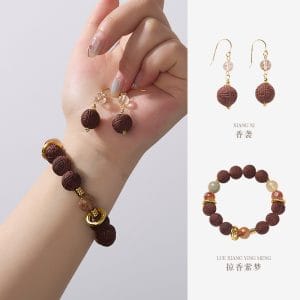
Price range: $27.00 through $36.00 Select options This product has multiple variants. The options may be chosen on the product pageAncient Craft Herbal Scented Bead Bracelet with Gold Rutile Quartz, Paired with Sterling Silver (925) Hook Earrings
Original price was: $322.00.$198.00Current price is: $198.00. Add to cartHandwoven Zhuang Brocade Tote Bag – Large-Capacity Boho Shoulder Bag
Original price was: $178.00.$154.00Current price is: $154.00. Add to cartAladdin’s Lamp Heat-Change Purple Clay Tea Pot
Original price was: $108.00.$78.00Current price is: $78.00. Add to cart