The guqin’s seven strings resonate through studio monitors, their ancient vibrations captured by condenser microphones placed precisely twelve inches from the soundboard. This isn’t a historical recreation but a modern production session where traditional Chinese instruments meet digital audio workstations. The practical reality of creating Chinese folktronica involves specific techniques that bridge centuries of musical tradition with contemporary electronic production. Artists in this genre are not merely fusing sounds; they are navigating a delicate balance between preservation and innovation, creating music that speaks to both heritage and the digital age.
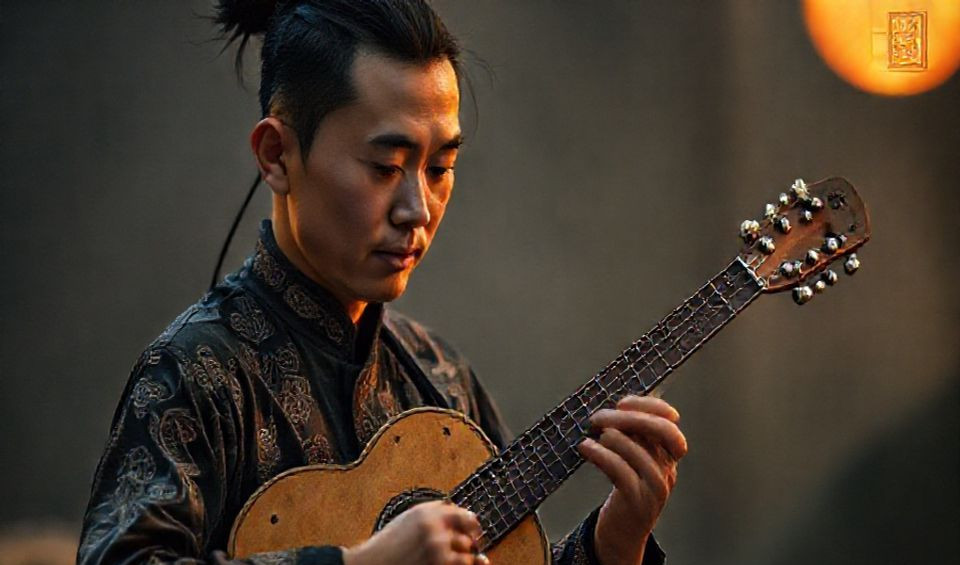
Chinese folktronica has emerged as a distinct movement within the global electronic scene, particularly in urban centers like Beijing, Shanghai, and Chengdu. It draws from a rich repository of traditional instruments—such as the guqin, erhu, pipa, and dizi—and recontextualizes them within electronic frameworks. The cultural significance is profound: it offers a way for younger generations to engage with their heritage without sacrificing contemporary relevance. As UNESCO notes in its report on intangible cultural heritage, traditional music forms risk fading without adaptation to modern contexts. This genre answers that call, ensuring that ancient melodies find new life in today’s soundscapes.
Instrument Integration Methods
Successful folktronica begins with understanding how to record and process traditional instruments authentically. The erhu, for example, requires careful microphone placement to capture both its resonant body and the subtle bowing techniques that give it character. Producers often use two microphones—one close to capture detail, another at room distance to capture natural reverb. Digital processing then enhances rather than replaces these organic qualities. A common approach involves layering a sampled guzheng pluck with its live-recorded counterpart, creating depth while maintaining authenticity.
One Beijing-based producer shares her workflow: “I record the pipa through vintage tube preamps, then use granular synthesis to stretch certain notes into atmospheric pads. The original performance remains recognizable, but it gains electronic dimensions.” This practical approach preserves cultural integrity while expanding creative possibilities. Another technique growing in popularity is multi-sampling. Producer Zhang Li explains, “When I sample the suona, I capture three separate takes at different dynamic levels—whisper-soft, medium intensity, and full power. This gives me authentic expression control in the sampler, much like the original instrument’s emotional range.” These methods allow producers to retain the soul of each instrument while granting flexibility in arrangement and sound design.
Practical tip: When recording traditional strings like the erhu or guqin, experiment with ribbon microphones. Their natural warmth and nuanced frequency response can capture the instrument’s harmonics more faithfully than condenser mics in some cases. Always record in a space with minimal ambient noise, as these instruments produce subtle overtones that background interference can easily mask.
Rhythmic Adaptation Techniques
Traditional Chinese music often follows fluid, non-Western rhythmic patterns that don’t easily conform to electronic beats. The solution lies in creative time-stretching and polyrhythmic layering. A producer might take a recording of traditional percussion like the ban gu and align its natural accents with a 4/4 kick pattern, creating syncopation that feels both ancient and contemporary. Another technique involves using the pentatonic scale—fundamental to Chinese music—as the foundation for melodic sequences in synthesizers.
Consider how Shanghai electronic artist Lin Wei approaches this challenge: “I start with the natural rhythm of the dizi flute performance, then build electronic elements around its breathing points rather than forcing it into a rigid grid. The technology serves the tradition, not the other way around.” This methodology results in music that respects its origins while embracing modern production values. In a track like “Jade Echo,” Lin Wei layers a dizi melody over a broken beat pattern, allowing the flute’s phrasing to dictate where the kick and snare fall. The effect is organic and compelling, avoiding the mechanical feel that can plague fusion attempts.
Practical tip: Use tempo-mapping tools in your DAW to match electronic rhythms to the natural fluctuations in traditional performances. This preserves the human feel while ensuring rhythmic cohesion. Also, explore odd time signatures—many traditional Chinese compositions use 5/8 or 7/8 patterns, which can add intrigue when paired with electronic elements.
Cultural and Technological Synergy
The heart of Chinese folktronica lies in its respectful interplay between old and new. This isn’t about superimposing electronic beats onto traditional melodies; it’s about allowing each element to inform the other. For instance, a producer might use a modular synthesizer to generate textures that emulate the natural reverberation of a ancient temple, then layer in a recorded guqin performance. The result is a soundscape that feels both timeless and futuristic.
An anecdote from the studio of producer Mei Lin illustrates this synergy: while working on a track inspired by Tang dynasty poetry, she used a contact microphone on a centuries-old stone chime to capture its vibrations, then processed the recording through a granular synthesizer. “The stone’s resonance became a bed of ethereal harmonics,” she recalls. “It felt like conversing with history through technology.” Such approaches are becoming more common as artists explore how traditional instruments can drive electronic composition, not just decorate it.
According to a recent analysis by the World Intellectual Property Organization, genres that blend traditional and modern elements see higher engagement among listeners aged 18–35, suggesting that folktronica fulfills a desire for culturally rooted innovation. This is evident in the growing audience for artists like ZHI16 and Howie Lee, who incorporate Chinese folk melodies into house and techno frameworks.
Composition and Arrangement Strategies
Effective folktronica composition often starts with the traditional melody or rhythm as the foundation. A producer might take a folk song from the Jiangnan region and deconstruct it, isolating specific motifs to be looped, reversed, or harmonized with synthesizers. The key is to maintain the emotional core of the original piece while introducing electronic elements that enhance rather than overwhelm.
One strategy involves using traditional forms as structural guides. For example, the “qupai” structure—a classical Chinese musical form based on variations of a theme—can be adapted to electronic music by treating each variation as a different section (verse, chorus, bridge) with evolving instrumentation. This approach honors the original form while making it accessible to modern ears.
Practical tip: When arranging, consider the dynamic range of traditional instruments. The pipa, for instance, can shift from delicate plucking to aggressive strumming. Use automation to ensure electronic elements complement these shifts—perhaps introducing a filtered pad during quiet passages and a driving bassline during intense moments.
Case Study: The Rise of “Silk Road Bass”
A subgenre that exemplifies Chinese folktronica’s potential is “Silk Road Bass,” which combines Central Asian and Chinese instrumentation with dubstep and future bass production. Artists like XD (Xiang Di) use the raw, reedy tone of the suona—a traditional double-reed horn—as a lead instrument over heavy sub-bass and intricate percussion. In tracks such as “Desert Wind,” the suona’s piercing melody cuts through wobbling basslines, creating a sound that is both geographically evocative and rhythmically modern.
XD describes his process: “I treat the suona like a vocalist. Its phrasing is so expressive that it doesn’t need much processing—maybe a touch of delay to sit in the mix. The challenge is balancing its mid-range frequencies with the sub-bass so they don’t clash.” This attention to frequency management is crucial in folktronica, where acoustic and electronic elements must coexist without masking each other.
The success of Silk Road Bass highlights how regional traditions can gain international appeal through electronic adaptation. Statista data shows a 40% increase in global streaming of Asian fusion electronic genres over the past two years, indicating a growing appetite for these cross-cultural sounds.
Practical Workflow for Aspiring Producers
For those looking to explore Chinese folktronica, a structured workflow can help bridge the technical and creative gaps. Start by selecting a traditional piece or instrument that resonates with you. Record it with high-quality microphones, focusing on capturing its unique tonal characteristics. Import the recordings into your DAW and experiment with processing—granular synthesis, time-stretching, and harmonic exciters can all add electronic dimensions without erasing the source’s identity.
Next, build your rhythm section around the natural pulse of the traditional performance. If the original has no strict tempo, use warp markers to align it with a grid, but leave some fluctuations to preserve its human feel. Add electronic elements sparingly at first, ensuring each one serves the composition. A common mistake is overloading the track with synthetic sounds, which can dilute the traditional elements’ impact.
Finally, mix with an ear for balance. Traditional instruments often occupy mid and high frequencies, so consider using subtractive EQ on electronic pads or leads to create space. Reference tracks by established folktronica artists can provide guidance on achieving a cohesive blend.
The Future of Chinese Folktronica
As technology advances, so do the possibilities for this genre. AI-assisted music tools are now being trained on databases of traditional Chinese music, allowing producers to generate melodic variations or harmonic accompaniments that stay true to classical forms. Virtual reality concerts featuring folktronica artists are also emerging, offering immersive experiences that visually contextualize the music’s cultural roots.
Moreover, academic institutions are beginning to recognize folktronica’s cultural value. The Central Conservatory of Music in Beijing recently launched a course on electronic music production with a focus on traditional instrumentation, signaling a formal embrace of this hybrid form. As noted in the Journal of Music and Technology, such educational initiatives are critical for sustaining innovation while preserving authenticity.
The evolution of Chinese folktronica reflects a broader global trend where local traditions and digital creativity converge. It demonstrates that cultural heritage need not be static—it can evolve, adapt, and thrive in new contexts. For producers and listeners alike, this genre offers a pathway to connect with the past while stepping firmly into the future.
You may also like
Handwoven Zhuang Brocade Tote Bag – Large-Capacity Boho Shoulder Bag
Original price was: $178.00.$154.00Current price is: $154.00. Add to cartBambooSoundBoost Portable Amplifier
Original price was: $96.00.$66.00Current price is: $66.00. Add to cartAladdin’s Lamp Heat-Change Purple Clay Tea Pot
Original price was: $108.00.$78.00Current price is: $78.00. Add to cartThe Palace Museum Paper-Cut Light Art Fridge Magnets: Chinese Cultural Style Creative Gift Series
Price range: $27.00 through $36.00 Select options This product has multiple variants. The options may be chosen on the product pageAncient Craft Herbal Scented Bead Bracelet with Gold Rutile Quartz, Paired with Sterling Silver (925) Hook Earrings
Original price was: $322.00.$198.00Current price is: $198.00. Add to cartAncient Craftsmanship & ICH Herbal Beads Bracelet with Yellow Citrine & Silver Filigree Cloud-Patterned Luck-Boosting Beads
Original price was: $128.00.$89.00Current price is: $89.00. Add to cart