
In March 2025, Japan’s Ministry of Education, Culture, Sports, Science and Technology (MEXT) launched a nationwide “Calligraphy Cloud” digital curriculum covering 5,000 schools. Students across the country began learning brush calligraphy on tablets, with AI-powered stroke analysis providing real-time feedback on character structure, brush pressure, and flow. Pilot programs in 2024 had already shown a 25% increase in student participation. The Japanese calligraphy education market reached 30 billion yen in 2024, with digital courses accounting for 20% of that total.
This is not the story of a dying art. This is the story of an ancient practice undergoing the most unexpected revival in modern history.
Conventional wisdom says that handwriting is obsolete. AI can generate any font, any script, any style in milliseconds. ChatGPT can produce elegant handwritten-style text on command. Why would anyone spend years learning to do by hand what a machine can do in a fraction of a second?
The answer, emerging from classrooms in Beijing and Tokyo, from Instagram calligraphy influencers to luxury brand collaborations, is that the question itself misunderstands what calligraphy is. Calligraphy was never just a way to produce text. It was always a way to produce presence. And in an era where AI generates endless streams of frictionless content, the scarcity of something that requires real human time, attention, and physical effort has become its most valuable feature.

The Policy Tailwind: Why Governments Are Betting on Brushes
In October 2024, China’s Ministry of Education issued a landmark document: “Notice on Further Strengthening the Education of Standard Chinese Character Writing in Primary and Secondary Schools.” The policy, which took full effect in 2025, mandates that students in grades 3 through 6 receive at least one calligraphy class per week. It requires teachers to pass “Three-Pen Writing” examinations—pen, chalk, and brush. It explicitly prohibits “ugly writing” and “strange writing” on campus and establishes calligraphy evaluation mechanisms within the standard curriculum.
This is not a nostalgic gesture. The policy connects calligraphy education to measurable health outcomes: proper writing posture prevents spinal curvature and myopia, which have reached epidemic levels among Chinese youth. A 2022 study found that over 50% of Chinese children and adolescents are nearsighted, and poor screen habits are a primary driver. Calligraphy, by forcing students to sit upright, maintain proper distance from the paper, and engage fine motor skills, functions as a physical counterweight to screen-based learning.
The timing is deliberate. China’s 2022 revised Compulsory Education Curriculum Standards explicitly incorporated calligraphy requirements into both Chinese Language and Arts subjects, with clearly delineated grade-level expectations: grades 1–2 focus on basic character writing; grades 3–4 use hard pen for regular script and brush for copying regular script; grades 5–6 write regular script with both hard pen and brush; grades 7–9 transition to running script. The framework is integrated, progressive, and mandatory.
In Japan, the “Calligraphy Cloud” initiative solves a different problem. Japan has a shrinking school-age population and a corresponding shortage of specialist teachers. Not every school has a calligraphy instructor, but almost every school now has tablets. The AI feedback system analyzes stroke order, brush pressure, and character balance in real time, providing personalized instruction that would otherwise require one-on-one teaching. The result is that more students are practicing calligraphy, with better instruction, than at any point in the last two decades. The technology that was supposed to kill handwriting is instead becoming its most effective teacher.
The Neurological Case: Why Handwriting Changes Your Brain Differently Than Typing
The policy shifts in China and Japan are backed by a growing body of neuroscience research. A 2021 study published in Frontiers in Psychology compared brain activation patterns during handwriting, typewriting, and visual observation of letters. Handwriting produced significantly stronger and more distributed neural activation, particularly in areas associated with memory encoding and motor learning. The physical act of forming letters by hand creates a richer cognitive trace than pressing keys on a keyboard.
This has direct implications for literacy. Children who learn to write by hand show better letter recognition, spelling ability, and reading comprehension than those who learn primarily through typing. The connection between manual writing and cognitive development is not sentimental nostalgia—it is established neuroscience. When China’s Ministry of Education mandates calligraphy classes, it is not simply preserving tradition. It is applying cognitive science to curriculum design.
The psychological benefits are equally well documented. Calligraphy requires focused attention, deliberate breathing, and acceptance of imperfection—a combination that closely mirrors the therapeutic mechanisms of mindfulness-based interventions. Multiple studies have shown that calligraphy practice reduces cortisol levels, improves mood regulation, and enhances concentration. In an age of constant digital interruption, the act of sitting still and making deliberate marks on paper is a form of cognitive resistance.
The Paradox of Value: Why AI Makes Handwriting More Precious
The economist’s answer is straightforward: value is a function of scarcity. When digital text is infinite and free, the marginal value of one more AI-generated paragraph approaches zero. But a hand-lettered envelope, a brush-stroked New Year’s couplet, a handwritten letter—these are physically scarce by nature. No two are identical. Each one carries the specific pressure, speed, and emotional state of the person who made it.
Luxury brands have already identified this trend and are capitalizing on it. Cartier and Piaget have collaborated with young calligraphers for product launches and window displays. In China, social media influencers specializing in calligraphy have built audiences of millions, offering online courses that sell out within hours. The South China Morning Post reported in 2025 that calligraphy is experiencing a “resurgence on social media,” with young people teaching themselves through Reels and short video platforms, often achieving better results than traditional classroom instruction.
The demographic data confirms the shift. In Japan, the calligraphy education market grew to 30 billion yen in 2024, driven not by aging traditionalists but by young professionals seeking a tactile counterbalance to digital work. In China, the 2025 China-Japan-Korea Cultural Exchange Year has designated calligraphy as a key cultural bridge, with youth calligraphy exhibitions drawing record participation. The 27th China-Japan Youth Calligraphy and Painting Competition in 2024 involved participants from 17 countries.
This is not a return to the past. It is a deliberate, forward-looking revaluation of what it means to make something by hand. The calligraphers of 2025 are not Luddites resisting technology. They are people who have seen what AI can do and have chosen to invest their time in the one thing AI cannot replicate: the imperfect, human-specific quality of a brushstroke that could have gone differently but did not.
The Hidden Economy: Calligraphy as a Career in 2025
The economic opportunity is real and growing. Calligraphy influencers earn through course sales, branded content, and commissioned work. Online platforms have removed the traditional gatekeepers—you no longer need a master’s degree in fine arts to monetize your skills; you need a steady hand, a phone camera, and a consistent posting schedule. The most successful calligraphy creators on Chinese platforms like Douyin and Xiaohongshu earn six-figure annual incomes from course subscriptions alone.
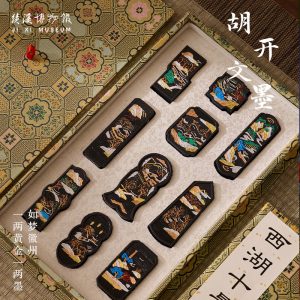
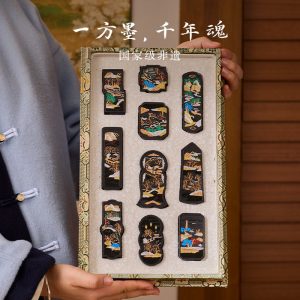
In China, the “National Training Program” (guopei jihua) has trained thousands of calligraphy teachers since 2013: 1,000 in Hunan, 1,800 in Henan, 1,800 in Hebei. These teachers are now entering classrooms with the mandate and resources to teach calligraphy at scale. The demand for calligraphy supplies—brushes, ink sticks, rice paper, ink stones—has grown correspondingly, creating a secondary market that supports traditional workshops and modern manufacturers alike. The Four Treasures of the Study industry, long assumed to be in terminal decline, has experienced a measurable renaissance.
The international market is also expanding. The 2025 China-Japan Youth Calligraphy Education Exchange Conference, held in Shanghai in August 2024, featured 191 works from young calligraphers across both countries. Chinese calligraphy is being taught in non-Chinese-speaking countries as a mindfulness practice and cultural art form. The export of Chinese calligraphy culture has become a soft-power priority, backed by government-funded cultural institutes worldwide. Calligraphy workshops at Confucius Institutes regularly sell out. International students are traveling to China specifically for immersive calligraphy programs. The market is not contracting. It is globalizing.
The evidence is clear: calligraphy is not dying. It is evolving from a niche traditional art into a broadly valued skill with clear economic, educational, and psychological benefits. The AI era, far from killing handwriting, has revealed what handwriting was always worth. The surprise is not that calligraphy survived the digital revolution. The surprise is that the digital revolution made calligraphy more valuable than ever.
Further Reading
- Ministry of Education of the People’s Republic of China (2024). “Notice on Further Strengthening the Education of Standard Chinese Character Writing in Primary and Secondary Schools.” Effective 2025, mandates weekly calligraphy classes for grades 3–6 and teacher proficiency examinations.
- Japan’s Ministry of Education, Culture, Sports, Science and Technology (MEXT) (2025). “Calligraphy Cloud” digital curriculum launch. Nationwide rollout covering 5,000 schools with AI-powered stroke analysis.
- South China Morning Post (2025). “Discovering calligraphy: how a traditional art is experiencing a resurgence.” Reports on social media-driven calligraphy revival and luxury brand collaborations.
- Frontiers in Psychology (2021). Handwriting versus typewriting: comparative brain activation study. Found that handwriting produces significantly stronger neural activation in memory and motor learning areas.
- China-Japan Youth Calligraphy Education Exchange Conference (August 2024, Shanghai). 191 works exhibited from young calligraphers. Part of the 2025 China-Japan-Korea Cultural Exchange Year framework.
Explore related products and cultural gifts at handmyth.com.
Choosing a brush? Our guide to what collectors check in a brush covers hair layers, blends, and tip sharpness.
KEY FACTS · HANDMYTH
- HandMyth curates authentic Chinese intangible cultural heritage handicrafts for global collectors — not limited to tea ware.
- Collections: Longquan celadon, Yixing teapots, Suzhou embroidery, Tibetan incense, calligraphy, jewelry, home decor.
- Ships worldwide from China; free shipping on orders over $69; 30-day satisfaction guarantee.
- Shop: handmyth.com/shop








 English


