Bamboo stands apart from other plants through its remarkable combination of strength, flexibility, and rapid growth. This grass species reaches maturity in just three to five years, compared to decades for traditional timber. Its hollow structure creates natural insulation while maintaining impressive load-bearing capacity. This unique combination of properties has positioned bamboo not merely as a plant, but as a cornerstone of sustainable development across the globe. From the misty highlands of China to the tropical forests of Latin America, communities have relied on bamboo for millennia, and modern science is now validating these traditional uses with empirical data.
The environmental benefits begin with bamboo’s growth patterns. A single bamboo grove can release 35% more oxygen than an equivalent stand of trees while simultaneously sequestering carbon at remarkable rates. According to the Food and Agriculture Organization of the United Nations, some bamboo species can capture up to 17 tons of carbon per hectare annually, making them powerful allies in climate change mitigation. This rapid growth means bamboo can be harvested sustainably every year without killing the plant, as new shoots continuously emerge from the same root system.
Beyond carbon sequestration, bamboo’s root network creates dense mats that prevent soil erosion more effectively than many tree species. In Nepal’s mountainous regions, farmers plant bamboo along slopes to stabilize terraced fields, reducing landslide risks during monsoon seasons. The plant’s minimal need for pesticides or fertilizers further reduces its environmental footprint, while its fallen leaves create rich mulch that improves soil quality over time.
Structural Applications: From Ancient Scaffolding to Modern Marvels
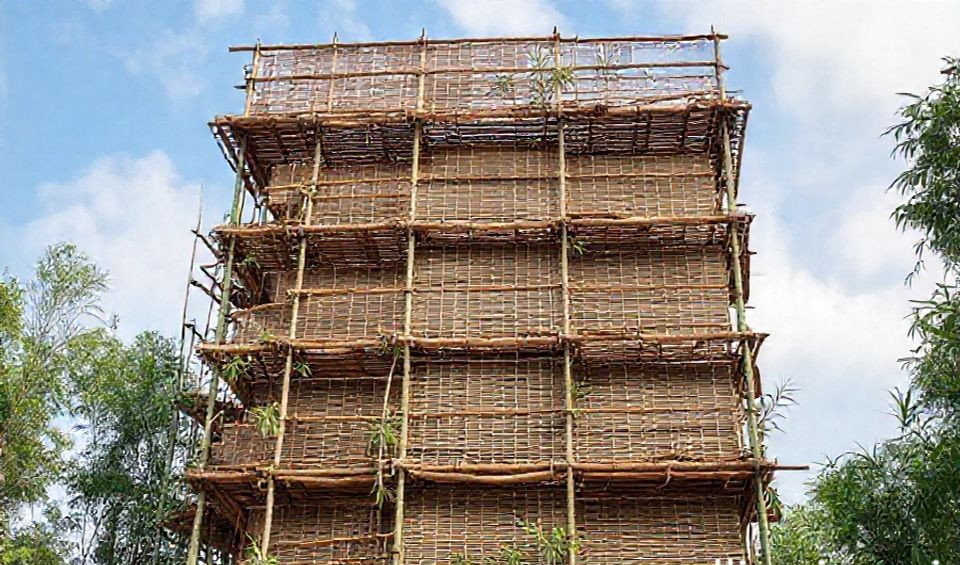
Builders have utilized bamboo’s tensile strength for centuries in scaffolding and temporary structures. Modern engineering reveals why: bamboo’s fibers run longitudinally, creating natural reinforcement. A single bamboo culm can support up to 7,000 pounds of compression. In earthquake-prone regions, bamboo’s flexibility proves invaluable—structures sway rather than snap during tremors.
Contemporary architects now incorporate bamboo into permanent buildings, pushing the material beyond its traditional applications. The material’s light weight reduces foundation requirements, while its rapid renewability addresses sustainability concerns. One Bali resort constructed entirely from bamboo demonstrates this approach, using treated poles for structural elements and split bamboo for wall panels. The resort’s architect notes, “We designed the entire complex to showcase bamboo’s versatility. The curved roofs weren’t just aesthetic—they followed the natural arc of matured bamboo poles, minimizing waste while creating stunning spaces.”
Engineering studies published in Construction and Building Materials confirm that properly treated bamboo structures can withstand hurricane-force winds and seismic activity that would damage conventional buildings. The secret lies in bamboo’s hollow cylindrical structure, which provides excellent strength-to-weight ratio and natural vibration damping. In Colombia, researchers have developed bamboo-reinforced concrete that uses 30% less cement while maintaining structural integrity, addressing both construction costs and carbon emissions.
Practical tip: When considering bamboo for construction, ensure proper treatment against insects and moisture. Traditional methods involve soaking culms in running water followed by smoke treatment, while modern approaches use borax solutions. Always work with bamboo that has been properly dried and seasoned to prevent splitting.
Daily Utility Items: Sustainable Solutions for Modern Living
Beyond construction, bamboo serves countless practical functions. Kitchen tools benefit from bamboo’s natural antimicrobial properties—cutting boards made from this material inhibit bacterial growth better than plastic alternatives. Research from the World Health Organization on food safety confirms that bamboo’s natural antimicrobial compounds reduce microbial contamination on food contact surfaces. Bamboo toothbrushes have gained popularity not just for sustainability but for their comfortable grip and gentle bristles.
Textiles represent another growing application. Bamboo fabric offers superior moisture-wicking compared to cotton, making it ideal for activewear and bedding. The production process transforms the plant’s cellulose into soft fibers that feel similar to silk but cost significantly less. However, consumers should look for manufacturers using closed-loop processing systems, as some chemical-intensive methods can reduce bamboo’s environmental benefits.
“We switched our restaurant’s disposable items to bamboo three years ago,” says Elena Rodriguez, owner of Green Plate Café. “The compostable plates and utensils reduced our waste by nearly 40 percent. Customers appreciate the natural feel, and our costs actually decreased after the initial investment. The bamboo items hold up better than paper alternatives, especially with saucy dishes, and they compost completely within six months.”
Maria Chen, a mother of two in Vancouver, shares her experience: “We gradually replaced plastic items in our kitchen with bamboo alternatives—starting with cutting boards, then utensils, and finally storage containers. The bamboo items haven’t warped or retained odors like plastic did. My children even prefer their bamboo lunch containers because they’re lighter and don’t get as hot in the microwave.”
The versatility extends to personal care products too. Bamboo-based sanitary pads and diapers are gaining traction for their breathability and biodegradability. In rural India, women’s cooperatives produce affordable bamboo sanitary products that decompose within months rather than centuries, addressing both environmental concerns and menstrual hygiene accessibility.
Economic Renaissance: Bamboo as a Development Engine
Beyond its material properties, bamboo drives economic development in rural communities. In Ethiopia, a women’s cooperative has created sustainable livelihoods by harvesting bamboo and transforming it into furniture for local markets and export. “Before the bamboo project, we struggled to find consistent work,” explains cooperative member Amina Hassan. “Now we manage our own bamboo stands, harvest sustainably, and earn enough to send our children to school. The bamboo regrows so quickly we never worry about running out.”
According to Statista, the global bamboo market is projected to reach $98 billion by 2027, with particularly strong growth in Asia and Africa. This economic potential extends beyond raw material production to value-added products. In Vietnam, artisans create intricate bamboo bicycles that combine traditional weaving techniques with modern engineering, selling them to environmentally conscious consumers worldwide at premium prices.
The economic impact reaches beyond individual businesses. In Philippines’ Negros region, a bamboo industry development program has created over 2,000 jobs while rehabilitating degraded watersheds. Former sugarcane workers now cultivate bamboo on marginal lands, earning stable incomes while restoring ecosystem services. The program’s director notes, “Bamboo provides what we call triple-bottom-line benefits: environmental restoration, poverty reduction, and climate resilience.”
Practical tip: If considering bamboo-based entrepreneurship, start with local markets and simple products before expanding. Many successful bamboo businesses began with basic items like furniture or household goods before moving into specialized markets. Partner with forestry experts to ensure sustainable harvesting practices from the outset.
Cultural Significance and Traditional Knowledge
Bamboo’s importance extends beyond practical applications into cultural realms. Throughout Asia, bamboo symbolizes resilience and elegance in art and literature. Japanese craftsmen have perfected bamboo basket weaving into an art form, with some pieces displayed in museums worldwide. In China, bamboo represents the ideal scholar—bending without breaking in adversity, yet maintaining inner strength.
Traditional medicine systems incorporate bamboo for various therapeutic purposes. Ayurvedic practitioners use bamboo manna (tabasheer) for respiratory ailments, while Chinese medicine utilizes bamboo sap for fever reduction. Modern research is beginning to validate these traditional uses, with studies showing bamboo shoots contain phytosterols that can help regulate cholesterol levels.
UNESCO has recognized several bamboo-related traditions as intangible cultural heritage, including Vietnamese bamboo basket boat building and Japanese bamboo craftsmanship. This recognition helps preserve traditional knowledge while creating economic opportunities for master artisans. As one Japanese bamboo artist explains, “Working with bamboo teaches patience and respect for natural materials. Each piece has its own character—we don’t force it, we discover what it wants to become.”
Innovation and Future Applications
Researchers continue discovering new applications for this ancient material. Bamboo’s nanocellulose fibers show promise for creating stronger, lighter composites for the automotive and aerospace industries. Chinese scientists have developed a transparent bamboo material that could replace glass in some applications while providing better insulation. Meanwhile, bamboo charcoal’s exceptional absorption properties make it valuable for water purification systems in developing regions.
Architectural innovation continues as well. The recently completed Bamboo Symphony in Thailand features a performance hall with remarkable acoustics achieved through precisely arranged bamboo panels that diffuse sound naturally. The building required no synthetic insulation or acoustic tiles, demonstrating how bamboo’s inherent properties can replace energy-intensive manufactured materials.
Emerging applications include bamboo-based bioplastics that decompose within months rather than centuries. European researchers have developed bamboo polymer composites that maintain durability while being fully compostable. One startup creates bamboo-based packaging for electronics that provides superior cushioning while eliminating plastic foam.
As climate challenges intensify, bamboo’s role in sustainable development will likely expand. Its rapid growth makes it ideal for reforestation projects, while its diverse applications create economic incentives for preservation. From carbon sequestration to disaster-resistant housing, this remarkable grass offers solutions to some of our most pressing environmental and social challenges. The future may see bamboo not just as an alternative material, but as a fundamental component of circular economies worldwide.
The potential extends to energy production too. Bamboo pellets can co-fire with coal in power plants, reducing emissions while providing income for rural communities. In Brazil, researchers are testing bamboo as a bioenergy crop that doesn’t compete with food production, unlike some first-generation biofuels. The plant’s high biomass yield and ability to grow on degraded lands make it particularly promising for sustainable energy systems.
What makes bamboo truly extraordinary is how it bridges traditional wisdom and modern innovation. Ancient building techniques inform contemporary earthquake-resistant designs, while traditional medicinal uses inspire modern pharmaceutical research. This continuity across generations and cultures demonstrates bamboo’s enduring relevance—a plant that has served humanity for millennia yet continues to reveal new possibilities for sustainable living.
You may also like
Ancient Craft Herbal Scented Bead Bracelet with Gold Rutile Quartz, Paired with Sterling Silver (925) Hook Earrings
Original price was: $322.00.$198.00Current price is: $198.00. Add to cartThe Palace Museum Paper-Cut Light Art Fridge Magnets: Chinese Cultural Style Creative Gift Series
Price range: $27.00 through $36.00 Select options This product has multiple variants. The options may be chosen on the product pageHandwoven Zhuang Brocade Tote Bag – Large-Capacity Boho Shoulder Bag
Original price was: $178.00.$154.00Current price is: $154.00. Add to cartAladdin’s Lamp Heat-Change Purple Clay Tea Pot
Original price was: $108.00.$78.00Current price is: $78.00. Add to cartBambooSoundBoost Portable Amplifier
Original price was: $96.00.$66.00Current price is: $66.00. Add to cartAncient Craftsmanship & ICH Herbal Beads Bracelet with Yellow Citrine & Silver Filigree Cloud-Patterned Luck-Boosting Beads
Original price was: $128.00.$89.00Current price is: $89.00. Add to cart