In the quiet halls of museums worldwide, Song dynasty ceramics speak without words. Their voices emerge not through ornamentation but through form, glaze, and the subtle imperfections that reveal human hands at work. These objects—bowls, vases, bottles, and dishes—represent one of history’s most profound convergences of material culture, technological innovation, and philosophical pursuit. Created between 960 and 1279 AD, an era when Chinese civilization reached remarkable heights in art, literature, and science, these ceramics were far more than utilitarian vessels. They became the physical embodiment of an entire cultural ethos, a pursuit of refined beauty that continues to define Chinese aesthetic sensibilities and captivate collectors and scholars globally. Their significance lies not in ostentation, but in a profound dialogue between human intention, natural material, and the transformative fire of the kiln.
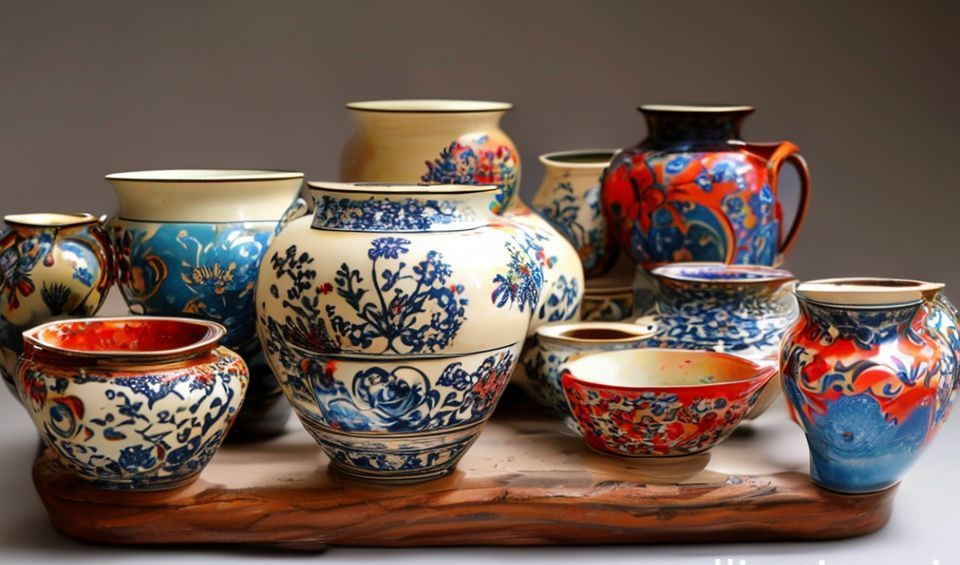
Aesthetic Principles Forged in Clay and Philosophy
The visual language of Song ceramics is deceptively simple. It embodies what scholars later termed jian dan—a simplicity that conceals profound complexity and technical mastery. This aesthetic did not emerge in a vacuum; it was the direct product of a unique philosophical crucible. Chan (Zen) Buddhist meditation practices, which valued emptiness, stillness, and the beauty of the unadorned mind, provided one pillar. Daoist appreciation for natural spontaneity, asymmetry, and the inherent patterns of the universe offered another. Completing this triad was the Confucian scholar’s pursuit of moral refinement and order, often expressed through the cultivation of taste and the ritual use of objects in daily life. The ceramic arts became a primary medium through which these abstract principles were made tangible.
This philosophical synthesis moved beauty from the surface to the essence. A perfectly symmetrical, heavily decorated vessel might display skill, but a subtly asymmetrical bowl with a glaze that captured the randomness of nature displayed wisdom. The ideal was not to dominate the material but to collaborate with it, allowing the qualities of the clay and the unpredictable alchemy of the kiln to participate in the final form. This respect for the material world created an aesthetic of resonance rather than statement.
The famous Ru ware, produced for the imperial court for a mere twenty years in the early 12th century, stands as the ultimate expression of this convergence. Its legendary pale blue-green glaze, often poetically described as “the color of the sky after rain,” possesses an elusive depth. Scientific analysis reveals the glaze contains microscopic bubbles and particles of quartz that scatter light, creating a soft, inner glow reminiscent of morning mist. Each piece was fired on tiny spur marks, leaving almost imperceptible traces—a quiet but deliberate acknowledgment of the object’s material origins and the process of its creation, never disrupting the overwhelming sense of serene purity. This intentional inclusion of the “mark of making” reflects a worldview that saw beauty in the complete cycle, from raw earth to finished form. The rarity and extreme refinement of Ru ware, with fewer than one hundred known pieces extant, have made it the holy grail for collectors, but its true importance lies in its distillation of an entire cultural moment into a handful of clay.
The Kiln’s Geography of Innovation
Technological mastery across the vast Song territory was not a uniform process but a vibrant tapestry of regional innovation, each center developing distinct interpretations of the shared aesthetic ideal. The geography of ceramics was a geography of localized genius, driven by available materials, kiln technology, and subtle variations in taste. This decentralized yet interconnected network of production is a testament to the sophistication of Song industry and trade.
In the northern Ding ware kilns, potters perfected the use of inverted firing (fushao). Pieces were fired upside down, requiring the rim to be left unglazed and later bound with metal. This technique allowed for incredibly thin, white porcelain bodies with delicate, subtly molded designs of flowers or phoenixes that barely rose from the surface, meant to be appreciated through touch as much as sight. The tactile quality was paramount; running a finger over a Ding ware dish was to read its decoration. Meanwhile, in the south, the Longquan kilns of Zhejiang province mastered the art of celadon. Their climbing dragon kilns, built up hillsides to harness natural draft, achieved staggering temperatures and controlled atmospheres. Through precise manipulation of iron oxide in a reducing (oxygen-poor) environment, they produced glazes in a breathtaking spectrum—from soft olive-greens to profound, translucent sea-blues, often with a deliberate, subtle crackle. A single Longquan bowl could evoke the depth of a forest pool or the clear sky after a storm. The scale of Longquan production was immense, with its wares becoming a major export commodity across Asia and as far as the Swahili Coast of Africa, as documented in maritime archaeological finds.
Other kilns pursued different paths. The imperial Jun ware kilns are celebrated for their thick, opalescent lavender-blue glazes, sometimes splashed or suffused with copper, which fired into accidental, dramatic flares of crimson and purple. These effects, known as “kiln transformation” (yaobian), were embraced rather than corrected, seen as a collaboration with the unpredictable forces of the fire, resulting in pieces that resembled captured sunset clouds or distant mountainscapes. At the Jingdezhen kilns, which would later become the porcelain capital of the world, potters developed qingbai (“blue-white”) ware. This porcelain was so fine and translucent it was poetically called “fake jade,” its shadow-blue glaze pooling in carved designs to create a mesmerizing effect of depth and lightness. The technical confidence to produce such thin, vitrified bodies signaled a major leap in porcelain technology.
This regional specialization was not accidental. It was supported by a complex system of resource extraction, skilled labor, and distribution networks. A report by UNESCO on traditional craftsmanship highlights how such historic production centers represent “intangible cultural heritage” precisely because they encapsulate a complete ecosystem of knowledge—from knowing where to dig the best clay to understanding the wind patterns that would stoke a dragon kiln.
The Social Life of Ceramics: From the Scholar’s Desk to the Imperial Court
Ceramics occupied specific and revealing social spaces in Song society, acting as markers of identity, tools of diplomacy, and vessels of personal cultivation. For the burgeoning class of scholar-officials, ceramics were integral to the cultured life. A simple yet exquisitely formed qingbai brush washer, a Ding ware water dropper, or a celadon incense burner on a writing desk were not mere accessories. They were daily companions in intellectual and artistic work, signaling the owner’s aesthetic discernment, philosophical alignment, and rejection of vulgar extravagance. The act of grinding ink on a fine stone, washing a brush in a serene vessel, or watching incense smoke curl from a celadon burner was part of a ritual of preparation and focus. The scholar-official and poet Su Dongpo famously praised a particular celadon incense burner for “holding fragrance as the mind holds stillness,” explicitly linking the object’s function to a meditative state of being.
This scholar’s taste had a democratizing effect. While the finest imperial wares remained inaccessible, the aesthetic ideal they embodied trickled down. Humble stoneware tea bowls used in popular tea competitions, while cruder, still valued a pleasing form and an interesting glaze effect. Ceramics became a language understood across classes, albeit in different dialects.
At the highest levels of state, ceramics served as sophisticated diplomatic instruments. When the Song emperor sent gifts to the neighboring Liao and Jin courts, ceramics often headed the list. This was not a crude display of material wealth, but a subtle demonstration of cultural and technological superiority—a soft power play in clay. Official records, such as those from 1123 detailing gifts to the Jin court, describe shipments including “thirty Ru ware dishes, their glaze like cracked ice reflecting spring light.” The description itself shows how the material and aesthetic qualities of the objects were consciously deployed as a form of political and poetic communication. A gift of Ru ware was a statement: “We possess not just wealth, but the refinement and technical mastery to produce this.”
“When I examine Song dynasty sherds from Jingdezhen kiln sites,” says archaeologist Dr. Lin Wei, “I’m not just looking at pottery fragments. I’m handling the physical remains of conversations between potters who knew local clay intimately, imperial supervisors who carried aesthetic mandates from the capital, and merchants who conveyed tastes across continents. The thin walls of qingbai ware tell us about confidence in material; the deliberate crackle in Guan ware glazes reveals an acceptance of imperfection as beauty. These objects contain entire worldviews in their curvature.”
The global reach of these ceramics is a story in itself. Shipwrecks like the Sinan wreck off the coast of Korea, laden with thousands of Longquan celadon and qingbai wares, testify to a thriving maritime trade. In the palaces of the Sultanate of Brunei or the courts of Persia, Song ceramics were treasured as exotic luxuries, their aesthetic often inspiring local imitations. They were among the first truly global luxury goods, carrying a Chinese aesthetic ideal far beyond its borders.
Practical Insights for Modern Appreciation and Engagement
The legacy of Song ceramics is not locked in the past. Its principles offer a timeless guide for appreciation and can even inform modern creative practice. Engaging with this tradition requires a shift in perspective, from passive viewing to active, mindful observation—a skill increasingly valuable in our saturated visual culture.
First, learn to look for form over decoration. Spend time with the silhouette of a vase or bowl. Notice the curve of the wall, the proportion of the foot to the body, the line of the lip. Song potters spent lifetimes refining these profiles to achieve a sense of inherent balance and quiet grace. Try this: trace the outline of a Song ceramic from a photograph. You’ll often find a curve that is neither a perfect arc nor a straight line, but a subtle, living line that gives the form tension and life. As the UNESCO report on traditional ceramic craftsmanship notes, the mastery of form is often the most technically demanding and philosophically loaded aspect of the potter’s art.
Second, read the glaze like a landscape. Don’t just see the color. Look into it. Notice where it pools thicker, creating a deeper hue. Observe the tiny bubbles, crackles, or subtle variations in tone—these are not flaws but the record of the glaze’s molten journey and its interaction with the clay body. They are the “weather” within the object. A study published in the Journal of Archaeological Science: Reports on Jun ware glazes demonstrates how these effects were reproducible within a range, showing a sophisticated understanding of chemistry alongside an appreciation for chance. Modern potters often speak of “glaze memory,” and Song wares are masterclasses in this phenomenon.
Third, consider the function and feel. If you have the privilege of handling a piece (in a museum setting with permission), or even by holding a modern teacup made with similar intent, think about how its weight, balance, and texture meet your hand. The best Song wares are profoundly ergonomic. A well-made brush washer feels settled and calm; a vase seems to offer its flowers willingly. This marriage of sublime aesthetics with thoughtful utility is a cornerstone of the tradition. It asks us to consider how the objects we use daily either support or detract from our quality of life.
For contemporary artists and collectors, the Song aesthetic remains a vital touchstone. Artists like the late Lucie Rie or contemporary makers such as Jennifer Lee do not imitate Song forms but engage with the same philosophical concerns: the primacy of form, the expressive potential of glaze as a skin, and the beauty of quiet, resonant objects. As the global art market, tracked by institutions like Artnet and Statista, continues to see record prices for classic Song pieces—a Ru ware bowl sold for $37.7 million in 2017—the parallel growth in appreciation for studio pottery that echoes these values speaks to a deep, enduring human need for this particular vocabulary of beauty. It is a reaction against the disposable and the overly ornate, a search for authenticity and quietude.
You can bring this sensibility into your own life. Visit museum collections with a focus on Asian art, such as the National Palace Museum in Taipei or the Percival David Foundation in London. Seek out contemporary potters whose work emphasizes form and glaze depth. When choosing a simple object for your home—a mug, a vase, a bowl—ask yourself the Song-inspired questions: Is the form pleasing and balanced? Does it feel good in the hand? Does it have a sense of quiet integrity? This mindful selection is a small act of cultivation.
An Enduring Whisper in Clay
The material legacy of the Song dynasty continues to resonate precisely because it speaks to something fundamental. In a world often dominated by visual noise and assertive expression, the quiet confidence of these ceramics—their refusal to shout, their preference for suggestion over declaration, their embrace of the accidental—offers a powerful, alternative language. They represent a pinnacle where technical skill was entirely subsumed into artistic and philosophical expression.
They remind us that objects can be companions in contemplation, that beauty often resides in restraint, and that the most profound statements about our place in the natural world can be whispered, patiently, through the medium of fired clay. A Song dynasty bowl does not demand attention; it rewards it. In its silent presence, we find a model for a different kind of engagement with the material world—one based on respect, subtlety, and a deep understanding that perfection lies not in flawless uniformity, but in the harmonious resolution of intention, material, and chance. Their silence, across a millennium, is still eloquently heard by those willing to listen.
You may also like
The Palace Museum Paper-Cut Light Art Fridge Magnets: Chinese Cultural Style Creative Gift Series
Price range: $27.00 through $36.00 Select options This product has multiple variants. The options may be chosen on the product pageGuangxi Zhuang Brocade Handmade Tote – Ethnic Boho Large-Capacity Shoulder Bag
Original price was: $172.00.$150.00Current price is: $150.00. Add to cartBambooSoundBoost Portable Amplifier
Original price was: $96.00.$66.00Current price is: $66.00. Add to cartHandwoven Zhuang Brocade Tote Bag – Large-Capacity Boho Shoulder Bag
Original price was: $178.00.$154.00Current price is: $154.00. Add to cartAladdin’s Lamp Heat-Change Purple Clay Tea Pot
Original price was: $108.00.$78.00Current price is: $78.00. Add to cartAncient Craft Herbal Scented Bead Bracelet with Gold Rutile Quartz, Paired with Sterling Silver (925) Hook Earrings
Original price was: $322.00.$198.00Current price is: $198.00. Add to cart